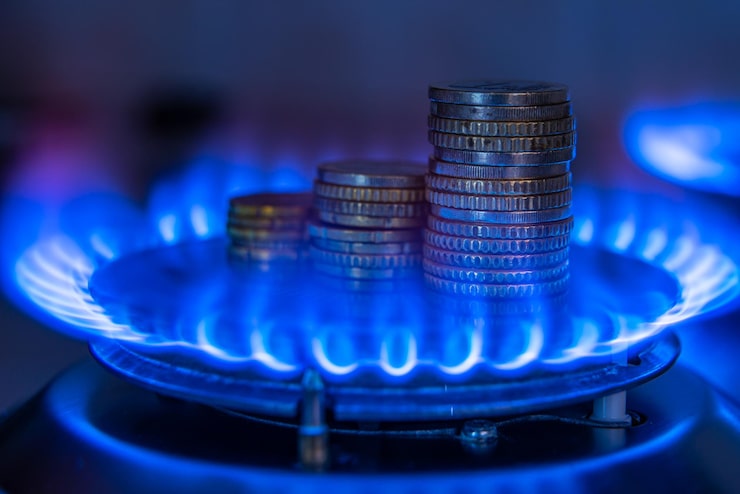
When you send cryptocurrency or interact with a decentralized application, you’re likely paying something called a gas fee. These transaction costs have become one of the most discussed aspects of blockchain technology, especially as networks like Ethereum process millions of transactions daily. Understanding gas fees isn’t just about knowing why you’re charged–it’s about grasping how blockchain networks actually function, maintain security, and allocate their computational resources.
Think of gas fees as the fuel that powers blockchain operations. Just as your car needs gasoline to run, smart contracts need gas to execute their code. But unlike filling up your vehicle at a fixed price per gallon, blockchain gas fees fluctuate based on network demand, transaction complexity, and the underlying protocol mechanisms. This dynamic pricing creates both opportunities and challenges for users who want to participate in decentralized finance, purchase NFTs, or simply transfer tokens between wallets.
The concept might seem abstract at first, but gas fees solve a fundamental problem in distributed computing. When thousands of nodes worldwide process your transaction, someone needs to compensate the validators or miners for their work. Without this economic incentive, nobody would maintain the network infrastructure. Gas fees also serve another critical purpose: they prevent spam attacks and ensure that computational resources are used efficiently rather than wasted on malicious or frivolous transactions.
What Are Gas Fees and Why Do They Exist
Gas fees represent the payment required to execute operations on a blockchain network. Every action you take–whether sending tokens, deploying a smart contract, or swapping assets on a decentralized exchange–consumes computational resources from the network. These resources include processing power, bandwidth, and storage across potentially thousands of validator nodes that maintain the distributed ledger.
The term “gas” originated with Ethereum, though similar concepts exist across different blockchain platforms under various names. The naming convention reflects the idea that computational operations require fuel to run. Each operation in a smart contract has a specific gas cost measured in small units. More complex operations naturally require more gas, just as driving further requires more fuel for your vehicle.
Blockchain networks face a constant challenge: they must process transactions while maintaining security and decentralization. Unlike centralized systems where a single company controls server capacity, blockchains rely on distributed validators who voluntarily participate in network consensus. Gas fees create the economic framework that motivates these validators to dedicate their computational resources and maintain network integrity.
Without gas fees, blockchain networks would be vulnerable to spam attacks. A malicious actor could flood the network with meaningless transactions, consuming bandwidth and processing power without consequence. By requiring payment for each transaction, the network ensures that only genuine users willing to pay for computational resources can access the system. This economic barrier makes attacks prohibitively expensive while keeping the network accessible for legitimate use cases.
How Gas Fees Work in Different Blockchain Networks
While the fundamental concept remains consistent, different blockchain platforms implement gas fees with significant variations. Understanding these differences helps users choose appropriate networks for their specific needs and budget constraints.
Ethereum Gas Mechanism

Ethereum pioneered the gas fee model that many other blockchains later adopted or modified. In the Ethereum system, each operation has a base cost measured in gas units. Simple operations like transferring ETH consume less gas, while complex smart contract interactions require substantially more. The actual cost you pay depends on two factors: the amount of gas your transaction consumes and the price you’re willing to pay per unit of gas.
Before the London hard fork in August 2021, Ethereum used a first-price auction system where users bid on transaction inclusion. This created unpredictable costs and often resulted in users overpaying during periods of high network congestion. The introduction of EIP-1559 fundamentally changed this mechanism by implementing a base fee that adjusts algorithmically based on network demand.
Under the current system, each block has a base fee that increases when blocks are more than 50 percent full and decreases when they’re less full. This base fee is burned–permanently removed from circulation–rather than paid to validators. Users can also add a priority fee, essentially a tip to validators for faster transaction inclusion. This two-part structure makes costs more predictable while maintaining incentives for network participants.
The Ethereum network processes transactions in blocks, with each block having a target size and a maximum size. When demand exceeds capacity, the base fee increases, economically discouraging lower-priority transactions until network usage returns to sustainable levels. This dynamic adjustment creates a market-driven approach to resource allocation without requiring users to understand complex bidding strategies.
Layer 2 Solutions and Their Fee Structures
Layer 2 networks emerged specifically to address high gas fees on main blockchain networks. These solutions process transactions off the main chain while inheriting its security guarantees. Optimistic rollups like Arbitrum and Optimism bundle hundreds of transactions together, then submit a single proof to the Ethereum mainnet. This batching dramatically reduces per-transaction costs since the fixed cost of posting to Ethereum is distributed across many users.
Zero-knowledge rollups take a different approach, using cryptographic proofs to verify transaction validity without revealing transaction details. Networks like zkSync and StarkNet can process thousands of transactions before submitting a single validity proof to Ethereum. The computational complexity of generating these proofs is offset by the massive savings from reduced mainnet interaction.
State channels represent another layer 2 approach where participants lock funds in a smart contract, conduct unlimited off-chain transactions, and only settle the final state on the blockchain. This method works particularly well for applications requiring frequent interactions between fixed parties, such as gaming or streaming payments. The fee reduction is dramatic because only the opening and closing transactions touch the expensive mainnet.
Sidechains operate semi-independently with their own consensus mechanisms but maintain bridges to main networks. Polygon, for example, offers transaction fees often measured in fractions of a cent while maintaining compatibility with Ethereum smart contracts. The tradeoff involves different security assumptions, as sidechains typically have fewer validators than established main networks.
Alternative Layer 1 Blockchains
Several blockchain platforms designed their architectures specifically to minimize transaction costs. Solana uses a proof-of-history mechanism combined with proof-of-stake, allowing the network to process thousands of transactions per second with fees typically under a penny. This high throughput comes from optimizations that reduce the communication overhead between validators and allow parallel transaction processing.
Binance Smart Chain adopted a proof-of-staked-authority model with fewer validators than Ethereum, achieving faster block times and lower fees at the expense of reduced decentralization. The network maintains compatibility with Ethereum tools and contracts, making it easy for developers to deploy applications across both platforms while offering users more affordable transaction options.
Cardano implements a different economic model where fees are calculated based on transaction size and computational steps rather than auction-based pricing. This deterministic fee structure provides predictability but requires careful protocol design to prevent network congestion. The network uses a proof-of-stake consensus mechanism with delegated validators, balancing security and efficiency.
Avalanche utilizes a subnet architecture where different blockchains can operate with customized rules and fee structures while sharing security through the main network. This modular approach allows application developers to create purpose-built chains with fee mechanisms optimized for their specific use cases, whether that’s high-frequency trading or social media applications.
Factors That Influence Gas Fee Prices
Gas fees fluctuate significantly based on multiple interconnected factors. Understanding these variables helps users make informed decisions about when and how to transact on blockchain networks.
Network Congestion and Demand
The most immediate factor affecting gas prices is network congestion. Blockchains have limited capacity measured in transactions per block or computational units per second. When demand exceeds this capacity, users compete for inclusion in the next block. This competition drives up prices as users increase their offered fees to prioritize their transactions over others waiting in the mempool.
Congestion patterns follow predictable cycles. Weekday activity in North American and European time zones tends to increase demand compared to weekends or off-peak hours. Major events like popular NFT drops, token launches, or liquidation cascades in DeFi protocols can cause sudden fee spikes as thousands of users simultaneously try to execute time-sensitive transactions.
The composition of transactions also matters. A block filled with simple token transfers processes more transactions than one dominated by complex smart contract interactions. During periods when computationally intensive operations dominate, average fees tend to rise even if the number of pending transactions appears moderate. This reflects the fundamental constraint on computational resources rather than just transaction count.
Transaction Complexity and Computational Requirements

Not all transactions require equal computational effort. Sending native cryptocurrency from one wallet to another involves minimal computation–checking balance, updating state, and verifying signatures. Interacting with a complex DeFi protocol might require executing code across multiple smart contracts, performing mathematical calculations, accessing storage multiple times, and emitting various events for indexing.
Smart contract developers optimize their code to minimize gas consumption because users pay for every operation. Simple design choices like using efficient data structures, minimizing storage operations, and batching similar calculations can significantly reduce transaction costs. However, some operations are inherently expensive regardless of optimization efforts.
Storage operations particularly drive up costs because they permanently alter blockchain state that every node must maintain. Writing new data to storage costs substantially more gas than reading existing data or performing calculations in temporary memory. This cost structure incentivizes developers to store only essential information on-chain while moving supplementary data to decentralized storage solutions like IPFS.
Gas Limit and Gas Price Relationships
Every transaction includes a gas limit–the maximum amount of gas the sender is willing to spend. Setting this limit too low results in transaction failure and wasted fees, as validators attempt execution until they hit the limit. Setting it too high doesn’t cost extra because you only pay for actual gas consumed, but it can tie up resources in your wallet until the transaction completes or times out.
The gas price or fee per unit of gas represents your bid for transaction processing priority. In competitive environments, transactions with higher gas prices get processed first because validators rationally choose the most profitable transactions to include. This creates a dynamic auction where you must balance desired speed against cost tolerance.
Modern wallets estimate appropriate gas limits and prices by analyzing recent network activity. These estimates work well under stable conditions but may lag during rapidly changing situations. Users executing time-sensitive transactions during volatile periods often manually increase gas prices to ensure prompt processing, contributing to feedback loops that amplify fee spikes.
Calculating and Estimating Gas Costs
Understanding how to calculate expected transaction costs helps users budget appropriately and avoid unexpected expenses when interacting with blockchain networks.
Reading Gas Fees in Gwei
Ethereum and compatible networks typically express gas prices in gwei, a denomination representing one billionth of the native currency. Using gwei provides convenient numbers rather than dealing with many decimal places. A gas price of 50 gwei means you’re offering 0.000000050 ETH per unit of gas consumed by your transaction.
To calculate total transaction cost, multiply gas consumed by gas price. If a transaction uses 21,000 gas units at 50 gwei, the total cost is 1,050,000 gwei or 0.00105 ETH. At an ETH price of $2,000, this transaction costs $2.10. The same transaction at 200 gwei would cost four times as much–$8.40–despite performing identical operations.
Different transaction types have predictable gas consumption ranges. Simple ETH transfers always consume 21,000 gas, the minimum for any transaction. ERC-20 token transfers typically require 45,000 to 65,000 gas depending on the token contract implementation. Complex DeFi interactions might consume anywhere from 100,000 to over 500,000 gas depending on the number of operations involved.
Tools for Estimating Transaction Costs
Numerous platforms provide real-time gas price information and estimation tools. Block explorers like Etherscan display current gas prices categorized by desired confirmation speed–slow, average, and fast. These estimates are based on recent block data and pending transaction analysis, giving users current market conditions rather than outdated information.
Dedicated gas tracking services offer more detailed analytics, including historical fee data, congestion predictions, and optimal timing recommendations. These platforms aggregate data across multiple sources to provide comprehensive views of network conditions. Some offer alerts when gas prices fall below specified thresholds, helping cost-conscious users time their transactions strategically.
Wallet applications increasingly incorporate intelligent fee estimation directly into transaction workflows. MetaMask, Rainbow, and other popular wallets analyze network conditions and suggest appropriate fees based on desired confirmation time. Advanced users can override these suggestions, but default estimates work well for most situations.
Simulation tools allow users to preview transaction costs before committing funds. These tools execute transactions in test environments, calculating exact gas consumption for complex interactions. This capability is particularly valuable for first-time users of complicated DeFi protocols who want to understand costs before making significant commitments.
Strategies for Reducing Gas Fees
Users can employ various tactics to minimize transaction costs without sacrificing functionality or security.
Timing Transactions Strategically
Gas prices fluctuate throughout the day and week based on global usage patterns. Weekends typically see lower activity than weekdays. Late night and early morning hours in major time zones often feature reduced congestion and correspondingly lower fees. Users executing non-urgent transactions can save significantly by monitoring fee trends and waiting for favorable conditions.
Some tools provide historical analysis showing typical fee patterns for specific times and days. This data helps users develop intuition about when to expect cheap transaction windows. While unexpected events can disrupt patterns, statistical trends remain useful for planning routine operations.
Setting lower gas prices and waiting for confirmation works for non-time-sensitive transactions. Your transaction enters the mempool where it waits until network conditions allow processing at your offered price. This approach requires patience but can reduce costs by 50 percent or more compared to paying premium rates for immediate confirmation.
Batching Multiple Operations
Many transactions include fixed overhead costs regardless of operation complexity. Batching multiple operations into a single transaction amortizes these fixed costs across all included actions. For example, approving token spending and executing a swap in one transaction is cheaper than doing them separately, even though the total computation is similar.
Some protocols specifically support batch operations. Decentralized exchanges might allow multiple swaps in one transaction. NFT platforms may support batch minting or transfers. Using these features when available provides immediate cost savings without requiring any technical expertise.
Smart contract wallets offer advanced batching capabilities unavailable with standard wallets. These contracts can bundle complex sequences of operations–multiple token approvals, swaps across different protocols, and final withdrawals–into atomic transactions. While deploying a smart contract wallet involves upfront costs, frequent users often recoup these expenses through accumulated savings.
Choosing Alternative Networks
For many use cases, alternative networks provide functionally equivalent experiences at substantially lower costs. Layer 2 solutions built on Ethereum offer the same security guarantees as mainnet while processing transactions for a fraction of the cost. Arbitrum and Optimism support most major DeFi protocols, with identical user interfaces and contract interactions but fees measured in cents rather than dollars.
Cross-chain bridges allow moving assets between networks, though bridging itself incurs costs. Users planning extended activity on alternative networks can bridge assets once and conduct numerous low-cost transactions before bridging back. This strategy works particularly well for traders, gamers, or social media users who perform many small transactions.
Some applications deploy across multiple chains, allowing users to choose their preferred network. A DeFi protocol might operate on Ethereum, Polygon, Arbitrum, and BNB Chain, with each deployment offering different fee structures. Comparing these options before committing to a particular network ensures users select the most cost-effective platform for their needs.
Optimizing Smart Contract Interactions
Understanding how specific protocols consume gas enables users to minimize costs through interaction design choices. Some decentralized exchanges charge lower fees for certain token pairs or routing paths. Choosing slightly different trade routes can reduce gas consumption by tens of thousands of units without affecting the exchange rate.
Setting appropriate slippage tolerances affects transaction success rates and retry costs. Extremely tight tolerances increase the likelihood of transaction failures during price volatility, forcing users to pay failed transaction fees and retry with adjusted parameters. Slightly looser tolerances reduce retry frequency while still protecting against unfavorable execution.
Managing token approvals carefully prevents unnecessary transactions. Unlimited approvals allow repeated interactions without additional approval transactions, though they carry security implications. Limited approvals require periodic renewal but protect against certain exploit scenarios. Balancing convenience and security based on protocol trustworthiness and transaction frequency optimizes long-term costs.
The Role of Validators and Miners in Gas Economics
Understanding who receives gas fees and why they’re necessary illuminates the economic incentives maintaining blockchain networks.
Transaction Validation Economics
Validators or miners secure blockchain networks by processing transactions and creating new blocks. These participants invest significant resources in hardware, electricity, and network infrastructure. Gas fees provide compensation for these operational costs while generating profit margins that justify continued participation.
In proof-of-work systems like pre-merge Ethereum and current Bitcoin, miners compete to solve computational puzzles. The winner adds the next block and collects all transaction fees included in that block plus newly minted cryptocurrency. This competition incentivizes miners to include the highest-paying transactions first, maximizing their revenue for the computational work invested.
Proof-of-stake networks like current Ethereum select validators based on staked collateral rather than computational work. Selected validators propose blocks and collect fees from included transactions. The reduced energy consumption of proof-of-stake allows networks to maintain security while requiring lower fee revenues, though competitive dynamics still incentivize validators to prioritize higher-paying transactions.
Maximum Extractable Value Considerations
Validators can extract additional value beyond standard transaction fees through strategic transaction ordering. This practice, called maximum extractable value or MEV, involves arranging transactions within blocks to capture profit from arbitrage opportunities, liquidations, or sandwich attacks on user trades.
MEV exists because validators control transaction ordering within blocks. A validator spotting a profitable arbitrage opportunity can insert their own transaction ahead of user transactions, capturing the profit. Similarly, they might sandwich user trades by placing transactions immediately before and after, profiting from induced price movements.
Some networks and protocols attempt to mitigate negative MEV impacts through various mechanisms. Flashbots and similar services provide structured ways for searchers to share MEV profits with validators while reducing harmful effects on regular users. Transaction encryption solutions like threshold encryption aim to prevent validators from seeing transaction contents before inclusion, eliminating opportunities for front-running.
Understanding MEV helps explain why transaction fees sometimes seem disconnected from simple supply and demand dynamics. High-value transactions like large trades or liquidations may pay elevated fees because validators can extract additional value through strategic ordering. This creates complex interactions between obvious fees users pay and hidden costs absorbed through unfavorable execution prices.
Future Developments in Gas Fee Technology
Blockchain technology continues evolving, with numerous developments aimed at reducing transaction costs while maintaining security and decentralization.
Ethereum Scaling Roadmap
Ethereum’s development roadmap prioritizes scaling solutions that dramatically reduce gas fees while preserving security. The completed merge to proof-of-stake laid groundwork for subsequent improvements. The next major upgrade, proto-danksharding through EIP-4844, introduces blob-carrying transactions that provide temporary data availability at much lower cost than permanent storage.
These blob transactions specifically benefit layer 2 rollups, which need to post transaction data to Ethereum for security but don’t require permanent accessibility. By separating temporary data from permanent state, Ethereum can support dramatically higher data throughput without proportionally increasing validator hardware requirements. This change could reduce layer 2 fees by factors of ten or more.
Future sharding implementations will further distribute network load across parallel chains, multiplying throughput without sacrificing security. Each shard processes a subset of transactions while maintaining cross-shard communication capabilities. Combined with layer 2 solutions, full sharding could enable Ethereum to process hundreds of thousands of transactions per second at minimal cost per transaction.
Alternative Consensus Mechanisms
Various blockchain projects experiment with novel consensus mechanisms designed to reduce costs while maintaining security guarantees. Proof-of-stake variations like delegated proof-of-stake concentrate validation among elected representatives, increasing efficiency at the expense of some decentralization. Networks must carefully balance these tradeoffs based on their specific security requirements and user base preferences.
Byzantine fault tolerant consensus protocols like those used in Cosmos and Avalanche achieve fast finality through repeated voting rounds among validator sets. These approaches reduce the time and energy required for consensus, supporting higher throughput and lower fees. However, they typically involve more complex security assumptions and validator coordination requirements.
Directed acyclic graph structures represent radical departures from traditional blockchain architecture. Projects like IOTA and Nano eliminate blocks entirely, with each transaction directly confirming previous transactions. This structure removes mining and fixed block capacity constraints, potentially enabling feeless transactions. However, these architectures face different security challenges and have yet to prove themselves at massive scale.
Account Abstraction and Gas Sponsorship
Account abstraction proposals enable smart contract logic to control account behavior, unlocking innovative gas payment mechanisms. Applications could sponsor transaction fees for users, removing friction from onboarding and routine interactions. Users might pay fees in tokens other than the native currency, or protocols could implement subscription models where monthly payments cover unlimited transactions.
These capabilities allow building user experiences that hide blockchain complexity behind familiar interfaces. A decentralized social media platform might sponsor post and comment transactions, making the experience indistinguishable from Web2 platforms. Gaming applications could include gas costs in item purchases or subscription fees, eliminating the need for users to monitor and manage transaction fees constantly.
Gas abstraction doesn’t eliminate costs–someone must still pay validators–but it enables flexible payment arrangements that improve user experience. Businesses can choose to absorb transaction costs as customer acquisition expenses. Protocols can implement token-based fee payment, burning governance tokens or distributing fees to stakeholders. These mechanisms align economic incentives while reducing friction for end users.
Common Gas Fee Mistakes and How to Avoid Them
Users frequently make preventable errors that result in wasted funds or failed transactions. Recognizing these pitfalls helps avoid costly mistakes.
Setting Insufficient Gas Limits
Transactions fail when execution runs out of gas before completing all operations. Failed transactions still consume gas and charge fees because validators expended computational resources attempting execution. Setting appropriate gas limits requires understanding transaction complexity or relying on accurate estimation tools.
Wallet-suggested gas limits usually provide adequate margins for successful execution. Manually reducing these limits to save money often backfires, resulting in failure fees that exceed potential savings. Users should only adjust gas limits downward when they thoroughly understand the transaction’s requirements or have successfully executed identical transactions previously.
Complex smart contract interactions with conditional logic may require variable gas amounts depending on execution path. A DeFi transaction might consume different gas based on pool liquidity conditions or price movements during execution. Building adequate buffers into gas limits prevents failures from these variations while still capping maximum potential costs.
Panic Trading During Volatility
Market volatility triggers panic trading as users rush to execute transactions simultaneously. This coordination increases network congestion and drives up gas prices precipitously. Paying extreme premiums during these periods often proves unnecessary, as positions and opportunities remain available after congestion subsides.
Automated trading strategies and stop-loss orders can reduce the need for emergency manual interventions. Setting these safeguards during calm periods ensures execution at reasonable gas prices compared to manual trading during panics. While automation requires upfront configuration, it prevents expensive emotional decisions during stressful market conditions.
Understanding protocol mechanics helps identify which actions truly require immediate execution versus those where slight delays cause minimal harm. Claiming rewards, rebalancing positions, or taking profits often tolerate delays of hours or days. Emergency actions like preventing liquidations or capturing rapidly disappearing arbitrage require immediate execution and justify premium fees.
Ignoring Transaction Status
Submitted transactions sometimes remain pending for extended periods when gas prices are set too low or network conditions deteriorate after submission. Users occasionally resubmit transactions without canceling previous attempts, resulting in duplicate executions and doubled costs. Monitoring transaction status and understanding how to cancel or replace pending transactions prevents these expensive mistakes.
Most wallets support transaction replacement by submitting new transactions with the same nonce but higher gas prices. This mechanism allows canceling unwanted pending transactions by sending zero-value transactions to yourself or speeding up delayed transactions by increasing offered fees. Understanding nonce management prevents confusion when transactions process in unexpected orders.
Block explorers provide detailed transaction status information including position in the mempool and estimated confirmation time. Checking these details before resubmitting transactions or assuming failure prevents duplicate submissions. Some transactions remain pending but viable for hours; patience often proves cheaper than panic replacement at inflated prices.
Gas Fees and Application Development
Developers building blockchain applications must carefully consider gas efficiency to ensure their projects remain accessible and cost-effective for users.
Writing Gas-Efficient Smart Contracts
Smart contract optimization begins during initial design and architecture phases. Choosing efficient algorithms, minimizing storage operations, and leveraging existing libraries reduce gas consumption without sacrificing functionality. Simple optimizations like using appropriate variable types, packing storage variables, and avoiding redundant operations can save thousands of gas per transaction.
Storage represents the most expensive operation in smart contract execution. Developers minimize storage use by storing only essential data on-chain while moving supplementary information to off-chain systems accessed through oracles or decentralized storage. Careful planning of data structures ensures efficient storage layout that reduces read and write costs.
Code auditing tools analyze smart contracts for gas efficiency, identifying optimization opportunities. These tools flag expensive patterns like loops with unbounded iterations, redundant storage reads, or inefficient mathematical operations. Addressing these issues during development prevents launching contracts that impose excessive costs on users.
Testing and Gas Profiling
Development frameworks include gas profiling tools that measure consumption for each function and operation. Developers use these tools to identify expensive operations and evaluate optimization impacts. Comparing gas usage before and after changes validates that optimizations actually reduce costs rather than inadvertently increasing them through added complexity.
Realistic testing environments that mirror mainnet conditions help developers understand how contracts perform under actual usage. Test networks like Goerli or Sepolia for Ethereum allow deploying and interacting with contracts using test tokens, revealing gas consumption patterns without risking real funds. Load testing identifies how gas costs scale with increased usage or data sizes.
Public test deployments before mainnet launches allow community testing and feedback on gas efficiency. Users can interact with contracts, report unexpected costs, and suggest optimizations based on real usage patterns. This community involvement often reveals edge cases or usage patterns developers didn’t anticipate, leading to additional optimizations.
Designing User-Friendly Fee Experiences
Applications can abstract gas complexity behind user-friendly interfaces that communicate costs clearly without requiring technical knowledge. Displaying fees in familiar fiat currency terms rather than gwei or gas units makes costs comprehensible to non-technical users. Providing context like comparing costs to alternatives helps users evaluate whether fees are reasonable.
Real-time fee estimation before transaction submission allows users to make informed decisions. Warning users when fees exceed typical ranges prevents shock at checkout and reduces abandoned transactions. Suggesting alternative timing or networks when fees are elevated improves user experience and reduces costs.
Implementing gas sponsorship or meta-transactions for small or routine operations removes friction from user experience. Applications might sponsor transactions below certain thresholds while charging fees only for substantial operations. This approach balances sustainable economics with smooth onboarding for new users unfamiliar with blockchain mechanics.
Regulatory and Economic Implications of Gas Fees
Gas fees create interesting dynamics that extend beyond simple transaction costs, influencing network economics and regulatory considerations.
Network Sustainability and Token Economics
Gas fees play crucial roles in blockchain token economics. In systems where fees are burned like post-EIP-1559 Ethereum, high usage creates deflationary pressure on the native token supply. This mechanism can increase token value over time if burn rates exceed new issuance, creating interesting investment dynamics distinct from traditional currencies.
The balance between fee revenue and validator costs determines network sustainability. Networks must generate sufficient fee revenue to compensate validators adequately while keeping costs low enough to encourage adoption. This tension drives ongoing development of scaling solutions that increase capacity without proportionally increasing validator requirements.
Token price volatility affects gas fee dynamics in complex ways. Rising token prices increase dollar-denominated fees even if gas prices remain constant in native units. This relationship can price out users during bull markets, reducing network accessibility. Some networks implement stabilization mechanisms or dynamic fee adjustments to maintain consistent dollar costs regardless of token price fluctuations.
Accessibility and Financial Inclusion
High gas fees create barriers to entry that undermine blockchain’s promise of permissionless financial access. When transaction costs exceed typical transaction values for global users, networks become accessible only to wealthy participants. This dynamic concentrates usage among high-value transactions and institutional participants while excluding retail users from developing economies.
Scaling solutions and alternative networks specifically aim to restore accessibility through dramatically reduced fees. Layer 2 networks and high-throughput layer 1 blockchains enable cost structures where even small transactions remain economically viable. This accessibility expansion is crucial for applications like micropayments, remittances, and financial services for underbanked populations.
Education about gas fees and optimization strategies helps users maximize blockchain value despite transaction costs. Understanding when to transact, which networks to use, and how to minimize fees empowers users to participate effectively. Community resources, wallet integrations, and application guidance all contribute to making blockchain technology accessible beyond technical experts.
Regulatory Perspectives on Transaction Costs
Regulators increasingly scrutinize blockchain networks, with transaction costs representing one consideration among many. High fees might be viewed positively as friction that discourages illicit activity, or negatively as barriers to legitimate financial access. Regulatory approaches vary significantly across jurisdictions, reflecting different priorities and understandings of blockchain technology.
Transparency of fee structures may become regulatory requirements in some jurisdictions. Ensuring users understand costs before committing to transactions protects consumers from unexpected charges. Applications might need to display fee estimates prominently and provide clear cancellation options before transaction submission.
Tax treatment of gas fees varies by jurisdiction and remains unclear in many regions. Some tax authorities treat fees as capital expenses reducing taxable gains, while others consider them separately. Users must track transaction costs for tax reporting, and applications may need to provide detailed fee records to support compliance requirements.
Conclusion
Gas fees represent fundamental economic mechanisms that enable blockchain networks to function sustainably while allocating scarce computational resources efficiently. Understanding these costs–how they’re calculated, what factors influence them, and strategies for minimizing them–empowers users to participate effectively in blockchain ecosystems without paying unnecessary premiums.
The landscape of gas fees continues evolving rapidly as developers implement scaling solutions, optimize protocols, and experiment with alternative consensus mechanisms. Layer 2 networks, sharding implementations, and novel blockchain architectures promise to reduce transaction costs by orders of magnitude while maintaining the security and decentralization that make blockchain technology valuable.
For users, staying informed about gas fee dynamics and available optimization tools ensures cost-effective participation in decentralized applications. Timing transactions strategically, choosing appropriate networks, and understanding protocol specifics all contribute to minimizing costs. As infrastructure matures and competition increases among blockchain platforms, users benefit from expanding options and steadily declining fees.
Developers bear responsibility for building gas-efficient applications that remain accessible to broad user bases. Thoughtful contract design, rigorous testing, and user-friendly interfaces that abstract complexity contribute to sustainable ecosystem growth. Balancing functionality with efficiency ensures applications deliver value without imposing prohibitive costs on users.
The future of blockchain technology depends significantly on solving the gas fee challenge. Networks that successfully combine low costs with strong security and meaningful decentralization will likely capture the majority of users and applications. Ongoing innovation in this space promises to unlock blockchain’s potential for global financial inclusion, complex decentralized applications, and value transfer at unprecedented scale and efficiency.
What Are Gas Fees and Why Do Smart Contracts Require Them
When you interact with blockchain networks that support smart contracts, you encounter a system fundamentally different from traditional computing environments. Every action you take, whether sending cryptocurrency, executing a decentralized application, or deploying code, consumes computational resources from a distributed network of computers. Gas fees represent the compensation mechanism that makes this entire ecosystem function sustainably.
At its core, a gas fee is a payment made to validators or miners who process and verify transactions on a blockchain network. Think of it as paying for computational work, similar to how you might pay for electricity consumption or cloud computing services, except the payment goes directly to network participants who dedicate their hardware and energy to maintaining the blockchain.
The term originated with Ethereum, where Vitalik Buterin and his team introduced the concept to solve several critical problems that plagued earlier blockchain implementations. Unlike Bitcoin, which primarily handles simple value transfers, Ethereum was designed to run arbitrary code through smart contracts. This created a unique challenge: how do you prevent malicious actors from overwhelming the network with infinite loops or computationally expensive operations?
Gas fees solve this problem by attaching a cost to every computational step. Each operation within the Ethereum Virtual Machine, whether it involves basic arithmetic, storing data, or calling another contract, has a predetermined gas cost measured in units. Complex operations naturally require more gas units than simple ones. When you multiply these gas units by the current gas price, which fluctuates based on network demand, you get the total fee paid in the native cryptocurrency.
The Economic Foundation of Distributed Computing
Smart contracts transformed blockchains from simple ledgers into fully programmable platforms capable of executing complex logic without intermediaries. However, this power comes with responsibility. Unlike centralized servers where a company bears the infrastructure costs, blockchain networks distribute computation across thousands of independent nodes. Each node must execute every transaction to verify its correctness and maintain consensus.
This redundancy, while providing security and censorship resistance, means that computational resources get multiplied across the entire network. When you execute a smart contract function, you are not running code on a single server but simultaneously on thousands of machines worldwide. The economic model must account for this amplification of resource consumption.
Gas fees create a market-based system that naturally allocates scarce computational resources. During periods of high network activity, users compete for block space by offering higher gas prices. Validators prioritize transactions with better compensation, ensuring that those who value quick execution most are willing to pay for it. This price discovery mechanism prevents network congestion from grinding the system to a halt.
The fee structure also serves as a crucial defense mechanism against spam and denial-of-service attacks. Without transaction costs, a bad actor could flood the network with meaningless operations, consuming bandwidth and processing power without consequence. By requiring payment for every operation, the network ensures that launching such attacks becomes prohibitively expensive.
How Smart Contract Execution Consumes Resources
To understand why smart contracts require gas fees, you need to grasp what happens when code executes on a blockchain. Traditional software runs on specific hardware with known performance characteristics. Developers can optimize for that environment and users typically experience consistent execution costs.
Smart contracts operate in a radically different environment. The code lives on a distributed virtual machine, replicated across an entire network. When you trigger a contract function, every validating node must independently execute that code, verify the results match, and update their local copy of the blockchain state. This process involves multiple resource-intensive steps.
First, nodes must retrieve the contract code from storage. This bytecode represents compiled instructions that the virtual machine can interpret. Reading from persistent storage, even in decentralized systems, consumes energy and time. More complex contracts with larger codebases naturally require more retrieval operations.
Next comes the actual execution. The virtual machine processes instructions sequentially, performing calculations, making logical decisions, and manipulating data structures. Mathematical operations, string manipulations, and cryptographic functions all demand processing power. Some operations, like hashing algorithms or signature verifications, are particularly computation-intensive.
Storage operations represent another significant resource drain. Smart contracts frequently need to write data to the blockchain’s permanent state. Whether updating account balances, recording ownership transfers, or logging events, these write operations persist forever across all network nodes. The cost of perpetual storage gets reflected in higher gas requirements for state-changing operations.
Memory allocation during execution also factors into resource consumption. Contracts may need temporary workspace to perform calculations or manipulate data structures. While this memory gets released after execution completes, allocating and managing it during runtime still consumes resources that validators must provide.
The Anatomy of Gas Calculation
Different blockchain platforms implement gas systems with varying levels of complexity, but the underlying principles remain consistent. Ethereum pioneered a detailed gas model where every operation code in the virtual machine has an assigned cost. Addition might cost 3 gas units, multiplication 5 units, while storing a 256-bit word in contract storage could cost 20,000 units for a fresh storage slot.
These prices were not arbitrary. The Ethereum Foundation conducted extensive benchmarking to determine the real-world computational cost of each operation. They measured how long operations took to execute, how much memory they consumed, and what impact they had on node performance. The goal was creating a fee structure that accurately reflected actual resource consumption.
When you submit a transaction that interacts with a smart contract, you specify a gas limit. This represents the maximum number of gas units you are willing to allow the transaction to consume. Setting this limit protects you from unexpectedly high costs if the contract behaves differently than anticipated. If execution exceeds your specified limit, the transaction reverts, but you still pay for the computation performed up to that point.
You also specify a gas price, indicating how much you are willing to pay per unit of gas. This price gets denominated in the blockchain’s smallest currency unit. On Ethereum, for example, gas prices are quoted in gwei, where one gwei equals one billionth of an ether. The total transaction fee equals the gas used multiplied by your specified gas price.
Modern implementations have evolved beyond this simple model. Ethereum’s London upgrade introduced a base fee mechanism that automatically adjusts based on network congestion. Instead of users guessing appropriate gas prices, the protocol calculates a base fee that burns with each transaction. Users can add a priority fee to incentivize faster inclusion, creating a more predictable fee market.
Why the Complexity Cannot Be Avoided
Newcomers often wonder why blockchain networks cannot simply make transactions free or charge flat fees regardless of complexity. The answer lies in the fundamental architecture of decentralized systems and the game theory that keeps them secure.
Flat fees create perverse incentives. If every transaction costs the same regardless of computational complexity, users would be incentivized to pack maximum functionality into each transaction. This would quickly lead to bloated operations that consume excessive resources while paying minimal compensation. Network performance would degrade as validators struggled to process increasingly complex transactions.
Free transactions sound appealing but prove disastrous in practice. Without costs, nothing prevents automated systems from flooding the network with spam. Even if individual spam transactions accomplish nothing meaningful, their volume would overwhelm legitimate users trying to interact with the blockchain. The network would become unusable, destroying its value proposition.
Variable gas costs based on actual resource consumption create the right incentives. Developers are motivated to write efficient code that minimizes unnecessary operations. Users think carefully about which transactions justify network resources. Validators receive fair compensation for the work they perform. This alignment of incentives keeps the ecosystem healthy and sustainable.
The transparency of gas costs also enables innovation in user experience. Wallet developers can estimate fees before users commit to transactions. Decentralized applications can optimize their smart contracts to reduce gas consumption. Layer-two solutions can batch multiple operations to amortize costs. None of these improvements would be possible without the detailed accounting that gas systems provide.
The Role of Network Validators
Understanding gas fees requires understanding who receives these payments and what they do to earn them. In proof-of-work systems like early Ethereum, miners competed to solve cryptographic puzzles, with winners earning the right to propose the next block. These miners collected all gas fees from transactions included in their blocks, providing significant financial incentive beyond the block reward.
Proof-of-stake systems, which Ethereum now employs after The Merge, distribute fees to validators who stake cryptocurrency as collateral. These validators take turns proposing blocks and verifying the proposals of others. The gas fees from transactions flow to the validator who successfully proposes the block containing those transactions.
This compensation model serves multiple purposes. It rewards validators for the capital they commit and the operational costs they incur. Running validator nodes requires hardware, electricity, internet bandwidth, and ongoing maintenance. The gas fees help offset these expenses and provide profit margins that keep validators engaged.
Fee-based compensation also aligns validator incentives with network health. Validators profit when the network processes many transactions, giving them a vested interest in maintaining high performance and availability. They are motivated to upgrade hardware, optimize software, and ensure reliable connectivity because better service leads to more transaction volume and higher earnings.
The competitive nature of fee markets creates additional accountability. If validators become unreliable or attempt censorship, users can increase gas prices to incentivize other validators to include their transactions. This market mechanism provides a check against validator misconduct without requiring centralized intervention.
Gas Fees Across Different Blockchain Platforms
While Ethereum pioneered the gas fee model, other smart contract platforms have implemented variations tailored to their specific architectures and goals. Examining these differences illuminates the tradeoffs inherent in blockchain design.
Binance Smart Chain adopted an Ethereum-compatible approach but with modifications to reduce costs. By using a smaller validator set and shorter block times, BSC can process transactions more quickly and cheaply. However, this comes at the expense of decentralization, as fewer validators mean greater centralization risk.
Polygon, operating as a sidechain and later as a commit chain to Ethereum, offers dramatically lower gas fees by processing transactions on a separate network before periodically checkpointing to Ethereum mainnet. This layered approach lets users enjoy low costs for routine operations while still leveraging Ethereum’s security for final settlement.
Solana takes a different architectural approach entirely, using a proof-of-history mechanism that allows extremely high throughput. Transaction fees on Solana remain remarkably low because the network can process thousands of transactions per second. However, this performance comes from making different tradeoffs around hardware requirements and validator economics.
Avalanche employs multiple chains with different purposes, allowing developers to customize fee structures for their specific applications. This flexibility means that simple value transfers might carry minimal fees while complex DeFi operations pay proportionally more.
Cardano implements a fee model that considers both transaction size and computational steps but uses a different calculation methodology than Ethereum. The approach aims for predictability, helping users understand costs before submitting transactions.
Each platform’s fee structure reflects its priorities and technical architecture. High-throughput chains can charge lower fees because they amortize validator costs across more transactions. Networks emphasizing decentralization and security often accept higher fees as the price of these properties. Understanding these tradeoffs helps users choose appropriate platforms for their specific needs.
The Impact on Smart Contract Development
Gas fees profoundly influence how developers design and implement smart contracts. Unlike traditional software development where computational efficiency might be one concern among many, blockchain developers must obsess over gas optimization. Every unnecessary operation directly costs users money, creating strong incentives for efficiency.
Storage operations particularly demand attention. Storing data on-chain is expensive because it must persist forever across all nodes. Developers learn to minimize storage, using clever data structures and techniques to compress information. They might store data off-chain when possible, keeping only essential commitments or hashes on the blockchain itself.
Loop structures become dangerous in gas-metered environments. A loop that iterates over an unbounded array could consume unpredictable amounts of gas, potentially causing transactions to fail or cost exorbitant amounts. Experienced developers avoid unbounded loops or implement pagination patterns that break operations into multiple transactions.
Function visibility modifiers take on new importance. Public functions that read contract state but do not modify it can be marked as view or pure, allowing them to execute without gas costs when called externally. Developers structure their contracts to maximize read operations that users can perform for free while reserving gas-consuming calls for state changes that truly require network consensus.
The choice between deploying multiple smaller contracts versus one large monolithic contract involves gas considerations. Deploying a contract costs gas based on its bytecode size, so splitting functionality might increase deployment costs. However, smaller, modular contracts can be more gas-efficient to interact with, as users only load the specific functionality they need.
Libraries and inheritance patterns help developers share code between contracts without duplication. By deploying common functionality once and having multiple contracts reference it, developers reduce redundant storage and deployment costs. These architectural decisions directly impact the economic viability of decentralized applications.
Gas Tokens and Optimization Strategies
The programmable nature of smart contracts has spawned creative strategies for managing gas costs. Gas tokens represent one such innovation, exploiting mechanics in Ethereum’s refund system to effectively store gas during periods of low prices and release it when prices spike.
The Ethereum virtual machine provided gas refunds for certain operations, particularly clearing storage slots. Gas tokens would mint tokens during low-fee periods, storing data on-chain. Later, when gas prices rose, users could burn these tokens, clearing storage and receiving refunds that partially offset their transaction costs. While Ethereum has since modified refund mechanisms to reduce this arbitrage opportunity, gas tokens illustrated how deeply developers could optimize for fee reduction.
Contract deployment strategies also evolved around gas considerations. Developers might deploy contracts during periods of low network activity to minimize costs. Some projects coordinate deployments around predictable low-activity windows, like weekends or holidays when trading volume typically decreases.
Batch processing represents another powerful optimization. Instead of having each user submit individual transactions, smart contracts can be designed to accumulate operations and process them together. This amortizes fixed costs across multiple operations, reducing the per-user fee burden. Decentralized exchanges often use batch auctions or order matching algorithms that process many trades simultaneously.
Proxy patterns allow contracts to be upgraded without redeploying all their code. A lightweight proxy contract holds the contract state while delegating logic execution to a separate implementation contract. Upgrading functionality requires deploying a new implementation and updating a single pointer, rather than migrating all data to a new contract, saving substantial gas costs.
The Future Evolution of Gas Systems
Blockchain technology continues evolving rapidly, and gas fee mechanisms evolve alongside it. Layer-two scaling solutions represent perhaps the most significant near-term development, moving much transaction execution off the main chain while preserving security guarantees.
Rollup technologies bundle hundreds or thousands of transactions into a single batch that gets submitted to the main chain. This approach dramatically reduces per-transaction costs because many operations share the fixed costs of main-chain settlement. Optimistic rollups assume transactions are valid unless challenged, while zero-knowledge rollups use cryptographic proofs to guarantee validity.
State channels allow parties to conduct unlimited off-chain transactions, only touching the main chain to open and close the channel. This makes gas fees virtually zero for intermediate transactions, though opening and closing channels still incurs costs. Payment channels excel for frequent interactions between known parties.
Sharding will eventually split blockchain networks into parallel chains that process transactions simultaneously. This multiplication of processing capacity should reduce congestion and lower fees by increasing supply relative to demand. Ethereum’s roadmap includes sharding as a key component, though implementation remains complex and challenging.
Alternative consensus mechanisms continue emerging, each with different implications for fees. Proof-of-stake reduces the energy costs validators must recoup through fees. Novel approaches like proof-of-spacetime or proof-of-useful-work might further alter the economics of transaction processing.
Account abstraction may eventually allow users to pay gas fees in tokens other than the network’s native cryptocurrency. Smart contracts could sponsor user transactions, enabling gasless experiences where applications cover costs. These innovations would dramatically improve user experience while maintaining the underlying economic model.
Conclusion
Gas fees represent far more than a simple transaction cost. They form the economic foundation that makes decentralized computation possible, aligning incentives between users, developers, and network validators. By attaching real costs to computational resources, gas systems prevent abuse while enabling a functioning market for block space.
The complexity of gas fees reflects the genuine complexity of running code across distributed networks. Every operation consumes resources that must be fairly compensated. The transparency of these costs, while sometimes frustrating for users accustomed to free centralized services, enables optimization and innovation impossible in opaque systems.
Understanding gas fees empowers users to make informed decisions about when and how to interact with blockchain networks. It helps developers build efficient applications that respect user resources. For the ecosystem as a whole, well-designed gas systems ensure long-term sustainability by properly valuing the scarce computational resources that power decentralized applications.
As blockchain technology matures, gas fee mechanisms will continue evolving. Scaling solutions will reduce costs for many use cases. New consensus algorithms may alter validator economics. User experience innovations might abstract away fee complexity. Yet the fundamental principle will remain: distributed computation requires distributed compensation, and gas fees provide the mechanism that makes it all work.
Question-Answer:
Why do I have to pay gas fees when my transaction fails?
You still pay gas fees for failed transactions because validators have already done the computational work to process your transaction. When you submit a transaction, validators attempt to execute it on the blockchain, using their computing resources and energy. Even if the transaction fails due to errors in the smart contract code, insufficient funds, or other issues, the validators have already spent resources trying to complete it. The gas fee compensates them for this work. Think of it like paying a delivery driver who attempts to deliver your package but finds nobody home – they still drove to your address and spent time and fuel, so they deserve payment for the effort.
What’s the difference between gas price and gas limit?
Gas limit represents the maximum amount of computational work you’re willing to pay for, while gas price is how much you’re willing to pay per unit of that work. The gas limit is set based on how complex your transaction is – a simple transfer might need 21,000 gas units, while interacting with a complex smart contract could require 200,000 or more. Gas price, measured in Gwei on Ethereum, determines how much each unit costs. You set the gas price based on how quickly you want your transaction processed – higher prices incentivize validators to prioritize your transaction. Your total fee equals gas limit multiplied by gas price, though you only pay for the actual gas used.
Can I get refunded if I set my gas limit too high?
Yes, you’ll receive a refund for any unused gas. If you set a gas limit of 100,000 units but your transaction only uses 65,000, you’ll only be charged for the 65,000 actually consumed. The remaining 35,000 units worth of fees will be automatically returned to your wallet. However, the gas you do use is gone forever, even if you drastically overestimated. This mechanism prevents people from setting extremely high limits “just in case” without consequence, while also protecting users from overpaying. Most wallets now provide gas estimates to help you set appropriate limits.
Why are gas fees so much higher during certain times of day?
Gas fees spike during periods of high network activity because blockchain space is limited and users compete for inclusion in the next block. Blockchains can only process a certain number of transactions per block, and blocks are produced at regular intervals. When many people want to transact simultaneously – perhaps due to a popular NFT mint, a market crash causing panic selling, or simply peak usage hours in certain geographic regions – users bid higher gas prices to get their transactions processed first. Validators naturally prioritize transactions offering better compensation. During quiet periods with fewer pending transactions, you can pay much lower fees since there’s less competition for block space.
