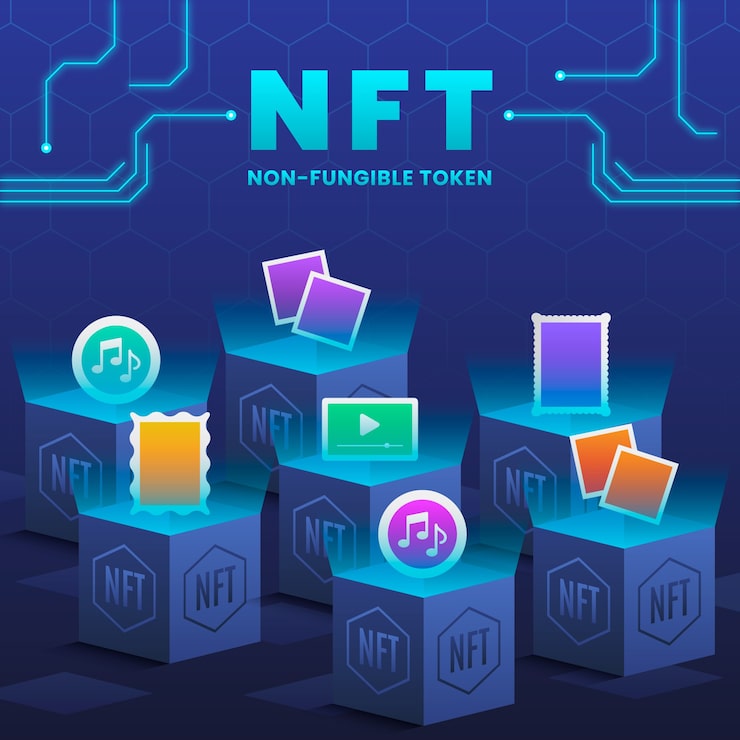
The digital asset landscape has transformed dramatically over the past decade, bringing blockchain technology from obscure technical circles into mainstream conversation. While many people use the terms interchangeably, non-fungible tokens and cryptocurrencies represent fundamentally different types of digital assets with distinct characteristics, use cases, and value propositions. Understanding these differences matters whether you’re considering entering the digital economy as an investor, creator, or simply trying to make sense of the technology reshaping finance and ownership.
Both cryptocurrencies and non-fungible tokens exist on blockchain networks, which creates understandable confusion. They share common technological foundations, including distributed ledger systems, cryptographic security, and decentralized validation mechanisms. However, the similarities largely end there. The core distinction revolves around fungibility, a concept that determines how these assets function, trade, and derive value. This fundamental difference cascades into everything from pricing mechanisms to practical applications, creating two parallel ecosystems within the broader blockchain universe.
Navigating this space requires more than surface-level knowledge. The explosive growth of digital collectibles, decentralized finance platforms, and tokenized assets has created both opportunities and pitfalls. Making informed decisions demands clarity about what you’re actually acquiring when you purchase these digital assets, how they differ in terms of ownership rights, liquidity characteristics, and long-term value retention. This comprehensive guide breaks down the technical and practical differences between these asset classes, providing the foundation you need to understand this evolving digital frontier.
Understanding Fungibility as the Core Distinction
Fungibility represents the property that makes individual units of an asset interchangeable with one another. Traditional currencies exemplify perfect fungibility: one dollar bill holds identical value to any other dollar bill, and they can be exchanged freely without any party losing value. This characteristic makes currencies functional as mediums of exchange, since participants don’t need to evaluate the unique properties of each unit during transactions.
Cryptocurrencies like Bitcoin and Ethereum maintain this fungible nature. One Bitcoin equals any other Bitcoin in value and utility. When you send someone a Bitcoin, it doesn’t matter which specific Bitcoin you transfer, the recipient receives equivalent value regardless. This interchangeability makes cryptocurrencies work as digital money, enabling seamless transactions, predictable pricing, and straightforward valuation.
Non-fungible tokens break this pattern entirely. Each token contains unique identifying information stored in its smart contract metadata, making it distinguishable from every other token. Even within the same collection, individual tokens possess different characteristics, rarity levels, and therefore different market values. This uniqueness mirrors physical collectibles: just as one baseball card differs from another based on the player, condition, and rarity, each non-fungible token stands as a distinct digital asset.
Technical Architecture and Smart Contract Differences
The underlying technical implementation differs significantly between these asset types. Cryptocurrencies typically follow token standards like ERC-20 on Ethereum or similar protocols on other blockchains. These standards define how tokens behave, ensuring uniform functionality across all units. The smart contracts governing cryptocurrencies focus on basic operations: tracking balances, enabling transfers, and managing total supply.
Non-fungible tokens employ different standards, most notably ERC-721 and ERC-1155 on Ethereum. These protocols accommodate unique metadata for each token, allowing individualized properties, ownership history, and specific attributes. The smart contracts become more complex, managing not just ownership transfers but also royalty mechanisms, attribute verification, and provenance tracking. This additional complexity enables the unique characteristics that define non-fungible assets but also introduces different security considerations and gas fee structures.
The metadata architecture represents another crucial technical difference. Cryptocurrency transactions require minimal data: sender address, recipient address, and amount. Non-fungible token transactions must reference specific token identifiers and often link to external storage systems containing images, videos, or other media files. This reliance on off-chain storage creates dependencies that don’t exist with cryptocurrencies, affecting long-term preservation and accessibility.
Valuation Mechanisms and Price Discovery
Cryptocurrencies benefit from relatively straightforward valuation. Market forces establish a single price at any given moment for each cryptocurrency across exchanges. While prices fluctuate based on supply and demand dynamics, network utility, adoption rates, and broader market sentiment, participants can easily determine current value by checking exchange listings. This price transparency facilitates trading, enables simple portfolio tracking, and allows for standardized financial products.
Non-fungible token valuation operates through entirely different mechanisms. Since each token possesses unique characteristics, no universal price exists. Valuation depends on subjective factors including artistic merit, rarity within collections, historical significance, creator reputation, and community perception. Two tokens from the same collection might differ in value by orders of magnitude based on specific traits. This subjectivity creates challenges for buyers, who must evaluate individual pieces rather than relying on market-wide pricing.
Comparable sales provide the primary valuation method for non-fungible tokens, similar to real estate appraisal. Buyers examine recent transactions for similar pieces, considering trait rarity, floor prices for collections, and historical price trends. This process requires significantly more research and expertise than purchasing cryptocurrencies, where current market prices provide clear reference points. The lack of price standardization also complicates tax reporting, insurance, and collateralization.
Liquidity Profiles and Trading Dynamics
Liquidity represents a critical practical difference between these asset classes. Major cryptocurrencies trade with substantial volume across numerous exchanges, enabling quick conversion to fiat currency or other digital assets. This deep liquidity means sellers can typically exit positions rapidly without significant price impact, especially with established cryptocurrencies that maintain high trading volumes and tight bid-ask spreads.
Non-fungible tokens face inherent liquidity constraints. Finding buyers for specific pieces requires matching someone who values that particular token’s unique characteristics at the seller’s asking price. This process can take days, weeks, or may never occur for less desirable pieces. Even highly sought-after collections experience periods where specific traits find no buyers at any price. This illiquidity introduces carrying costs and exit risks absent from cryptocurrency holdings.
The marketplace infrastructure reflects these liquidity differences. Cryptocurrency exchanges operate continuously with automated market makers and order books facilitating instant transactions. Non-fungible token platforms function more like auction houses or classified listings, where sellers list pieces and wait for interested buyers. Some platforms have introduced innovations like fractional ownership and liquidity pools, but these solutions haven’t achieved the seamless trading experience available for cryptocurrencies.
Use Cases and Practical Applications
Cryptocurrencies serve primarily as digital money, stores of value, and medium of exchange. Bitcoin proponents position it as digital gold, emphasizing scarcity and value preservation. Ethereum and similar platforms extend functionality through smart contracts, enabling decentralized applications and programmable money. Stablecoins provide price stability for everyday transactions. These use cases center on financial functionality: payments, remittances, savings, and increasingly, yield generation through staking and lending protocols.
Non-fungible tokens address completely different needs centered on digital ownership and provenance. Digital artists use them to monetize creations and establish scarcity in inherently copyable mediums. Collectors acquire them for aesthetic appreciation, cultural participation, or speculative investment. Gaming platforms integrate them as items, characters, or virtual real estate. Musicians release exclusive content. Event organizers issue them as tickets. Brands create digital collectibles for customer engagement. These applications focus on uniqueness, authenticity, and ownership rights rather than financial transactions.
The practical implications extend to how people interact with these assets. Cryptocurrency holders generally view tokens as investment vehicles or transaction tools, tracking prices and market conditions. Non-fungible token owners often develop emotional attachments to specific pieces, display them in virtual galleries, use them as profile pictures, or integrate them into online identities. This shift from purely financial instruments to cultural artifacts represents a fundamental difference in user engagement and value perception.
Storage and Security Considerations
Both asset types require digital wallets for storage, but security considerations differ in important ways. Cryptocurrency wallets need to protect private keys that control fungible assets. Security practices focus on seed phrase protection, hardware wallet usage, and avoiding phishing attacks. Since all units hold equivalent value, the primary concern involves preventing unauthorized access to the entire wallet balance.
Non-fungible token security introduces additional considerations. Beyond protecting wallet access, owners must verify token authenticity, since scammers create counterfeit versions of popular collections. Contract addresses must be verified before purchase to avoid fake tokens. The connection between tokens and off-chain metadata creates vulnerability if hosting services fail or links break. Some collections have experienced metadata manipulation or storage failures, rendering tokens valueless despite valid blockchain ownership records.
The insurance landscape reflects these different risk profiles. Cryptocurrency insurance primarily covers exchange hacks and custody failures. Non-fungible token insurance must address authenticity verification, metadata preservation, and subjective valuation challenges. This complexity makes comprehensive coverage rare and expensive compared to cryptocurrency holdings.
Market Maturity and Regulatory Environment
Cryptocurrencies have achieved greater regulatory clarity and market maturity. Governments worldwide have established frameworks treating them as property, commodities, or securities depending on characteristics. Tax treatment follows established principles, with capital gains applying to appreciation. Financial institutions increasingly offer custody services, futures contracts, and investment products. This regulatory structure, while still evolving, provides baseline certainty for participants.
Non-fungible tokens occupy murkier regulatory territory. Classification questions persist regarding whether specific tokens constitute securities, collectibles, or entirely new asset categories. Tax treatment remains inconsistent, with questions about like-kind exchanges, wash sale rules, and valuation methodologies. Intellectual property rights add complexity, since owning a token doesn’t necessarily convey copyright or reproduction rights for associated media. These uncertainties create risks for buyers and sellers navigating evolving legal frameworks.
Market infrastructure maturity shows similar disparities. Cryptocurrency markets operate with established exchanges, price feeds, derivatives markets, and lending protocols. Professional market makers provide liquidity and arbitrage opportunities. Non-fungible token markets remain fragmented across platforms with inconsistent standards, limited price discovery mechanisms, and nascent financial infrastructure. This immaturity introduces inefficiencies but also opportunities as the market develops.
Environmental and Economic Impact
The environmental footprint differs between these assets primarily based on blockchain infrastructure rather than asset type. Both cryptocurrencies and non-fungible tokens on proof-of-work networks like Bitcoin or pre-merge Ethereum consumed substantial energy. Ethereum’s transition to proof-of-stake dramatically reduced energy consumption for both asset types on that network. The choice of underlying blockchain matters more than whether assets are fungible or non-fungible for environmental considerations.
Economic impact manifests differently across these asset classes. Cryptocurrencies affect monetary policy, cross-border payments, financial inclusion, and banking industry disruption. They challenge traditional currency monopolies and enable new financial architectures. Non-fungible tokens primarily impact creative industries, providing artists direct monetization channels and enabling new forms of digital expression. They’ve created economic opportunities for creators while disrupting traditional gallery systems and intermediaries.
The wealth distribution patterns also differ. Cryptocurrency holdings, while concentrated, allow broad participation through fractional purchases. Anyone can buy small amounts of major cryptocurrencies regardless of budget. Non-fungible tokens from prominent collections often require substantial capital, creating higher barriers to entry. This dynamic has implications for market accessibility and democratization claims surrounding blockchain technology.
Investment Characteristics and Risk Profiles
Investment dynamics diverge significantly between these asset classes. Cryptocurrency investment relies on network adoption, technological development, regulatory acceptance, and macroeconomic factors. Investors analyze metrics like transaction volume, active addresses, developer activity, and institutional adoption. Diversification across multiple cryptocurrencies follows portfolio theory similar to traditional equity investing, balancing established projects against higher-risk emerging protocols.
Non-fungible token investment incorporates elements of art collecting, venture speculation, and cultural trend analysis. Due diligence examines creator reputation, community strength, roadmap execution, and cultural relevance. Rarity tools help evaluate trait distribution within collections. Investment returns depend heavily on correctly anticipating cultural movements and community sustainability. This subjective analysis differs fundamentally from the quantitative metrics used for cryptocurrency evaluation.
Risk profiles reflect these different dynamics. Cryptocurrency volatility stems from market-wide sentiment, regulatory announcements, technological vulnerabilities, and adoption cycles. Individual projects may fail, but established cryptocurrencies benefit from network effects and first-mover advantages. Non-fungible token risk concentrates in specific pieces and collections, which can become worthless if communities dissolve or cultural interest shifts. The lack of intrinsic utility for many non-fungible tokens increases vulnerability to preference changes.
Interoperability and Cross-Chain Considerations
Cryptocurrencies have developed robust cross-chain infrastructure enabling transfers between different blockchain networks. Bridges, wrapped tokens, and atomic swaps allow value movement across ecosystems. This interoperability enhances utility, enabling users to access different platforms while maintaining asset exposure. Decentralized exchanges facilitate seamless trading between cryptocurrencies on various networks, creating an increasingly interconnected ecosystem.
Non-fungible tokens face greater interoperability challenges. Each token exists natively on a specific blockchain with unique metadata standards and smart contract implementations. Moving non-fungible tokens between chains requires complex bridging mechanisms that may not preserve all attributes or recognition. Gaming assets designed for one platform typically don’t function in different games despite theoretical composability. These limitations constrain the portable digital ownership vision often associated with non-fungible tokens.
Standards development progresses differently for these asset types. Cryptocurrency standards achieve broad adoption relatively quickly since interoperability directly benefits all participants. Non-fungible token standards fragment across competing approaches, with different platforms prioritizing different features. This fragmentation slows ecosystem development but allows experimentation with novel approaches to digital ownership and attribute definition.
Community Dynamics and Social Elements

Community formation patterns differ markedly between cryptocurrencies and non-fungible tokens. Cryptocurrency communities typically organize around technological beliefs, economic theories, or specific use cases. Discussions focus on protocol development, adoption metrics, and market analysis. Community members share ideology about decentralization, financial sovereignty, or specific technical approaches. These communities form around shared intellectual or financial interests rather than cultural identity.
Non-fungible token communities often resemble fan clubs or social groups centered on shared ownership and cultural participation. Profile pictures signal membership and status within communities. Discord servers and social media channels facilitate relationship building beyond financial interest. Many projects incorporate exclusive access, events, or collaborative governance that strengthen social bonds. This community structure emphasizes belonging and identity formation alongside financial considerations.
The creator relationship varies significantly. Most cryptocurrencies operate as decentralized protocols without central creators maintaining ongoing involvement. Development teams may guide early stages, but successful cryptocurrencies transition to community governance. Non-fungible token projects frequently maintain strong creator presence, with founding teams driving roadmap execution, community engagement, and ongoing development. This centralization creates different dynamics regarding trust, accountability, and long-term sustainability.
Future Development Trajectories
Cryptocurrency development focuses on scalability, interoperability, regulatory compliance, and expanded financial functionality. Layer-two solutions address transaction speed and cost issues. Privacy features balance transparency with confidentiality needs. Integration with traditional finance through custody solutions, ETFs, and payment processing expands accessibility. The trajectory points toward cryptocurrencies becoming standard components of diversified portfolios and payment infrastructure.
Non-fungible token evolution explores utility expansion beyond static collectibles. Dynamic tokens that change based on external data offer new possibilities. Integration with virtual reality environments promises immersive experiences tied to token ownership. Fractional ownership models address liquidity limitations. Physical item authentication and supply chain tracking extend applications beyond digital native use cases. The development path emphasizes expanding utility and real-world integration rather than purely speculative assets.
Convergence between these asset types may occur as technology develops. Cryptocurrencies could incorporate unique attributes for specific use cases. Non-fungible tokens might develop more liquid secondary markets with improved price discovery. Hybrid models combining fungible and non-fungible characteristics address limitations of pure approaches. Despite convergence possibilities, fundamental differences in fungibility and use cases will likely maintain distinct categories serving different needs.
Conclusion
The distinction between non-fungible tokens and cryptocurrencies extends far beyond technical specifications into fundamental differences in purpose, valuation, liquidity, and user engagement. Cryptocurrencies function primarily as digital money and investment vehicles, offering fungible units with transparent pricing and deep liquidity. Non-fungible tokens serve as unique digital assets emphasizing ownership, authenticity, and cultural participation, with subjective valuations and limited liquidity.
Understanding these differences matters for anyone engaging with blockchain technology. Investment strategies, risk management approaches, and use cases diverge completely between asset classes despite shared technological foundations. Cryptocurrencies suit those seeking liquid financial instruments with relatively transparent pricing mechanisms. Non-fungible tokens appeal to collectors, creators, and participants interested in digital culture and unique ownership experiences.
Both asset types will likely continue evolving as blockchain technology matures and finds broader adoption. Regulatory frameworks will develop greater clarity, infrastructure will improve, and use cases will expand. However, the core distinction of fungibility will persist, maintaining separate ecosystems serving different human needs. Success in this space requires recognizing these fundamental differences and aligning participation with appropriate expectations, risk tolerance, and objectives. Whether you engage with cryptocurrencies, non-fungible tokens, or both, informed understanding of their distinct characteristics provides the foundation for meaningful participation in the digital asset economy.
How Fungibility Separates NFTs from Traditional Cryptocurrencies
The concept of fungibility stands as the fundamental dividing line between non-fungible tokens and traditional cryptocurrencies. Understanding this distinction requires moving beyond technical jargon and examining how these digital assets function in practical scenarios. When you hold a Bitcoin or Ethereum token, you possess something that can be exchanged one-to-one with an identical unit. This interchangeability defines fungible assets. Non-fungible tokens operate under completely different principles, where each token carries unique characteristics that cannot be replicated or substituted.
Consider the traditional currency sitting in your wallet. A ten-dollar bill holds the same value as any other ten-dollar bill. You can exchange it freely without losing purchasing power. This property extends to digital currencies like Bitcoin, where one BTC equals another BTC regardless of its history or origin. The blockchain records transactions, but the tokens themselves remain indistinguishable in terms of their inherent value and utility.
Non-fungible tokens break this mold entirely. Each token contains metadata that distinguishes it from every other token in existence. This metadata might include ownership history, creator information, visual attributes, rarity scores, or utility features specific to that particular asset. Two NFTs from the same collection may appear similar, but their token IDs and blockchain records identify them as separate, unique entities.
The Technical Foundation of Fungibility in Digital Assets
Traditional cryptocurrencies operate on token standards designed for fungibility. The ERC-20 standard on Ethereum creates tokens where each unit functions identically. Developers building payment systems, decentralized exchanges, or lending protocols rely on this uniformity. Smart contracts can process these tokens without checking individual characteristics because every token behaves predictably within the system.
The mathematical properties underlying fungible cryptocurrencies ensure divisibility and interchangeability. You can split Bitcoin into satoshis, the smallest unit representing one hundred millionth of a Bitcoin. This divisibility allows for precise transactions and micropayments. The network treats these fractional amounts as legitimate units of value, maintaining the fungible nature across all denominations.
Non-fungible tokens utilize different token standards, primarily ERC-721 and ERC-1155 on Ethereum. These standards create unique identifiers for each token, embedding distinctiveness at the protocol level. The smart contract tracks individual tokens rather than aggregate balances. When you transfer an NFT, you move a specific, identifiable asset with its complete history and characteristics intact.
The blockchain architecture supporting non-fungible tokens requires additional data storage compared to fungible cryptocurrencies. Each token needs space for metadata that might include IPFS hashes pointing to artwork, JSON files containing attributes, or provenance records documenting ownership changes. This technical complexity reflects the fundamental purpose of maintaining uniqueness across the token lifecycle.
Market Dynamics and Price Discovery Mechanisms
Fungible cryptocurrencies benefit from straightforward price discovery. Market forces aggregate supply and demand across millions of identical tokens, creating clear price signals. Exchanges display a single price for Bitcoin because every unit trades at the same value. Traders can execute large orders with confidence that each token purchased carries identical worth and utility.
The market for non-fungible tokens operates through completely different mechanisms. Each asset requires individual valuation based on subjective factors including artistic merit, cultural significance, utility features, rarity traits, and collector demand. Two NFTs from the same collection might trade at vastly different prices depending on their specific attributes. A rare trait combination can command premiums of ten times or more compared to common variations.
Liquidity patterns reveal another stark contrast between these asset classes. Fungible cryptocurrencies maintain deep order books on exchanges, allowing instant conversion to other assets at transparent prices. The high trading volume ensures minimal slippage even for substantial transactions. Market makers provide continuous liquidity by offering to buy and sell at tight spreads.
Non-fungible token liquidity remains fragmented and unpredictable. Finding a buyer for a specific NFT might take days, weeks, or longer depending on market conditions and asset desirability. Sellers often list items at asking prices that may or may not reflect actual market interest. The absence of fungibility means traditional market-making strategies fail to translate effectively to NFT trading.
Ownership Rights and Asset Utilization
The non-fungible nature of NFTs enables unique ownership structures impossible with traditional cryptocurrencies. When you acquire an NFT, you gain verifiable ownership of a specific digital item with defined characteristics. This ownership might convey intellectual property rights, access privileges, membership status, or utility within applications and games. The token serves as a certificate authenticating your claim to that particular asset.
Traditional cryptocurrencies function primarily as mediums of exchange, stores of value, or governance instruments. Holding Bitcoin doesn’t grant ownership of a unique item; it represents a stake in the network’s value and utility. The tokens facilitate transactions, enable participation in decentralized finance protocols, or allow voting on network proposals. Their fungibility ensures these functions operate smoothly without requiring individual token tracking.
Smart contract interactions differ significantly based on asset fungibility. DeFi applications built for cryptocurrencies process tokens as interchangeable units. A lending protocol accepts any USDC token as collateral because each unit provides identical value and security. The system calculates positions based on aggregate balances without concerning itself with specific token identities.
Applications incorporating non-fungible tokens must account for individual asset characteristics. A gaming platform might grant different abilities based on specific NFT traits. Virtual world applications check ownership of particular land parcels identified by unique coordinates and token IDs. Marketplace contracts verify authenticity by examining token metadata and provenance before executing trades.
Practical Implications for Users and Collectors
Portfolio management strategies diverge dramatically between fungible and non-fungible digital assets. Cryptocurrency investors track aggregate holdings and average cost basis across identical units. Rebalancing involves selling portions of positions based on target allocations. Tax calculations follow standard accounting methods like first-in-first-out or specific identification of fungible units.
NFT collectors must maintain detailed records for each individual asset. Every token has unique acquisition costs, holding periods, and potential sale prices. Portfolio value assessment requires examining floor prices, rarity rankings, and recent comparable sales for similar items. The non-fungible nature means you cannot simply average your position; each piece demands separate evaluation and decision-making.
Storage and security considerations reflect these fundamental differences. Cryptocurrency holders typically consolidate funds in wallets optimized for security and ease of transaction. The fungibility means tokens can move freely between addresses without affecting their value or characteristics. Cold storage solutions protect aggregate balances rather than individual units.
Non-fungible token storage requires careful organization and display capabilities. Collectors often maintain multiple wallets to segregate collections by theme, value, or intended use. Viewing platforms and galleries help showcase unique pieces with their visual and metadata attributes. Security protocols must prevent theft or loss of specific valuable items that cannot be replaced with equivalent alternatives.
Economic Models and Value Accrual
The fungible nature of traditional cryptocurrencies creates network effects that benefit all holders uniformly. As adoption increases and utility expands, every token appreciates in value proportionally. Market participants trust that their holdings will maintain purchasing power equivalent to any other unit. This predictability supports the use of cryptocurrencies as collateral, payment rails, and reserve assets.
Non-fungible tokens derive value through scarcity, uniqueness, and cultural significance rather than pure network effects. A popular NFT collection might see floor prices rise as demand increases, but individual pieces appreciate at different rates based on their specific traits. Rare items might multiply in value while common variations stagnate. The subjective nature of art and collectibles means value accrual follows less predictable patterns.
Monetary premium accumulation works differently across these asset categories. Bitcoin advocates argue for digital scarcity creating store-of-value properties comparable to gold. The fungibility ensures uniform value recognition globally. Any Bitcoin can flow freely through payment channels, exchanges, and custody solutions without friction from uniqueness concerns.
Non-fungible tokens cannot serve as general money precisely because of their unique characteristics. While specific NFTs might command high prices, they lack the universal acceptability required for monetary functions. A rare digital artwork might sell for millions, but you cannot easily split it for everyday transactions or expect merchants to accept it as payment at established exchange rates.
Creator Economics and Royalty Structures
Artists and creators interact with these asset types through distinct economic models. Musicians launching fungible tokens typically distribute identical units to fans for governance, access, or revenue sharing. Each token holder enjoys equivalent rights and benefits. The fungibility ensures fair treatment across the community without privileging specific token holders based on which particular units they acquired.
NFT creators embed uniqueness into their work, often designing collections with intentional rarity tiers and trait variations. This approach enables nuanced pricing strategies where different pieces appeal to various collector segments. Creators can reserve rare items for special releases or reward loyal community members with distinguished pieces that carry additional prestige.
Royalty mechanisms function differently across fungible and non-fungible contexts. Cryptocurrency projects might distribute governance tokens to early supporters, but these tokens trade freely without ongoing creator compensation. Once distributed, the fungible tokens operate independently of their originators except for governance proposals affecting the protocol.
Non-fungible token standards allow creators to program perpetual royalties into smart contracts. Every time an NFT resells on compatible marketplaces, the original creator receives a percentage of the transaction value. This ongoing revenue stream connects creator success to the secondary market performance of their unique pieces. The non-fungible nature enables tracking and enforcing these royalty structures for individual assets.
Interoperability and Cross-Platform Functionality
Fungible cryptocurrencies move seamlessly across platforms and applications precisely because of their interchangeable nature. Decentralized exchanges can pool liquidity from multiple sources, knowing every token functions identically. Bridging solutions transfer value across blockchain networks by locking tokens on one chain and minting equivalent amounts on another. The fungibility ensures these wrapped versions maintain utility and acceptance.
Non-fungible tokens face interoperability challenges rooted in their uniqueness. Moving an NFT across blockchains requires preserving not just ownership records but also metadata, provenance, and any utility tied to specific networks. Some assets derive value from their existence on particular chains due to community preferences, security characteristics, or integration with platform-specific applications.
Composability in decentralized finance relies heavily on token fungibility. Protocols stack together seamlessly because they process standardized, interchangeable units. A user can deposit fungible tokens as collateral, borrow against that position, swap the borrowed assets, and provide liquidity to earn yields–all without individual token tracking or uniqueness concerns.
Gaming and metaverse applications increasingly incorporate non-fungible tokens as unique items, characters, or property. These integrations must account for specific attributes programmed into each token. A game might recognize that a particular NFT grants special abilities based on its trait combination. Cross-game compatibility requires coordinated standards for interpreting unique asset characteristics across different virtual environments.
Regulatory Perspectives and Classification Challenges
Regulators examining digital assets grapple with categorization questions where fungibility plays a central role. Fungible cryptocurrencies that function primarily as payment systems or stores of value might fall under commodity regulations. Those offering investment contracts tied to specific enterprise efforts could be classified as securities. The uniform nature of these tokens simplifies regulatory analysis in some respects because all units behave identically.
Non-fungible tokens present complex classification scenarios that often require case-by-case analysis. An NFT representing fractional ownership in real estate might be a security. Digital artwork sold as a collectible could be classified as property. Tokens granting access to services might be considered something else entirely. The unique characteristics of each NFT complicate attempts to create broad regulatory frameworks.
Tax treatment differs significantly between fungible and non-fungible digital assets in many jurisdictions. Cryptocurrency trades often follow capital gains frameworks similar to securities, with like-kind exchange rules and wash sale considerations. The fungibility allows taxpayers to use accounting methods that aggregate positions and calculate average cost basis.
NFT taxation requires tracking individual asset acquisition costs, holding periods, and disposition values. Each sale or trade represents a unique transaction with its own tax implications. Collectors cannot simply offset gains and losses across similar items without specific identification of which pieces were acquired and disposed. The administrative burden increases substantially compared to fungible cryptocurrency portfolios.
Insurance and Risk Management Considerations
Cryptocurrency custody solutions and insurance products benefit from asset fungibility. Custodians can implement security measures protecting aggregate balances without tracking individual token units. Insurance policies cover losses based on the fiat value of stolen or lost cryptocurrencies, with straightforward claims processes that reference market prices at the time of loss.
Insuring non-fungible token collections requires appraisal methods borrowed from traditional art and collectibles markets. Each piece needs individual valuation considering factors like provenance, creator reputation, rarity, and recent comparable sales. Claims processes must verify the specific items lost and determine appropriate compensation based on their unique characteristics rather than standardized market prices.
Risk profiles vary substantially between these asset classes. Cryptocurrency investors face market volatility, regulatory uncertainty, and technology risks that affect all tokens uniformly. While prices fluctuate, the fundamental nature of the asset remains consistent. Risk management strategies can employ hedging instruments that rely on the fungibility of underlying tokens.
Non-fungible token holders confront additional risks stemming from uniqueness. A specific NFT might lose value if its creator faces controversy, the associated platform fails, or collector interest shifts to different projects. These idiosyncratic risks cannot be easily hedged because no perfect substitutes exist. Portfolio diversification across multiple unique pieces helps mitigate concentration risk but requires larger capital outlays than achieving similar diversification with fungible tokens.
| Characteristic | Fungible Cryptocurrencies | Non-Fungible Tokens |
|---|---|---|
| Interchangeability | Complete substitutability between units | Each token uniquely identifiable and distinct |
| Divisibility | Can be split into smaller fractional units | Typically indivisible whole units |
| Price Discovery | Single market price for all units | Individual valuation for each asset |
| Liquidity | High liquidity with tight bid-ask spreads | Variable liquidity depending on specific asset |
| Use Case | Currency, store of value, DeFi collateral | Digital art, collectibles, gaming items, credentials |
| Token Standards | ERC-20, BEP-20, similar fungible standards | ERC-721, ERC-1155, unique identifier standards |
| Ownership Rights | Proportional share of network value | Specific item with defined attributes and history |
| Market Structure | Centralized and decentralized exchanges | NFT marketplaces with listing-based models |
Evolution of Hybrid Models and Future Developments
Innovation at the intersection of fungible and non-fungible tokens continues expanding the design space for digital assets. Fractional ownership platforms allow multiple investors to hold shares in high-value NFTs, creating fungible tokens backed by unique underlying assets. These models attempt to combine the liquidity benefits of fungibility with the uniqueness and cultural value of non-fungible items.
Semi-fungible tokens represent another evolutionary step, particularly relevant for gaming and virtual goods. These assets might start as fungible items like currency or generic resources, then transform into non-fungible equipment with unique upgrade paths based on player interaction. The ERC-1155 standard enables efficient batch transfers of both fungible and non-fungible tokens within single transactions.
Dynamic NFTs introduce programmable characteristics that change based on external data or user interaction while maintaining core uniqueness. A digital pet might evolve over time, a sports collectible could update with current season statistics, or artwork might respond to market conditions. These innovations preserve non-fungibility while adding layers of complexity and utility impossible with static tokens.
The distinction between fungible and non-fungible assets may blur in certain contexts as technology advances. Developers experiment with tokens that possess both standardized value components and unique attribute layers. Understanding the fundamental principle of fungibility remains essential even as hybrid models emerge, because the core trade-offs between interchangeability and uniqueness persist regardless of technical sophistication.
Community and Social Dynamics
Cryptocurrency communities form around shared economic incentives and protocol governance. Holders of fungible tokens unite around beliefs about monetary policy, network development, and ecosystem growth. The identical nature of their holdings creates common interests. Community decisions affect all
Question-answer:
Can I convert my NFT into regular cryptocurrency like Bitcoin or Ethereum?
You cannot directly convert an NFT into cryptocurrency in the same way you would exchange one coin for another. NFTs are unique digital assets that must be sold on a marketplace to someone willing to buy them. Once sold, you receive cryptocurrency (usually Ethereum) as payment. The process involves listing your NFT, finding a buyer, and completing the transaction through a platform like OpenSea or Rarible. The amount you receive depends on what buyers are willing to pay, which can be higher or lower than your original purchase price. This differs significantly from cryptocurrencies, which have established market rates and can be instantly exchanged on any trading platform.
Why do NFTs use blockchain if they’re so different from crypto?
NFTs and cryptocurrencies both use blockchain technology because it provides proof of ownership and transaction history. The blockchain acts as a permanent ledger that records who owns what and tracks every transfer. For NFTs, this is particularly valuable because it verifies authenticity and provenance of unique items. While cryptocurrencies use blockchain to track fungible tokens that all have equal value, NFTs use the same technology to track one-of-a-kind assets. Think of it as using the same recording system for two different purposes: one tracks identical coins, the other tracks unique collectibles.
Do NFTs and cryptocurrencies have the same tax implications?
Tax treatment for NFTs and cryptocurrencies can differ depending on your jurisdiction, though both typically qualify as taxable assets. Cryptocurrency trades are usually taxed as capital gains or losses based on the difference between purchase and sale prices. NFTs follow similar principles but may have additional considerations since they’re treated as collectibles in some countries, potentially facing higher tax rates. Creating and selling NFTs might be considered income, while buying and reselling could be capital gains. Both require careful record-keeping of transactions, dates, and values. Always consult a tax professional familiar with digital assets in your specific location, as regulations continue to develop.
Can I use cryptocurrency to buy NFTs, and which ones are accepted?
Yes, cryptocurrency is the standard payment method for purchasing NFTs. Ethereum is the most widely accepted cryptocurrency for NFT transactions since most NFT marketplaces operate on the Ethereum blockchain. You’ll need an Ethereum-compatible wallet with sufficient ETH to cover both the NFT price and gas fees (transaction costs). Some platforms also accept other cryptocurrencies like Solana (SOL), Polygon (MATIC), or Binance Coin (BNB), depending on which blockchain they use. A few marketplaces now offer credit card payments, but they convert your fiat currency to crypto behind the scenes. Before purchasing, verify which cryptocurrency the specific marketplace accepts and ensure you have the correct wallet setup.
What makes NFTs maintain value differently than cryptocurrencies?
NFTs and cryptocurrencies derive value from completely different sources. Cryptocurrency value comes from market demand, utility, scarcity, and adoption rates across the entire supply of identical tokens. If you own one Bitcoin, it’s worth exactly the same as any other Bitcoin. NFT value is subjective and individual, based on factors like the creator’s reputation, rarity, cultural significance, community interest, and the specific attributes of that single token. Two NFTs from the same collection can have vastly different values. An NFT might be worthless to most people but priceless to a specific collector. This makes NFT pricing more unpredictable and less liquid than cryptocurrency markets, where millions of identical units trade constantly at consistent prices.
Can I convert my NFT into cryptocurrency or vice versa?
You cannot directly convert an NFT into cryptocurrency in the traditional sense, since they serve fundamentally different purposes. An NFT represents ownership of a specific digital asset and carries unique properties that cannot be exchanged on a one-to-one basis. However, you can sell your NFT on a marketplace for cryptocurrency – typically the same type used to purchase it, such as Ethereum. The selling process involves listing your NFT at a set price or through an auction, and once someone buys it, you receive the cryptocurrency payment minus any platform fees. Going the other way, you can use cryptocurrency to purchase NFTs on various marketplaces. The key difference is that you’re not converting one format into another; rather, you’re engaging in a transaction where cryptocurrency acts as the payment method for acquiring or selling a unique digital item.
Which one is better for investment – NFTs or regular crypto?
The answer depends on your investment goals, risk tolerance, and understanding of each market. Cryptocurrencies like Bitcoin or Ethereum function similarly to traditional currencies or commodities, with prices determined by supply, demand, and market sentiment. They offer higher liquidity, meaning you can buy and sell them quickly at any time. NFTs, on the other hand, represent ownership of specific digital items – artwork, collectibles, or virtual real estate. Their value is subjective and depends on factors like creator reputation, rarity, and cultural relevance. NFTs can be much harder to sell quickly since you need to find someone who wants that particular item at your asking price. Cryptocurrency investments typically suit those looking for more liquid assets with established trading patterns, while NFTs may appeal to collectors or those interested in specific digital art and communities. Many investors hold both, treating cryptocurrencies as their primary digital asset holdings and NFTs as more speculative or collection-based investments.
