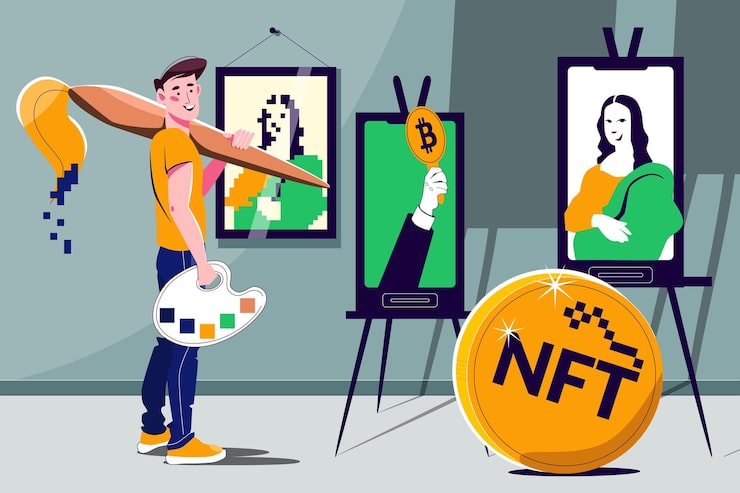
The digital world has introduced concepts that challenge our traditional understanding of ownership and value. When you hand someone a dollar bill and receive another dollar in return, you’ve made an equal exchange. Both bills hold the same value, serve the same purpose, and nobody questions whether you got a fair deal. This simple transaction demonstrates fungibility, a characteristic that’s been fundamental to commerce for thousands of years. But what happens when digital items refuse to play by these established rules?
Non-fungible tokens have emerged as a revolutionary technology that transforms how we think about digital ownership. Unlike cryptocurrencies such as Bitcoin or Ethereum, where each coin is identical and interchangeable, these tokens represent something entirely different. Each one carries distinct characteristics that cannot be replicated or substituted. This fundamental difference has created new markets, sparked intense debates, and opened possibilities that seemed impossible just a few years ago.
Understanding the distinction between fungible and non-fungible assets isn’t just academic exercise. It affects how we value digital art, how games manage virtual items, how musicians distribute their work, and how collectors prove authenticity in an increasingly digital world. The implications reach far beyond simple definitions, touching on questions of scarcity, ownership, and what it means to possess something that exists only as code on a blockchain.
Understanding Fungibility in Traditional and Digital Markets
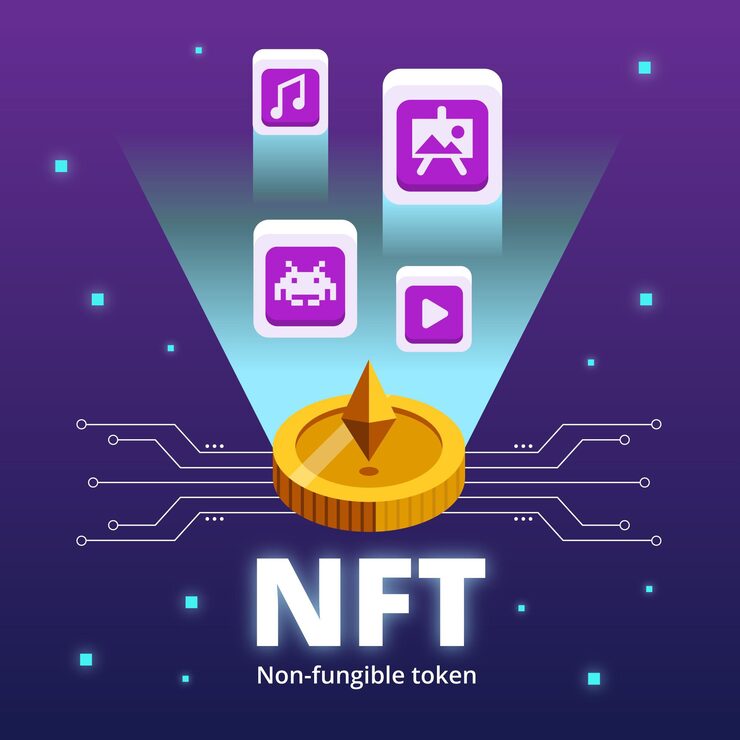
Fungibility describes the property of goods or assets whose individual units are essentially interchangeable. Traditional money exemplifies this concept perfectly. A twenty-dollar bill in your wallet has the same purchasing power as any other twenty-dollar bill. The specific serial number doesn’t matter when you’re buying groceries or paying for services. This interchangeability makes currency practical for everyday transactions and serves as the foundation for modern economic systems.
Commodities like gold, oil, and wheat also demonstrate fungibility. One barrel of crude oil of a specific grade is equivalent to another barrel of the same grade. Farmers don’t sell individual grains of wheat; they sell quantities measured by weight because each grain is functionally identical to the next. This standardization enables efficient markets where buyers and sellers can trade without inspecting every individual unit.
When digital currencies entered the scene, they maintained this fungible characteristic. Bitcoin operates on the principle that every bitcoin equals every other bitcoin. If you lend someone one bitcoin and they return a different bitcoin, you’ve received exactly what you lent. The blockchain records the transaction, but the specific coins involved don’t matter because they’re interchangeable. This fungibility makes cryptocurrencies function as intended: as digital money that can flow freely through the economy.
The same principle applies to tokens on various blockchain networks. ERC-20 tokens on the Ethereum network, for instance, are fungible by design. If you hold tokens from a particular project, each token in your wallet is identical to every other token from that same project. This standardization allows them to be traded on exchanges, used in decentralized finance protocols, and transferred between users without any loss of value or functionality.
The Emergence of Non-Fungible Digital Assets

Non-fungible tokens broke the mold by introducing uniqueness into the digital realm. Each token contains specific metadata that distinguishes it from every other token, even those from the same collection or project. This individuality mirrors how physical collectibles work. Your signed baseball card isn’t equivalent to another person’s signed card, even if they’re from the same set. The signature, condition, and provenance make each card unique and potentially more or less valuable than others.
The technical implementation relies on smart contracts that store unique information for each token. On Ethereum, the ERC-721 standard established the blueprint for creating these distinctive digital assets. Each token receives a unique identifier, and the smart contract maintains records of ownership, characteristics, and transaction history. This data structure ensures that no two tokens are identical, even if they might appear visually similar.
Unlike fungible tokens where quantity matters most, non-fungible tokens emphasize individual characteristics. A collection might contain ten thousand items, but each one possesses specific attributes that make it distinct. These attributes might include visual traits, rarity levels, functional capabilities in games or applications, or historical significance based on previous ownership. The combination of these factors determines each token’s unique identity and market value.
The technology solves a problem that plagued digital content for decades: perfect replicability. Before blockchain, digital files could be copied infinitely without degradation. A photograph saved on your computer could be duplicated thousands of times, with each copy being identical to the original. This unlimited reproduction made it difficult to establish scarcity or authentic ownership of digital creations. Non-fungible tokens introduced verifiable scarcity and provable ownership to the digital space.
Technical Architecture Behind Token Uniqueness
The blockchain serves as the foundation for establishing and maintaining non-fungibility. Every transaction, ownership change, and metadata update gets recorded permanently on the distributed ledger. This immutable record creates an unbroken chain of provenance that anyone can verify. When you purchase a non-fungible token, the blockchain documents that transaction, linking your wallet address to that specific token’s unique identifier.
Smart contracts govern the rules and behaviors of these tokens. The contract defines what makes each token unique, how they can be transferred, what royalties creators receive on secondary sales, and what permissions owners possess. Developers can program complex logic into these contracts, creating tokens that evolve over time, interact with other tokens, or unlock specific functionality based on ownership.
Metadata storage presents both opportunities and challenges. Some projects store all information directly on the blockchain, ensuring complete decentralization and permanence. This approach, called on-chain storage, means the token’s characteristics and even its visual representation exist entirely within the blockchain infrastructure. However, storing large files on-chain can be prohibitively expensive due to network fees and data limitations.
Many projects adopt hybrid approaches, storing essential identifying information on-chain while hosting larger files on distributed storage systems or traditional servers. The token might contain a unique identifier and a link to the actual artwork or content. This method reduces costs but introduces dependencies on external systems. If the hosting service fails or the creator stops paying for storage, the token might point to nothing. Various solutions like the InterPlanetary File System aim to provide decentralized storage that balances accessibility with permanence.
Real-World Applications Transforming Digital Ownership
Digital art markets experienced the most visible transformation through non-fungible token adoption. Artists who struggled to monetize digital creations found new revenue streams by minting their work as unique tokens. Collectors gained the ability to prove ownership and authenticity in ways impossible with traditional digital files. The technology didn’t just create new markets; it fundamentally changed how we think about owning digital art.
Gaming applications demonstrate the practical utility of non-fungibility beyond collecting. Virtual worlds and games use these tokens to represent items, characters, land parcels, and other in-game assets. Players truly own these items, able to trade them freely or use them across different compatible games. This ownership stands in stark contrast to traditional gaming, where items exist only within the game’s closed ecosystem and revert to the company if they shut down servers.
The music industry explores tokens as tools for artist independence and fan engagement. Musicians mint limited edition releases, offering collectors exclusive content, royalty shares, or special access to events. These tokens create direct relationships between artists and supporters, bypassing traditional intermediaries. Some projects enable fractional ownership of song rights, allowing fans to invest in music they believe will succeed.
Real estate and physical assets are beginning to connect with token technology through tokenization. Property deeds, luxury goods authentication, and supply chain tracking all benefit from the verifiable ownership and transfer history that non-fungible tokens provide. A luxury watch manufacturer might mint a token representing each watch, creating an unforgeable record of authenticity. Real estate transactions could be streamlined by representing property rights as tokens that transfer ownership instantly when conditions are met.
Market Dynamics and Valuation Principles
Pricing non-fungible assets follows different logic than pricing fungible ones. With cryptocurrencies, market prices reflect supply and demand across all units. With non-fungible tokens, each item requires individual valuation based on its specific characteristics. Rarity, aesthetic appeal, utility, historical significance, and creator reputation all influence what someone might pay for a particular token.
Collection dynamics create interesting market behaviors. Projects typically release tokens in sets with varying trait distributions. Common traits appear frequently while rare combinations occur seldom. This designed scarcity drives value differentiation within collections. A token with common traits might sell for the floor price, while rare combinations command premiums that can be orders of magnitude higher.
Liquidity differs dramatically between fungible and non-fungible markets. Cryptocurrency exchanges maintain deep order books where trades execute instantly at market prices. Non-fungible marketplaces function more like auctions or classified listings. Finding a buyer for a specific token might take days, weeks, or might never happen at certain price points. This illiquidity means owners can’t always exit positions quickly, and market prices can be difficult to establish without recent comparable sales.
Secondary market royalties represent a unique feature enabled by smart contract technology. Creators can program their tokens to automatically pay them a percentage of every future sale. If an artist sells a piece for one thousand dollars and it later resells for one hundred thousand dollars, they automatically receive their programmed royalty from that secondary transaction. This mechanism allows creators to benefit from their work’s increasing value over time, something impossible with traditional art sales.
Challenges and Criticisms Facing the Technology
Environmental concerns surround blockchain technology, particularly proof-of-work networks that require significant energy consumption. Minting tokens, transferring ownership, and maintaining the blockchain infrastructure all consume electricity. Critics argue that the environmental cost outweighs the benefits, especially for purely collectible applications. Some networks have transitioned to more energy-efficient consensus mechanisms, while others were designed with sustainability in mind from inception.
Speculation dominates much of the market activity, leading to volatility and criticism that the technology prioritizes financial gain over genuine utility. Projects launch with promises of innovation but amount to little more than gambling mechanisms where early participants hope to sell to later buyers at higher prices. This speculation can obscure legitimate applications and creates environments where fraud and manipulation thrive.
Intellectual property questions remain murky in many situations. Purchasing a token doesn’t automatically grant copyright to the underlying work unless explicitly stated. Buyers might own the token but lack rights to reproduce, display commercially, or create derivative works from the associated content. Different projects handle rights differently, creating confusion about what ownership actually means. Some grant full commercial rights while others restrict usage, and buyers don’t always understand these distinctions.
Technical barriers limit mainstream adoption. Wallet management, private key security, network fees, and understanding blockchain transactions present obstacles for average users. Losing access to a wallet means permanently losing all associated tokens. Sending tokens to wrong addresses results in irreversible losses. The unforgiving nature of blockchain transactions and the technical knowledge required to participate safely keep many potential users on the sidelines.
Interoperability and Cross-Platform Functionality
Token standards enable compatibility across different platforms and applications. When projects follow established standards like ERC-721 or ERC-1155 on Ethereum, any wallet or marketplace that supports those standards can interact with the tokens. This standardization creates network effects where tokens become more valuable because they work across diverse ecosystems rather than being locked into single platforms.
Cross-chain bridges attempt to extend this interoperability across different blockchain networks. A token minted on Ethereum might be bridged to Polygon or Solana, allowing it to function in applications on those networks. These bridges lock the original token and mint a representative version on the destination chain. While technically complex and sometimes introducing security risks, bridges expand the utility and reach of non-fungible assets.
Gaming metaverses showcase interoperability’s potential. Imagine using the same avatar across multiple virtual worlds, wearing items purchased in one game while playing another, or bringing weapons earned through achievements into different experiences. Several projects work toward this vision, though technical, economic, and design challenges remain significant. Different games have different art styles, balance considerations, and economic models that don’t always align with universal item portability.
Standards continue evolving to address limitations and enable new capabilities. Extensions to base standards add functionality like bundling multiple tokens, creating semi-fungible tokens that combine characteristics of both types, or implementing more sophisticated permission systems. These developments expand what’s possible while maintaining backward compatibility with existing infrastructure.
Legal and Regulatory Considerations
Regulatory frameworks struggle to keep pace with technological innovation. Governments worldwide are developing approaches to classify and regulate these digital assets, but consensus remains elusive. Some jurisdictions treat them as property, others as securities depending on their characteristics and how they’re marketed, and still others maintain ambiguous or undefined positions. This regulatory uncertainty creates compliance challenges for projects and users alike.
Securities law becomes relevant when tokens promise profit through others’ efforts or share revenue with holders. Regulatory bodies scrutinize whether certain offerings should be registered as securities, subject to investor protection requirements and disclosure rules. Projects that fail to comply face potential enforcement actions, and the line between collectible and investment security isn’t always clear.
Taxation presents complicated questions that vary by jurisdiction. Capital gains taxes might apply when selling tokens at a profit. Creating tokens might trigger tax events. Using tokens to purchase goods or services could be taxable transactions. The unique nature of each token and the detailed transaction history on blockchains create both opportunities and challenges for tax compliance and enforcement.
Consumer protection laws address fraud, misrepresentation, and unfair practices in token sales. Projects that promise utility they never deliver, falsely claim affiliations with brands or celebrities, or manipulate markets through wash trading face legal consequences. However, the pseudonymous nature of blockchain transactions and the international scope of markets make enforcement difficult. Victims of scams often have limited recourse.
The Psychology of Digital Ownership and Collecting
Human beings have collected objects throughout history, driven by desires for status, preservation, aesthetic appreciation, and community belonging. Non-fungible tokens tap into these same psychological motivations while adapting them for digital contexts. Owning a rare token signals taste, wealth, or early adoption similar to how collecting physical art or rare books functions in offline spaces.
Social signaling plays a significant role in token valuation and appeal. Profile picture projects gained popularity partly because ownership could be displayed across social media, serving as a badge of membership in exclusive communities. The public visibility of blockchain ownership makes collecting more social than private, where what you own becomes part of your digital identity and how others perceive you.
The speculative element introduces gambling psychology into collecting behavior. The possibility of discovering undervalued tokens that later increase dramatically in price creates excitement similar to gambling or lottery participation. This can lead to compulsive behaviors, emotional decision-making, and financial losses when speculation overtakes rational assessment of value and risk.
Community dynamics significantly influence individual collecting decisions. Strong communities form around successful projects, creating social bonds between holders and sense of shared identity. These communities organize events, create derivative content, and support each other through market volatility. The social aspects can become more valuable than the tokens themselves, with ownership serving as membership credentials for these digital tribes.
Future Developments and Emerging Trends
Dynamic tokens that change over time represent an evolution beyond static digital assets. Smart contracts can program tokens to evolve based on external data, owner interactions, or the passage of time. An artwork might change colors based on weather data, a character might level up through gameplay achievements, or a token might unlock additional features after being held for certain periods. These programmable characteristics add dimensions of engagement and utility impossible with traditional collectibles.
Artificial intelligence integration opens new creative possibilities. Generative algorithms can create unique outputs for each token at the moment of minting, ensuring true uniqueness even within large collections. AI tools help creators design complex systems where tokens interact, evolve, or respond to their environments in sophisticated ways. However, this also raises questions about authorship and the value of human creativity versus algorithmic generation.
Physical-digital hybrids blur the lines between tangible and virtual ownership. Fashion brands create garments paired with tokens that prove authenticity and enable digital ownership of virtual versions for use in games or social platforms. These hybrid approaches acknowledge that many people still value physical objects while extending utility into digital spaces where the same designs can be worn by avatars.
Social tokens and community governance represent applications beyond traditional collecting. Groups issue tokens that grant voting rights in decentralized organizations, access to exclusive content or spaces, or shares in collective treasuries. These tokens might be non-fungible to represent individual membership status, responsibilities, or reputation within communities. The technology becomes infrastructure for organizing human coordination and collective decision-making.
Comparing Investment Characteristics
Risk profiles differ substantially between fungible cryptocurrencies and non-fungible tokens. Cryptocurrencies offer liquidity and established markets where you can enter and exit positions quickly. Prices fluctuate, sometimes wildly, but markets exist to facilitate trading at any time. Non-fungible tokens carry liquidity risk where finding buyers at acceptable prices might be difficult or impossible. The unique nature that makes them appealing also makes them harder to value and trade.
Diversification strategies work differently with non-fungible assets. With cryptocurrencies, you might spread investments across multiple coins to reduce risk. With tokens, diversification might mean collecting across different projects, blockchain networks, or categories like art, gaming, and virtual land. However, the illiquidity means that even diversified portfolios can’t be quickly rebalanced in response to changing conditions.
Due diligence requirements are more intensive for non-
How Fungibility Works in Traditional Currency and Cryptocurrencies
When you hand someone a ten-dollar bill in exchange for another ten-dollar bill, you haven’t really lost anything. Both bills hold the same value, serve the same purpose, and can be used interchangeably anywhere that accepts cash. This seemingly simple concept represents one of the fundamental principles that makes money work: fungibility. Understanding how this characteristic operates in both traditional financial systems and digital currencies helps clarify why certain digital assets behave differently from others.
Fungibility refers to the property of an asset where individual units are essentially interchangeable with other units of the same type. Each unit holds identical value and can substitute for another without any loss or change in worth. This property isn’t just a nice feature of currency systems; it’s actually essential for how modern economies function on a daily basis.
The Foundation of Traditional Currency Systems
Traditional fiat currencies like the US dollar, Euro, British pound, or Japanese yen exemplify perfect fungibility in action. When you receive a salary payment of five thousand dollars, you don’t care which specific bills or coins make up that amount. A dollar earned in New York carries the same purchasing power as a dollar earned in Los Angeles. The physical wear on a banknote, the year it was printed, or the mint that produced a coin doesn’t alter its fundamental value.
This interchangeability creates several practical advantages. Merchants don’t need to evaluate each individual dollar bill presented to them beyond checking for counterfeits. Banks can process millions of transactions without tracking the history of each physical note. People can split bills, make change, and conduct complex financial operations because every unit of currency maintains consistent value.
Central banks and monetary authorities work deliberately to maintain this fungibility. They establish standards for currency production, remove damaged bills from circulation, and ensure that all legitimate currency units remain equally valid regardless of their physical condition or age. The legal tender laws in most countries explicitly state that creditors must accept the national currency for debt payment, reinforcing this fungible nature.
The banking system extends this fungibility beyond physical cash. When you check your account balance online, you see a number representing your funds, not information about specific dollar bills stored in a vault somewhere. Banks operate on the principle that money is completely interchangeable, allowing them to process transfers, loans, and investments efficiently.
Digital Banking and Electronic Money
The transition to digital banking hasn’t changed the fundamental fungibility of traditional currencies. When you transfer money electronically, you’re moving value, not specific identifiable units. If you send a friend one hundred dollars through a payment app, that hundred dollars came from your available balance, but nobody tracks which particular dollars you earned or received previously.
Electronic payment systems like wire transfers, credit card networks, and mobile payment platforms all rely on fungibility to operate smoothly. The system cares about amounts and account balances, not the identity or history of individual currency units. This approach allows for the massive scale and speed that modern financial networks require.
Even as physical cash usage declines in many economies, the fungible nature of money remains unchanged. Digital representations of dollars, euros, or yen behave exactly like their physical counterparts in terms of interchangeability. The technology might differ, but the underlying economic principle stays constant.
How Bitcoin Introduced Digital Fungibility
Bitcoin emerged as the first successful cryptocurrency, introducing a new form of digital money that operates without central banks or traditional financial intermediaries. Satoshi Nakamoto designed Bitcoin with fungibility in mind, creating a system where units of bitcoin could theoretically function as interchangeable digital cash.
Each bitcoin can be divided into one hundred million smaller units called satoshis, similar to how dollars divide into cents. The Bitcoin protocol treats these units as equivalent, allowing users to send, receive, and store value without the system distinguishing between different coins based on their history or origin.
The blockchain technology underlying Bitcoin records every transaction in a public ledger, creating a transparent history of how bitcoins move between addresses. This transparency serves important purposes for security and verification, but it also introduces interesting complications regarding fungibility that don’t exist with traditional cash.
When you spend physical cash, the recipient typically has no way to know where that money came from previously. Cash transactions offer privacy and anonymity, which contributes to the fungible nature of bills and coins. With Bitcoin, however, anyone can trace the transaction history of any particular bitcoin back through the blockchain to its creation through mining.
The Transparency Paradox in Cryptocurrency
This transparency creates what some call a fungibility problem in cryptocurrencies. While the protocol treats all bitcoins as equal, external factors can cause certain coins to be viewed differently based on their history. Coins that passed through darknet markets, hacking incidents, or other controversial activities might be flagged by exchanges or services.
Some cryptocurrency exchanges and services use blockchain analysis tools to screen incoming transactions. These tools examine the history of coins being deposited, looking for connections to illegal activities, sanctioned addresses, or other red flags. If coins are deemed problematic, the exchange might freeze the account or reject the deposit.
This practice effectively creates tiers of bitcoin based on transaction history, undermining the fungibility that makes currency useful. A bitcoin with a “clean” history might be accepted everywhere, while a bitcoin that previously moved through a mixing service or suspicious address could face scrutiny or rejection.
The situation differs from traditional banking, where similar tracking exists but operates differently. Banks monitor transactions for suspicious activity and money laundering, but they focus on accounts and patterns rather than tracking individual currency units. The money in your bank account doesn’t carry a permanent history that follows it through every subsequent transaction.
Privacy Coins and Enhanced Fungibility
Recognizing the fungibility challenges in transparent blockchains, developers created privacy-focused cryptocurrencies designed to restore the cash-like properties of anonymous transactions. Projects like Monero, Zcash, and others implement various cryptographic techniques to obscure transaction details while maintaining blockchain security.
Monero uses ring signatures, stealth addresses, and other privacy technologies to hide sender information, recipient addresses, and transaction amounts. This approach means that coins cannot be tracked through their history, restoring the fungibility that exists with physical cash. Every unit of Monero appears identical to every other unit because observers cannot distinguish their paths through the network.
Zcash offers optional privacy features using zero-knowledge proofs, which allow transactions to be verified without revealing details about the parties involved or amounts transferred. Users can choose between transparent transactions similar to Bitcoin or shielded transactions that provide privacy.
These privacy features generate debate within the cryptocurrency community and among regulators. Supporters argue that privacy is essential for fungibility and that cryptocurrency should replicate the anonymous properties of cash. Critics raise concerns about enabling illegal activities and money laundering, similar to debates about cash in traditional finance.
Stablecoins and Digital Dollar Equivalents
Stablecoins represent another category of cryptocurrency designed to maintain fungibility while offering the benefits of blockchain technology. These digital assets peg their value to traditional currencies, most commonly the US dollar, creating tokens that aim to behave like digital versions of fiat money.
Popular stablecoins like USDC, USDT, and DAI each implement different mechanisms to maintain their dollar peg, but they all share the goal of creating fungible units that can substitute freely for one another. One USDC token should always equal another USDC token in value, just as one dollar equals another dollar.
However, stablecoins face similar transparency challenges as other blockchain-based assets. Transactions occur on public blockchains, creating permanent records of how tokens move between addresses. Issuers of centralized stablecoins can freeze tokens or blacklist addresses, which can affect fungibility when certain tokens become marked as problematic.
The regulatory environment around stablecoins continues evolving, with authorities examining how these assets should be classified and supervised. Some jurisdictions treat them like money transmission services, while others apply securities regulations or create new frameworks specifically for digital assets.
Central Bank Digital Currencies and Government Approaches
Central banks worldwide are exploring or developing their own digital currencies, known as CBDCs. These projects aim to create official digital versions of national currencies that combine the benefits of electronic payments with the backing and stability of central bank money.
CBDCs would theoretically maintain perfect fungibility like traditional currency, with each digital unit fully interchangeable with any other unit of the same currency. However, the design choices around privacy, programmability, and surveillance capabilities could affect how these digital currencies function in practice.
Some CBDC proposals include features that don’t exist in physical cash, such as expiration dates, spending restrictions, or complete transaction tracking. These capabilities could potentially create situations where certain digital currency units behave differently from others, affecting fungibility.
China’s digital yuan pilot programs demonstrate how central banks might implement these systems, with features that allow authorities to track transactions while maintaining the interchangeability of currency units. The balance between surveillance capabilities and the privacy that supports fungibility remains a key consideration in CBDC development.
The Role of Exchanges and Custodians
Cryptocurrency exchanges and custodial services play a significant role in how fungibility operates in practice. These platforms serve as gateways between traditional finance and cryptocurrency markets, and they often implement compliance measures that can affect which coins are accepted or restricted.
Know Your Customer and Anti-Money Laundering regulations require exchanges to verify user identities and monitor transactions for suspicious activity. This compliance work includes screening cryptocurrency deposits for connections to illegal activities, sanctioned entities, or high-risk sources.
Major exchanges employ blockchain analytics firms that assign risk scores to cryptocurrency addresses and transactions. Coins moving from addresses associated with darknet markets, ransomware payments, or hacking incidents might trigger alerts or blocks, even if the current holder had no involvement in those activities.
This screening creates practical fungibility issues for cryptocurrency users. Someone might receive payment in bitcoin that they later discover has a problematic history, making it difficult to deposit at major exchanges or use with compliant services. Unlike cash, where bills with unknown histories circulate freely, cryptocurrency’s transparent blockchain allows for permanent marking.
Mixing Services and Fungibility Tools
Various services and protocols have emerged to address fungibility concerns in transparent blockchains. Cryptocurrency mixers, also called tumblers, allow users to pool their coins with others and receive different coins in return, breaking the direct link between input and output addresses.
CoinJoin is a mixing technique that combines multiple transactions from different users into a single transaction, making it harder to determine which inputs correspond to which outputs. Several Bitcoin wallets implement CoinJoin features to provide users with enhanced privacy and improve fungibility.
However, using mixing services can itself become a mark against coins. Some exchanges treat any cryptocurrency that passed through mixing services as suspicious, regardless of the user’s intentions. This creates a paradox where attempting to restore fungibility through privacy tools can actually make coins less acceptable to mainstream services.
The tension between financial privacy rights and law enforcement needs continues to shape how these tools develop and how they’re perceived by regulators and service providers. Some jurisdictions have moved to restrict or ban mixing services, while privacy advocates argue these tools are necessary for digital currencies to function properly as money.
Smart Contract Platforms and Token Standards
Ethereum and other smart contract platforms introduced new complexity to cryptocurrency fungibility through their token standards. ERC-20 tokens on Ethereum represent fungible assets where each token is meant to be identical and interchangeable with others of the same type.
These tokens power decentralized finance applications, representing everything from synthetic assets to governance rights to digital versions of real-world assets. The ERC-20 standard ensures that tokens behave consistently across different applications and platforms, maintaining their fungible nature within the Ethereum ecosystem.
However, the same transparency issues that affect Bitcoin also apply to ERC-20 tokens. All transfers occur on the public Ethereum blockchain, creating permanent records that can be analyzed. Token issuers can also implement features like blacklists or whitelists that affect which addresses can hold or transfer tokens.
Some token projects include administrative functions that allow issuers to freeze tokens, reverse transactions, or restrict transfers based on various criteria. While these features might serve legitimate purposes like compliance or security, they can undermine the fungibility that makes tokens useful as currency or exchange media.
The Lightning Network and Second Layer Solutions
Second layer technologies like Bitcoin’s Lightning Network offer different approaches to transaction processing that can affect fungibility considerations. Lightning enables fast, cheap transactions by moving them off the main blockchain, with only opening and closing transactions recorded on-chain.
Lightning transactions occur in payment channels between participants, without every transfer being permanently recorded on the Bitcoin blockchain. This approach provides more privacy than on-chain transactions, since the details of individual Lightning payments aren’t visible to blockchain observers.
The enhanced privacy of Lightning transactions could improve Bitcoin’s fungibility by making it harder to track the history of specific satoshis. However, Lightning is still developing, and questions remain about whether its privacy properties will be sufficient to fully restore cash-like fungibility.
Other second layer solutions and sidechains offer similar potential for enhanced privacy and fungibility. These technologies demonstrate how blockchain systems can layer different properties, with base layers prioritizing security and upper layers optimizing for speed, privacy, or other features.
Regulatory Perspectives on Cryptocurrency Fungibility
Regulators worldwide grapple with how to approach cryptocurrency fungibility and privacy features. Financial authorities generally support the monitoring capabilities that transparent blockchains provide, making it easier to track criminal activities and enforce sanctions.
However, some regulators recognize that excessive surveillance or coin tracking could prevent cryptocurrencies from functioning effectively as payment systems. The Financial Action Task Force has issued guidance on cryptocurrency regulation that attempts to balance law enforcement needs with the practical requirements of digital currency systems.
Different jurisdictions take varying approaches to privacy coins and mixing services. Some countries have banned privacy-focused cryptocurrencies or prohibited exchanges from listing them. Others allow these assets while requiring additional compliance measures from service providers.
The regulatory landscape continues evolving as authorities gain more experience with digital assets and their implications. Future regulations will likely shape how fungibility operates in cryptocurrency markets and whether digital currencies can truly replicate the properties of physical cash.
Practical Implications for Users
For people actually using cryptocurrencies, fungibility issues create real practical considerations. Someone accepting bitcoin as payment might unknowingly receive coins with problematic histories, potentially causing problems when they try to use those coins later.
Users generally can’t easily determine if the cryptocurrency they receive carries any red flags without using specialized blockchain analysis tools. Most people lack the technical knowledge or resources to perform this kind of screening, creating uncertainty in peer-to-peer transactions.
This situation differs significantly from traditional currency, where merchants and individuals don’t worry about the history of the cash they receive. The transparency that makes blockchain technology secure and verifiable simultaneously creates friction in everyday use as a medium of exchange.
Some cryptocurrency advocates argue that these issues will resolve as markets mature and social consensus develops around treating all protocol-valid coins as equal. Others believe technical solutions like improved privacy features will be necessary to achieve true fungibility in digital currencies.
Comparing Digital and Physical Fungibility
The contrast between physical cash and cryptocurrency fungibility reveals fundamental differences in how these systems operate. Physical money achieves fungibility partly through the impossibility of tracking individual bills through countless transactions. Digital currencies achieve transparency through permanent public records, creating tension with fungibility.
Cash can be marked or recorded in specific situations, such as marking bills used in law enforcement operations or recording serial numbers for large withdrawals. However, these practices remain exceptional rather than routine, and the practical difficulty of tracking physical currency supports its fungible nature in everyday use.
Cryptocurrency operates in a completely different environment where every transaction is automatically recorded and publicly accessible forever. This transparency serves important purposes for security, auditability, and trustless operation, but it comes with tradeoffs regarding privacy and fungibility.
The question becomes whether digital currencies can achieve the same practical fungibility as cash while operating on transparent public ledgers. Different projects take different approaches to this challenge, with no clear consensus yet on the best solution.
Conclusion
Fungibility operates as a cornerstone principle in both traditional and digital currency systems, enabling the smooth exchange of value that modern economies require. While physical money achieves this property through physical interchangeability and practical tracking limitations, cryptocurrencies face unique challenges arising from their transparent blockchain foundations.
Traditional currencies benefit from centuries of institutional development and legal frameworks that support their fungible nature. Central banks, commercial banks, and payment processors all operate on the assumption that currency units are perfectly interchangeable, with systems designed around this principle.
Cryptocurrencies introduced new possibilities for digital money while creating new complications around fungibility. The same blockchain transparency that enables trustless transactions and security also allows for permanent transaction tracking that can mark certain coins as more or less desirable based on their history.
Privacy-focused cryptocurrencies, second layer solutions, and various mixing technologies attempt to restore the cash-like fungibility that transparent blockchains compromise. Meanwhile, regulators and compliance professionals push for greater transaction visibility, creating ongoing tension between privacy and oversight.
The future of digital currency fungibility remains
Question-answer:
What’s the actual difference between fungible and non-fungible tokens?
Fungible tokens are interchangeable with one another – think of them like dollar bills. If you have a $10 bill and swap it with someone else’s $10 bill, you still have the same value. Bitcoin and Ethereum work the same way; one Bitcoin equals another Bitcoin. Non-fungible tokens, however, are unique digital assets. Each NFT has distinct properties and metadata that set it apart from others. Even if two NFTs look similar, they have different identification codes and ownership records on the blockchain. This uniqueness means you can’t simply swap one NFT for another and expect equal value.
Can someone explain why NFTs have value if they’re just digital files?
The value comes from verifiable ownership and scarcity, not just the digital file itself. Anyone can screenshot a piece of digital art, but only one person (or entity) holds the verified ownership record on the blockchain. This is similar to how anyone can print a copy of the Mona Lisa, but owning the original painting holds immense value. NFTs provide proof of authenticity and ownership history that can be publicly verified. Collectors value this authenticity, and creators can embed royalties so they earn from future resales. The market determines value based on factors like the creator’s reputation, rarity, utility, and cultural significance.
How do NFTs prove ownership if I can just copy the image?
The blockchain acts as a permanent, public ledger that records who owns what. When you purchase an NFT, a transaction gets recorded showing the transfer from the previous owner to you. This record includes a unique token ID that links to specific metadata about the asset. While anyone can download or copy the image file, they cannot copy the ownership certificate stored on the blockchain. Think of it like owning a signed baseball – thousands of identical baseballs exist, but only yours has the authentic signature with documentation proving its origin. The NFT’s smart contract contains all ownership information, and this data cannot be altered or faked due to blockchain’s cryptographic security.
What makes one NFT worth more than another if they’re both unique?
Several factors influence NFT valuation. Creator reputation plays a major role – an NFT from a well-known artist or brand typically commands higher prices. Rarity matters too; projects often have traits with different scarcity levels, making some pieces more desirable. Historical significance adds value – early NFTs from pioneering collections often appreciate because they represent important moments in crypto history. Utility gives NFTs additional worth; some grant access to exclusive events, communities, or future benefits. Visual appeal and artistic quality affect desirability among collectors. Market demand shifts based on trends, cultural moments, and community strength around specific projects. Provenance, or ownership history, can increase value if the NFT was previously owned by notable collectors or celebrities.
Are there practical uses for NFTs beyond digital art collecting?
Yes, NFTs have applications across many industries. In gaming, they represent ownership of in-game items, characters, or land that players can trade or use across different platforms. Real estate projects use NFTs to represent property ownership or fractional shares in buildings. Music artists issue NFTs that include streaming rights, concert tickets, or exclusive content access. Fashion brands create digital wearables for virtual environments and sometimes pair them with physical items. Educational institutions have started issuing degree certificates as NFTs to prevent fraud and simplify verification. Event organizers use them as tickets that can’t be counterfeited. Supply chain management benefits from NFTs that track product authenticity and movement. Medical records, identity verification, and intellectual property rights management are emerging use cases where the non-fungible nature provides clear advantages over traditional systems.
