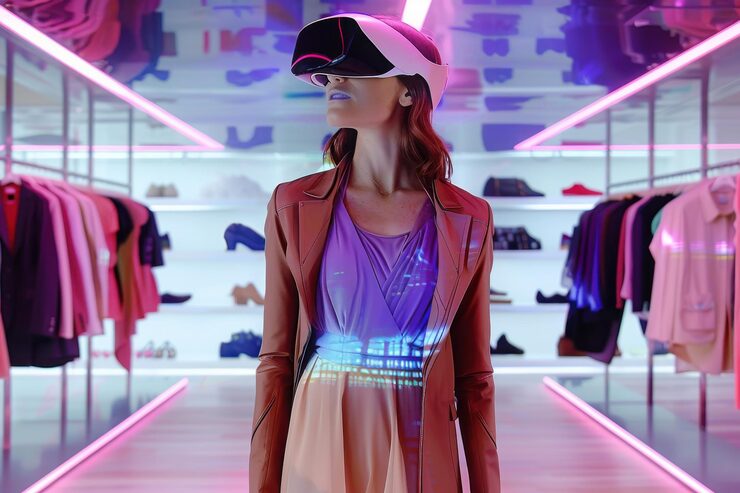
The boundary between physical and digital fashion has collapsed. Walk through any major city, and you’ll see people taking photos in outfits they never actually wore. Scroll through social media, and you’ll notice influencers showcasing garments that exist only as code. This isn’t science fiction anymore. Fashion NFTs have arrived, and they’re fundamentally changing what it means to wear clothing in the first place.
Digital garments started as a novelty, a quirky intersection of technology and style. Now they represent a multi-million dollar market where brands like Gucci, Balenciaga, and Dolce & Gabbana compete alongside digital-native labels. These aren’t just pictures of clothes. They’re verifiable, ownable pieces of fashion secured by blockchain technology. You can collect them, trade them, and most importantly, wear them across virtual spaces and augmented reality platforms.
For anyone new to this space, the concept might sound abstract. How do you wear something that doesn’t physically exist? Why would someone pay real money for pixels? These questions make sense, but they miss the larger shift happening in how we present ourselves. We already spend hours crafting our digital identities through profile pictures, avatars, and curated photo feeds. Fashion NFTs simply give us better tools to express ourselves in the spaces where we’re increasingly spending our time.
Understanding the Technology Behind Digital Fashion

Before diving into how fashion NFTs work, it helps to understand what makes them different from regular digital images. Anyone can screenshot a photo of a dress, but that doesn’t mean they own it. Non-fungible tokens create verifiable ownership records on blockchain networks. When you purchase a fashion NFT, you receive a unique digital certificate that proves you’re the legitimate owner of that specific item.
Think of blockchain as a massive, transparent ledger that thousands of computers maintain simultaneously. Every transaction gets recorded permanently, creating an unchangeable history of who owned what and when. This technology solves a problem that plagued digital goods for decades: proving authenticity and scarcity in a world where copying files costs nothing.
The fashion industry has struggled with counterfeits for generations. Walk through any street market, and you’ll find knockoff designer bags and watches. Digital spaces faced even worse problems because copying a file creates a perfect duplicate. NFT technology changes this equation. Even if someone copies the image file of a digital garment, they can’t replicate the blockchain record proving ownership. It’s like the difference between owning an original Picasso and having a poster of it.
Smart Contracts and Programmable Fashion
What makes fashion NFTs particularly interesting is their programmability. Traditional clothing just sits in your closet, but digital garments can evolve and interact with their environment. Smart contracts are self-executing agreements written into the blockchain. They allow designers to build rules and behaviors directly into their creations.
A digital jacket might change colors based on the time of day. A dress could react to virtual weather conditions in a metaverse environment. Some fashion NFTs grant access to exclusive events or unlock physical merchandise. Designers have created garments that adapt based on how many people view them, or that unlock new features as you wear them across different platforms.
This programmability extends to resale markets too. Creators can embed royalty payments into their NFTs, automatically receiving a percentage whenever someone resells their work. This solves a longstanding problem in fashion where designers rarely benefit from the secondary market. When vintage Chanel sells for thousands at auction, Chanel sees nothing. Fashion NFTs let creators participate in the ongoing value their work generates.
How People Actually Wear Digital Clothing
The practical question remains: where do you actually display these digital garments? The answer spans several growing platforms and use cases, each with its own community and conventions.
Augmented reality applications let you overlay digital clothing onto photos and videos. Companies like DressX and The Fabricant pioneered this approach. You take a photo of yourself in regular clothes, upload it to their platform, and their technology maps a digital garment onto your body. The results can be remarkably convincing, accounting for lighting, perspective, and body movement.
This has practical applications beyond novelty. Fashion shoots traditionally require transporting physical samples, booking locations, coordinating schedules. Digital fashion eliminates these logistics. A photographer in Tokyo can shoot models wearing garments designed in Paris and manufactured nowhere. Marketing campaigns happen faster and cheaper. Models can showcase entire collections without changing clothes once.
Virtual Worlds and Metaverse Platforms
The more immersive application comes through metaverse platforms where users exist as avatars. Games like Fortnite and Roblox have already demonstrated that people will pay real money to customize their digital appearance. Decentraland, The Sandbox, and other blockchain-based virtual worlds take this further by letting users truly own their digital possessions.
In these environments, fashion serves the same social function it does in physical spaces. Your avatar’s appearance communicates identity, status, and taste. Rare or expensive digital garments signal wealth and style just like designer clothing does offline. The difference is that virtual worlds eliminate physical constraints. You can wear avant-garde designs that would be uncomfortable or impossible in reality.
Major brands have recognized this shift. Nike acquired RTFKT, a leading digital sneaker company, for an undisclosed sum. Adidas partnered with Bored Ape Yacht Club to launch virtual clothing. These aren’t experimental side projects anymore. They represent strategic moves by billion-dollar companies betting that digital fashion will become as important as physical products.
Gaming Skins and Cross-Platform Identity

Gaming skins have generated billions in revenue for years, but they traditionally stay locked within individual games. Fashion NFTs promise interoperability, letting you wear the same items across multiple platforms. While full interoperability remains technically challenging, several projects are working toward this vision.
The appeal is obvious. Right now, if you buy a skin in one game, you can’t use it anywhere else. With fashion NFTs built on open standards, theoretically the same jacket could appear in multiple virtual worlds, social platforms, and augmented reality apps. Your digital wardrobe becomes portable, following you wherever your avatar goes.
The Environmental Conversation
No discussion of NFTs can ignore environmental concerns. Early blockchain networks like Ethereum used proof-of-work systems that consumed enormous amounts of electricity. Critics rightfully pointed out the absurdity of burning energy equivalent to small countries just to verify digital transactions.
The landscape has shifted significantly. Ethereum transitioned to proof-of-stake, reducing its energy consumption by over 99%. Alternative blockchains like Polygon, Tezos, and Flow were designed from the start to be energy-efficient. Many fashion NFT projects now launch on these greener networks.
Comparing environmental impacts requires nuance. Traditional fashion ranks among the world’s most polluting industries. Textile production generates massive water pollution. Garment manufacturing releases significant carbon emissions. Fast fashion creates mountains of waste as trends cycle faster than ever. A single physical garment often travels thousands of miles from raw materials to finished product to consumer to landfill.
Digital fashion eliminates material waste entirely. No fabric gets cut and discarded. No dyes pollute waterways. No shipping containers cross oceans. While blockchain transactions do consume energy, their footprint is generally far smaller than physical garment production. This doesn’t excuse wasteful blockchain implementations, but it provides important context.
Economic Models and Market Dynamics
The fashion NFT market operates differently from traditional retail. Understanding these economic models helps explain why brands and creators are investing heavily in this space.
Primary sales work similarly to traditional fashion. Designers create collections and sell them directly to consumers. Prices range from a few dollars for basic items to hundreds of thousands for exclusive pieces from major designers. Limited editions create scarcity, driving demand among collectors.
Secondary markets are where things get interesting. Platforms like OpenSea, Rarible, and LooksRare function as decentralized marketplaces where anyone can resell their NFTs. Unlike consignment shops that take large commissions, these platforms charge minimal fees. The embedded royalty system means creators earn a percentage of every resale automatically.
New Revenue Streams for Designers
Fashion NFTs create revenue opportunities that didn’t exist before. Emerging designers can reach global audiences without manufacturing costs, retail relationships, or geographic limitations. Someone talented in 3D design can launch a fashion brand from their bedroom.
Established brands use NFTs to test designs before committing to physical production. They can gauge demand, gather feedback, and refine concepts without manufacturing risk. Some brands offer NFT purchases that include options to claim physical versions later, creating a hybrid model that bridges digital and physical worlds.
Collaborations between digital and physical designers have produced some of the most successful fashion NFT drops. When traditional fashion houses partner with digital artists, they combine brand recognition with technical innovation. These collaborations often sell out instantly and command high prices on secondary markets.
The Collector’s Perspective
Who actually buys fashion NFTs, and why? The collector base is more diverse than you might expect. It includes cryptocurrency enthusiasts who view NFTs as investments, fashion lovers experimenting with new forms of expression, gamers expanding their digital wardrobes, and artists supporting creative innovation.
Investment motivations definitely drive some purchases. Early buyers of sought-after NFTs have seen dramatic price appreciation. A digital dress that sold for a few hundred dollars might resell for thousands if the designer gains popularity. This speculative element attracts traders looking for the next big opportunity.
Personal expression matters more for many collectors. These buyers treat fashion NFTs like wearable art. They display their collections in virtual galleries, use them as profile pictures, and dress their avatars for virtual events. The ability to showcase unique designs that nobody else owns provides satisfaction similar to wearing exclusive physical fashion.
Community and Social Status
Fashion has always been tribal. The clothes you wear signal which groups you belong to and aspire to join. Fashion NFTs amplify this dynamic through transparent ownership records and tight-knit communities.
Owning NFTs from certain collections grants access to exclusive groups. Discord servers, virtual events, and real-world meetups become available only to verified owners. These communities function like members-only clubs, creating social value beyond the items themselves.
Status signaling works differently in digital spaces. In physical life, only people nearby see what you’re wearing. Online, your entire network can view your digital wardrobe simultaneously. Profile pictures featuring expensive NFTs announce status to thousands of connections at once. This broader visibility makes digital fashion particularly effective for building personal brands.
Technical Challenges and Limitations
Despite rapid progress, fashion NFTs face significant technical hurdles. Understanding these limitations provides realistic expectations about current capabilities and future development.
Interoperability remains largely theoretical. Different platforms use incompatible 3D formats, rendering engines, and technical standards. A garment designed for one metaverse rarely works in another without extensive adaptation. Projects working on universal standards have made progress, but true cross-platform fashion is still emerging.
Quality varies dramatically. Some digital fashion features photorealistic rendering that rivals professional CGI. Other projects look amateurish, with poor texture work and unrealistic physics. The barrier to entry is low, which democratizes creation but also floods markets with mediocre products.
User Experience Barriers
For mainstream adoption, fashion NFTs need to become dramatically easier to use. Current workflows require cryptocurrency wallets, blockchain knowledge, and comfort navigating decentralized platforms. Most people find this intimidating.
Setting up a wallet means managing seed phrases, understanding gas fees, and accepting responsibility for security. Lose your seed phrase, and you lose everything with no customer service to call. Make a mistake sending funds, and they vanish permanently. These harsh realities keep non-technical users away.
Companies are working on solutions. Custodial wallets managed by trusted platforms reduce user burden. Credit card payment options eliminate the need to buy cryptocurrency first. Simplified interfaces hide blockchain complexity behind familiar shopping experiences. As these improvements roll out, fashion NFTs should become accessible to broader audiences.
Cultural and Social Implications
Fashion NFTs represent more than technological innovation. They reflect and accelerate broader cultural shifts in how we construct identity, value creativity, and define ownership.
The lines between physical and digital life continue blurring. We work remotely through video calls, socialize through platforms, and entertain ourselves with streaming media. Our digital presence matters as much as our physical one, sometimes more. Fashion NFTs acknowledge this reality by providing tools to craft appearance in spaces where we actually spend time.
Younger generations especially embrace fluid boundaries between real and virtual. Someone who grew up playing online games sees their avatar as a genuine extension of themselves. Investing in digital appearance feels natural, not strange. Fashion NFTs align with these existing behaviors and values.
Democratization and Accessibility
Digital fashion removes some barriers that make physical fashion exclusive. Manufacturing and distribution costs disappear. Geographic limitations vanish. A teenager in rural Indonesia can wear the same digital garment as a celebrity in Los Angeles.
This democratization has limits. While production costs are lower, popular fashion NFTs can sell for enormous prices. The speculation and investment focus sometimes pushes prices beyond what average consumers can afford. Yet even expensive NFTs become visible to everyone through social media and virtual spaces, spreading design influence regardless of ownership.
Representation improves in digital fashion too. Physical clothing comes in limited sizes, excluding many body types. Virtual garments fit any avatar perfectly. Adaptive fashion for people with disabilities becomes simpler when physical constraints disappear. Gender boundaries blur more easily in virtual spaces where avatar appearance is fully customizable.
Brand Strategies and Market Positioning
How brands approach fashion NFTs reveals different strategic priorities and target audiences. Luxury houses, streetwear labels, and digital-native brands each bring distinct perspectives.
Luxury brands initially hesitated, worried that digital products might cheapen their carefully cultivated exclusivity. That changed quickly as they recognized new ways to engage younger customers and create scarcity in digital spaces. Collaborations with established NFT artists lent credibility while limited editions maintained luxury positioning.
Streetwear brands adapted more naturally. Their audiences already valued digital culture, limited drops, and resale markets. Fashion NFTs fit perfectly with existing brand identities. Supreme, Off-White, and similar labels could extend their drop culture into virtual spaces.
Digital-First Fashion Houses
The most interesting developments come from brands born digital. Companies like The Fabricant, RTFKT, and Auroboros design exclusively for virtual environments. Freed from physical constraints, they create impossible garments that defy gravity, change shape, or incorporate animated elements.
These brands aren’t trying to replicate physical fashion digitally. They’re exploring what fashion can become when freed from material limitations. The results often look more like wearable art or sculpture than traditional clothing. This experimental approach attracts attention from both fashion enthusiasts and art collectors.
Legal and Intellectual Property Questions
Fashion NFTs raise complex legal questions that courts and regulators are just beginning to address. Ownership, copyright, and trademark issues become complicated when dealing with digital goods on decentralized networks.
When you buy a fashion NFT, what exactly do you own? The blockchain record proves you own that specific token, but does that grant you copyright over the artwork? Can you reproduce it commercially? Can you create derivative works? Different projects answer these questions differently, often through lengthy terms of service that few buyers read.
Some NFTs grant full commercial rights, letting owners use the artwork however they want. Others provide only personal use rights, similar to buying a physical painting. You own that specific copy but can’t reproduce it. Clear licensing terms are essential, yet many projects remain ambiguous.
Counterfeiting in Digital Spaces
NFTs were supposed to solve counterfeiting, but new problems emerged. Bad actors mint unauthorized NFTs of other artists’ work. Someone might steal a digital design, mint it as an NFT, and sell it before the original creator even knows. Platforms struggle to police this effectively.
Verification becomes crucial. Buyers need to confirm they’re purchasing from legitimate creator accounts. Established artists and brands usually have verified profiles on major platforms. Careful buyers check social media accounts, official websites, and community discussions before purchasing.
The Future of Fashion NFTs
Predicting technology trends is hazardous, but several trajectories seem likely based on current developments and broader market forces.
Improved augmented reality will make digital fashion more visible in everyday life. As AR glasses become mainstream, digital garments could overlay physical reality constantly. You might see someone wearing both physical and digital clothing simultaneously, blended seamlessly through your device.
Artificial intelligence will accelerate design and customization. Already, AI tools help designers create complex 3D garments quickly. Future systems might generate custom fashion NFTs based on user preferences, body types, and style history. Mass customization becomes possible when production involves rendering rather than manufacturing.
How Virtual Wardrobes Function Across Metaverse Platforms
Virtual wardrobes represent a fundamental shift in how digital assets are stored, displayed, and utilized across different metaverse environments. Unlike traditional gaming inventories that remain locked within a single platform, fashion NFTs introduce a new paradigm where your digital clothing collection can potentially travel with you across multiple virtual worlds. Understanding the mechanics behind these systems reveals both the exciting possibilities and current limitations of cross-platform digital fashion.
At the core of virtual wardrobe functionality lies blockchain technology, which serves as the permanent record keeper for your digital garments. When you purchase or mint a fashion NFT, the transaction gets recorded on a blockchain like Ethereum, Polygon, or Solana. This creates an immutable proof of ownership that exists independently of any single metaverse platform. Your wallet becomes the universal closet that holds keys to all your digital clothing items, accessible anywhere you can connect that wallet.
The technical architecture of virtual wardrobes differs significantly from traditional digital inventories. In conventional video games, your character’s clothing exists only as data within that game’s servers. If the game shuts down or you want to move to a different platform, those items disappear. Fashion NFTs change this equation by storing ownership information on decentralized networks. The actual garment files, whether 3D models or texture maps, might be stored on IPFS or other decentralized storage systems, while the blockchain maintains the ownership record and metadata.
Interoperability Standards and Technical Challenges
The promise of wearing your digital jacket across different metaverse platforms sounds straightforward, but the reality involves complex technical considerations. Each virtual world operates with its own rendering engine, avatar system, and technical specifications. A dress designed for Decentraland might use completely different polygon counts, rigging systems, and texture formats than one created for The Sandbox or Spatial.
Several organizations and consortiums are working to establish interoperability standards that would allow fashion NFTs to function seamlessly across platforms. The most promising approach involves creating multiple versions of each garment optimized for different environments, all linked to a single NFT token. When you connect your wallet to a new metaverse, the platform recognizes your NFT and loads the appropriate version of that garment compatible with its technical requirements.
Some platforms use wearable standards like VRM for avatars or glTF for 3D models, which provide a common framework for digital assets. However, adoption remains inconsistent across the metaverse landscape. A fashion brand releasing an NFT collection today typically needs to create separate versions for each major platform they want to support, significantly increasing production costs and complexity.
Avatar compatibility presents another substantial hurdle. Different metaverse platforms feature drastically different avatar styles, from realistic humanoid figures to stylized characters or even non-human representations. A couture gown that drapes beautifully on a photorealistic avatar might look completely wrong when applied to a voxel-based character. This has led to the development of adaptive clothing systems that can adjust to different avatar body types and styles, though these technologies are still maturing.
Wallet Integration and User Experience
Accessing your virtual wardrobe begins with connecting a cryptocurrency wallet to a metaverse platform. Popular wallets like MetaMask, WalletConnect, and Coinbase Wallet have become standard authentication methods for entering virtual worlds. When you connect your wallet, the platform scans the blockchain for NFTs you own and populates your wardrobe interface with available items.
The user experience of managing virtual wardrobes varies considerably between platforms. Some metaverse environments offer sophisticated wardrobe management systems with filtering options, outfit saving features, and visual previews. Others provide basic inventory lists that require multiple steps to preview and equip items. The most advanced systems allow you to create complete outfit combinations, save them as presets, and switch between looks instantly.
Layer management becomes crucial when dealing with complex fashion items. Digital clothing often includes multiple layers: base garments, accessories, jewelry, and overlays. Smart wardrobe systems understand these layers and prevent conflicts, such as two jackets occupying the same space. Some platforms implement automatic layering logic, while others require manual adjustment by the user.
The concept of dynamic NFTs adds another dimension to virtual wardrobes. These tokens can change appearance based on various triggers: time of day, weather conditions in the metaverse, your avatar’s activities, or even real-world data feeds. A jacket might change color when it rains in the virtual world, or sneakers might show wear patterns based on how much your avatar walks. These programmable features require wardrobe systems capable of rendering real-time changes rather than static 3D models.
| Platform Type | Wardrobe Access Method | Interoperability Level | Avatar Style |
|---|---|---|---|
| Decentraland | Wallet connection via browser | Moderate, accepts external NFTs with limitations | Customizable humanoid |
| The Sandbox | Direct wallet integration | Limited, primarily platform-specific items | Voxel-based characters |
| Spatial | Web3 wallet or email authentication | High, supports multiple NFT standards | Photorealistic avatars |
| Roblox | Platform account system | Closed ecosystem, no blockchain integration | Blocky stylized figures |
| Ready Player Me | Cross-platform avatar system | Very high, designed for portability | Semi-realistic customizable |
Storage optimization presents ongoing technical challenges for virtual wardrobe systems. High-quality 3D fashion models with detailed textures can consume significant bandwidth and storage space. When a metaverse platform needs to load dozens or hundreds of unique NFT garments for different users in the same virtual space, the data requirements multiply quickly. This has driven development of compression techniques, progressive loading systems, and level-of-detail rendering that displays simplified versions of garments when viewed from a distance.
Security considerations shape how virtual wardrobes function at a fundamental level. Since NFTs represent valuable digital assets, sometimes worth thousands of dollars, wardrobe systems must prevent unauthorized access while maintaining user convenience. Most platforms never actually custody your NFTs; they simply verify ownership through blockchain queries when you connect your wallet. This means you maintain complete control over your assets, but also bear responsibility for wallet security.
Smart contract interactions enable advanced wardrobe functionality beyond simple ownership verification. Some fashion NFTs include embedded royalty mechanisms that compensate original creators when items are resold. Others implement rental or lending features, allowing temporary transfer of wearing rights without changing ownership. Your wardrobe system must understand and respect these smart contract rules, displaying which items you own outright versus which you’re borrowing or renting.
The social dimension of virtual wardrobes introduces features uncommon in traditional digital inventories. Many metaverse platforms allow other users to inspect your wardrobe, similar to admiring someone’s outfit in the physical world. Some systems implement approval mechanisms where you can showcase certain pieces publicly while keeping others private. Trading and gifting functionality often integrates directly into wardrobe interfaces, enabling peer-to-peer transfers without leaving the virtual environment.
Augmented reality integration represents an emerging frontier for virtual wardrobe systems. Several platforms now support viewing your fashion NFTs overlaid on your real-world body through smartphone cameras or AR glasses. This bridges the gap between purely virtual fashion and physical appearance, allowing you to wear digital clothing in video calls, social media posts, or while walking down actual streets. The wardrobe system must coordinate between blockchain ownership records, 3D asset files, and AR rendering engines to make this work seamlessly.
Customization and modification capabilities vary widely across virtual wardrobe implementations. Some platforms treat fashion NFTs as immutable objects that must appear exactly as created. Others allow users to adjust colors, add patches or embellishments, or even combine multiple items into new creations. These modifications typically exist as separate layers or metadata rather than altering the original NFT, preserving the authentic version while enabling personal expression.
Performance optimization becomes critical as virtual wardrobes grow larger. A collector who owns hundreds of fashion NFTs needs efficient systems for browsing, searching, and selecting items. Advanced wardrobe interfaces implement features like text search, category filtering, brand organization, and rarity sorting. Some use machine learning algorithms to suggest outfit combinations based on your past choices or current context within the metaverse.
Cross-chain functionality adds complexity to virtual wardrobe architecture. Fashion NFTs exist on multiple blockchain networks, each with different characteristics regarding transaction speed, cost, and environmental impact. A comprehensive wardrobe system must monitor multiple chains simultaneously, aggregating your fashion assets regardless of which blockchain hosts them. Bridge protocols that enable moving NFTs between chains introduce additional considerations for wardrobe management systems.
Fractional ownership models present interesting possibilities for virtual wardrobes. Some expensive fashion NFTs are divided into shares, allowing multiple people to own portions of a single prestigious item. Wardrobe systems must handle these arrangements, potentially allowing shared wearing schedules or displaying partial ownership status. This democratizes access to high-value digital fashion while creating new coordination challenges.
The economics of virtual wardrobe management influence user behavior in measurable ways. Unlike physical closets with finite space, digital wardrobes can theoretically expand infinitely. However, blockchain transaction fees create real costs for acquiring and moving fashion NFTs. Wardrobe systems increasingly incorporate portfolio valuation features, showing the current market value of your collection and tracking appreciation or depreciation over time.
Gaming mechanics often integrate with virtual wardrobe systems to enhance engagement. Some metaverse platforms implement achievement systems where completing certain activities unlocks exclusive fashion items. Others use wardrobe contents as status indicators, with rare pieces signaling accomplishment or community standing. These gamification elements transform wardrobes from simple inventory systems into social currency and progression markers.
Sustainability tracking represents a growing feature in virtual wardrobe platforms. As environmental concerns about blockchain energy consumption receive attention, some systems display the carbon footprint associated with each fashion NFT or offer carbon offset integration. This information helps conscious consumers make informed choices about their digital fashion purchases.
Brand collaboration and licensing arrangements affect how fashion NFTs function within wardrobe systems. Major fashion houses entering the metaverse often negotiate specific terms about where and how their digital garments can be worn. A luxury brand might restrict its NFTs to certain premium metaverse platforms while prohibiting use in others. Wardrobe systems must enforce these licensing restrictions, which introduces centralized control elements into otherwise decentralized systems.
Seasonal and limited-time mechanics appear in virtual wardrobes similar to physical fashion cycles. Some fashion NFTs include metadata that makes them appear differently during specific times of year, or unlock special features during promotional periods. Wardrobe interfaces might highlight seasonal items or suggest weather-appropriate outfits based on conditions in the metaverse environment.
Backup and recovery systems provide essential safety nets for virtual wardrobes. Since cryptocurrency wallets can be lost if private keys are compromised or forgotten, some platforms offer recovery mechanisms or custodial wallet options for users who prioritize convenience over complete decentralization. These systems must balance security, accessibility, and user control in ways that physical closets never required.
The future trajectory of virtual wardrobes points toward increasing sophistication and seamless integration. Emerging standards like the Open Metaverse Interoperability Group aim to create universal protocols that would make fashion NFTs truly portable across all virtual worlds. Artificial intelligence systems might eventually handle automatic adaptation of garments to different platforms, eliminating the need for designers to create multiple versions manually.
Conclusion
Virtual wardrobes represent far more than simple digital storage solutions. They function as complex systems bridging blockchain technology, 3D rendering, user authentication, and cross-platform compatibility. While current implementations face significant technical challenges around interoperability and standardization, the fundamental architecture is steadily maturing. As metaverse platforms proliferate and fashion brands invest more heavily in digital clothing, the systems managing these virtual closets will become increasingly central to how we express identity online. The wardrobes we build today in various metaverse platforms are early experiments in a much larger transformation of digital ownership and personal expression. Understanding their current functionality, limitations, and potential helps both creators and consumers navigate this emerging landscape more effectively. The technical barriers preventing seamless wardrobe portability across all virtual worlds will gradually diminish as economic incentives drive adoption of common standards. For now, virtual wardrobes exist in a transitional state, offering glimpses of a future where digital fashion moves as freely as we do between different online spaces, while still contending with the practical realities of competing platforms and evolving technologies.
Question-answer:
How do fashion NFTs actually work if I want to wear digital clothes?
Fashion NFTs function through blockchain technology that verifies ownership of unique digital garments. When you purchase a fashion NFT, you receive a digital certificate proving you own that specific piece of virtual clothing. You can then use these items in several ways: wearing them in virtual environments like metaverse platforms, overlaying them on photos through augmented reality apps, or displaying them as status symbols in online communities. Some brands provide accompanying software or partner with specific platforms where you can apply your digital clothing to avatars or real photos of yourself. The NFT acts as your access key to use that particular design across compatible digital spaces.
Are fashion brands really making money from digital clothing, or is this just hype?
Major fashion houses are generating substantial revenue from digital fashion NFTs. Brands like Dolce & Gabbana have sold digital collections for millions of dollars, with individual pieces fetching six-figure sums. Luxury brands see this as a legitimate new revenue stream that requires minimal production costs compared to physical garments—no fabric, manufacturing, or shipping expenses. The market attracts both crypto enthusiasts and fashion collectors who view these pieces as investments. However, the market remains volatile, and prices fluctuate significantly based on brand reputation, design quality, and overall NFT market conditions.
Can I resell my fashion NFTs like regular clothes?
Yes, fashion NFTs can be resold on secondary markets, often more easily than physical clothing. You can list your digital garments on NFT marketplaces such as OpenSea, Rarible, or brand-specific platforms. The blockchain records the ownership transfer automatically. Many fashion NFTs include royalty mechanisms, meaning the original creator receives a percentage of each resale. This provides ongoing revenue for designers while allowing you to potentially profit if the item’s value increases. The resale market for fashion NFTs can be quite active, particularly for limited edition pieces from recognized brands, though liquidity varies depending on demand and market conditions.
What’s stopping someone from just screenshotting my digital outfit and using it themselves?
While anyone can screenshot a digital garment, they cannot replicate the verified ownership that comes with the NFT. The blockchain permanently records that you are the legitimate owner of that specific token. Many platforms that support fashion NFTs verify ownership before allowing users to wear items, so a screenshot won’t grant access to use the clothing in those environments. Think of it like photographing someone wearing a luxury handbag—the photo doesn’t give you the actual bag or its status. For serious collectors and within communities that value authenticity, the verified ownership matters more than visual possession. Some platforms also embed watermarks or verification badges that display only for legitimate owners.
Do I need cryptocurrency knowledge to buy and wear fashion NFTs?
Basic understanding helps, but many platforms are simplifying the process for mainstream users. You’ll typically need a digital wallet (like MetaMask) to store your NFTs and some cryptocurrency (usually Ethereum) to make purchases. However, some fashion brands now accept credit cards and handle the blockchain transactions behind the scenes. You don’t need to understand the technical details of blockchain to participate. Several user-friendly platforms offer step-by-step guides for setting up wallets and making your first purchase. As the technology matures, the buying experience increasingly resembles traditional online shopping, with the technical complexity hidden from view. That said, learning basic security practices for protecting your digital wallet remains important.
How do Fashion NFTs actually work when you want to wear digital clothing?
Fashion NFTs function through blockchain technology that verifies ownership of unique digital garments. When you purchase a digital clothing item as an NFT, you receive a certificate of authenticity stored on the blockchain. To wear these pieces, you typically use augmented reality apps or virtual platforms that overlay the clothing onto photos or videos of yourself. Some brands provide dedicated software where you upload your image, and the AI-fitted garment appears on your body with realistic draping and movement. The NFT itself contains metadata linking to the digital file, ensuring you’re the verified owner. Many platforms now offer cross-compatibility, meaning you can wear your purchased items across different metaverse spaces, social media filters, and virtual events. The technology has advanced to include try-before-you-buy features and virtual fitting rooms that scan your measurements for proper digital sizing.
