
When you decide to venture into cryptocurrency mining, whether it’s Bitcoin, Ethereum, or any other digital asset, one reality hits harder than most beginners expect: electricity isn’t just another expense, it’s often the determining factor between profit and loss. The whirring fans of your mining rigs might sound like the sweet melody of passive income, but those machines are consuming kilowatt-hours at a rate that can quickly turn your financial projections upside down. Understanding how to calculate power consumption, estimate your monthly electricity bills, and optimize energy efficiency isn’t optional knowledge for miners, it’s absolutely essential for survival in this competitive landscape.
The mining industry has evolved dramatically since the early days when enthusiasts could mine coins on basic CPUs while barely noticing an increase in their utility bills. Today’s operations require specialized hardware like ASIC miners or powerful GPU arrays that can draw anywhere from a few hundred watts to several thousand watts per machine. A single high-performance mining rig might consume more electricity in a month than an average household uses for all its appliances, heating, and cooling combined. This reality makes the difference between residential electricity rates and industrial power costs a critical consideration that can make or break your entire operation.
The challenge goes beyond simply reading your power meter. You need to account for efficiency losses in power supply units, consider the additional energy required for cooling systems in warmer climates, and factor in voltage fluctuations that affect actual consumption. Many newcomers make the mistake of calculating profitability based solely on hash rate and current coin prices, completely overlooking that their mining operation might be consuming fifty dollars worth of electricity to generate forty dollars worth of cryptocurrency. This guide will walk you through the complete process of understanding, calculating, and optimizing every aspect of power usage in mining operations.
Understanding Basic Power Consumption Metrics
Before diving into complex calculations, you need to grasp the fundamental units of electrical measurement that govern your mining operation. Power consumption is measured in watts, which represents the instantaneous rate of energy usage. When you see that an Antminer S19 Pro has a power consumption of 3250 watts, that number tells you how much power it draws at any given moment when running at full capacity. However, your electricity bill doesn’t charge you for instantaneous power, it charges you for energy consumed over time, measured in kilowatt-hours.
A kilowatt-hour represents one thousand watts used continuously for one hour. This is the unit that appears on your electricity bill and determines your actual costs. To convert from watts to kilowatt-hours, you divide the wattage by 1000 and multiply by the number of hours of operation. For a 3250-watt miner running for 24 hours, the calculation becomes 3250 divided by 1000, then multiplied by 24, giving you 78 kilowatt-hours per day. Over a 30-day month, that single machine would consume 2340 kilowatt-hours, and at a typical residential rate of 12 cents per kilowatt-hour, your monthly cost for just one miner reaches over 280 dollars.
Power factor is another metric that often gets overlooked but can significantly impact your calculations, especially for larger operations. Most mining equipment doesn’t convert electrical power with perfect efficiency. The power factor represents the ratio between the actual power being used for computational work and the apparent power drawn from the grid. A power factor of 0.95 means that 95 percent of the drawn power performs useful work, while the remaining 5 percent is lost to inefficiency. Quality power supply units typically maintain power factors between 0.9 and 0.95, but cheaper components might drop to 0.85 or lower, effectively increasing your real electricity costs.
Calculating Daily and Monthly Electricity Costs

The foundation of any mining profitability analysis starts with accurate electricity cost calculations. You need to know not just what your equipment consumes, but what your utility company charges for that consumption. Electricity rates vary dramatically depending on your location, with some regions offering rates as low as 3 to 4 cents per kilowatt-hour, while others, particularly in parts of Europe and certain US states, might charge 25 cents or more per kilowatt-hour.
Most utility companies use tiered pricing structures where the rate per kilowatt-hour increases as your consumption rises above certain thresholds. A residential customer might pay one rate for the first 500 kilowatt-hours, a higher rate for consumption between 500 and 1000 kilowatt-hours, and an even higher rate beyond that. Mining operations can easily push household consumption into these higher tiers, dramatically increasing the effective cost per kilowatt-hour. Some regions also implement time-of-use rates, where electricity costs more during peak demand hours and less during off-peak periods, typically late night and early morning.
To calculate your daily electricity cost accurately, you need to multiply your equipment’s total wattage by 24 hours, divide by 1000 to convert to kilowatt-hours, and then multiply by your electricity rate. For example, if you’re running three GPU mining rigs with each rig consuming 1200 watts, your total power draw is 3600 watts. Over 24 hours, this equals 86.4 kilowatt-hours per day. At an electricity rate of 10 cents per kilowatt-hour, your daily cost would be 8.64 dollars, or roughly 259 dollars per month. This calculation provides your baseline operating cost before considering any additional factors like cooling requirements or efficiency losses.
Mining Hardware Power Requirements
Different mining hardware presents vastly different power consumption profiles, and understanding these differences is crucial for making informed purchasing decisions. ASIC miners, designed specifically for mining particular algorithms, typically offer the best hash rate per watt ratio but come with fixed power consumption specifications. The Bitmain Antminer series, MicroBT Whatsminer models, and similar devices operate at predetermined power levels that vary slightly based on ambient temperature and firmware settings but generally remain consistent.
GPU mining rigs offer more flexibility but require careful consideration of component power draw. A modern high-end graphics card like the NVIDIA RTX 3090 can consume up to 350 watts at full load, while more efficient models like the RTX 3060 Ti might draw only 200 watts while still delivering competitive hash rates for certain algorithms. However, GPU power consumption isn’t isolated to just the graphics cards. The motherboard, processor, memory, storage drives, and multiple power supply units all contribute to total system consumption. A six-GPU mining rig might have graphics cards drawing 1200 watts combined, but the complete system could easily consume 1400 to 1500 watts when accounting for all components.
Power supply efficiency plays a critical role in actual consumption. PSU units carry 80 Plus ratings that indicate their efficiency levels: 80 Plus Bronze, Silver, Gold, Platinum, and Titanium. An 80 Plus Gold certified PSU operates at approximately 90 percent efficiency at typical loads, meaning that to deliver 1000 watts to your components, it actually draws about 1111 watts from the wall socket. The difference, roughly 111 watts, dissipates as heat. For a mining operation running continuously, these efficiency differences compound significantly over time. A Platinum rated PSU at 92 percent efficiency would only draw about 1087 watts to deliver that same 1000 watts, saving about 24 watts, or roughly 17.3 kilowatt-hours per month, which translates to real money when multiplied across multiple machines.
Cooling Systems and Additional Power Overhead
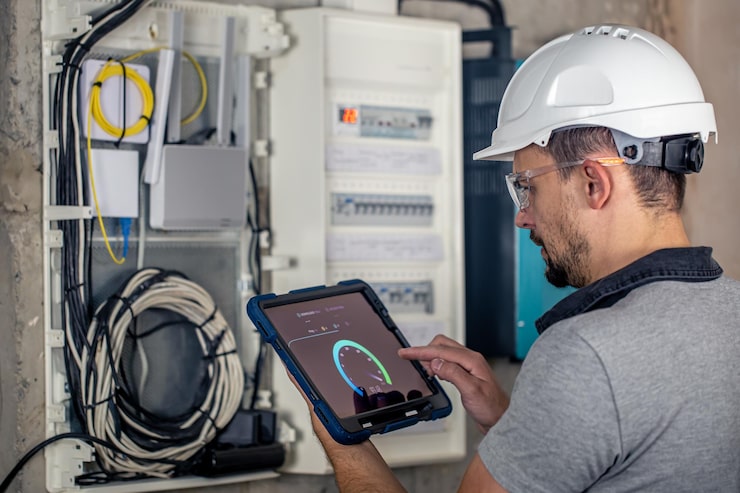
The power consumption visible on your mining hardware specifications tells only part of the story. Mining equipment generates tremendous amounts of heat, and managing that thermal output requires additional energy expenditure that many beginners fail to account for in their profitability calculations. A mining rig drawing 1500 watts of electrical power converts nearly all of that energy into heat, equivalent to running a small space heater continuously. In warm climates or poorly ventilated spaces, cooling becomes an unavoidable necessity that significantly impacts your total electricity consumption.
Air conditioning systems required to maintain optimal operating temperatures can easily match or exceed the power consumption of the mining equipment itself. A mining operation drawing 5000 watts might require an additional 3000 to 4000 watts of air conditioning capacity during summer months in hot climates. The cooling requirement depends on factors including ambient temperature, humidity levels, space volume, insulation quality, and the efficiency of heat extraction from the immediate vicinity of the mining hardware. Some operators find that their cooling costs during peak summer months actually exceed their mining equipment power costs, completely eliminating profitability during those periods.
Strategic ventilation can dramatically reduce or eliminate air conditioning requirements in many situations. Proper airflow design using exhaust fans to remove hot air and intake fans to bring in cooler outside air can maintain acceptable temperatures while consuming only a fraction of the power required for air conditioning. Industrial exhaust fans moving large volumes of air might consume 200 to 400 watts each, a significant savings compared to air conditioning units. However, this approach works best in climates with moderate temperatures and becomes less effective in extremely hot regions or during heat waves when outside air provides no cooling benefit.
Voltage, Amperage, and Circuit Requirements
Understanding your electrical infrastructure capabilities is essential before scaling any mining operation. Residential electrical systems typically provide 120-volt or 240-volt power through circuit breakers rated for specific amperage limits, commonly 15 or 20 amps for individual circuits. The relationship between voltage, amperage, and wattage follows a simple formula: watts equals volts multiplied by amps. A 120-volt circuit with a 20-amp breaker can theoretically supply 2400 watts, but electrical codes require you to use only 80 percent of circuit capacity for continuous loads, limiting you to 1920 watts of usable power on that circuit.
Running mining equipment on 240-volt circuits offers significant advantages over 120-volt operation. For the same wattage, higher voltage requires lower amperage, reducing resistive losses in wiring and allowing more efficient power delivery. A miner consuming 1200 watts on a 120-volt circuit draws 10 amps, but that same miner on a 240-volt circuit only draws 5 amps. This lower amperage reduces heat generation in wiring, minimizes voltage drop over cable runs, and allows you to operate more equipment on existing electrical infrastructure. Many high-power ASIC miners require 240-volt connections and won’t operate properly on standard 120-volt household circuits.
Circuit breaker capacity often becomes the limiting factor when expanding mining operations in residential settings. Each breaker protects a specific circuit, and exceeding its rated capacity creates serious fire hazards. A home might have twenty or thirty separate circuits, but most of these already serve existing household needs like kitchen appliances, HVAC systems, water heaters, and general lighting and outlets. Miners need to identify circuits with available capacity or install dedicated circuits specifically for mining equipment. Professional electricians can evaluate your electrical panel’s total capacity and determine how much additional load it can safely handle before requiring panel upgrades or service capacity increases from your utility company.
Calculating Break-Even Points and Profitability
The ultimate question every miner faces is whether the cryptocurrency revenue exceeds the electricity costs and other operational expenses. Break-even analysis requires comparing your mining rewards against your power consumption costs, but this calculation becomes complicated by the volatile nature of cryptocurrency prices and network difficulty adjustments. A mining operation that’s highly profitable today might become unprofitable tomorrow if coin prices drop or if network hash rate increases push up the difficulty.
To calculate your break-even electricity cost, you need to determine how much cryptocurrency you generate per day, convert that to fiat currency value, and divide by your daily kilowatt-hour consumption. For example, if your mining rig generates 0.002 Bitcoin per day when Bitcoin trades at 40,000 dollars, your daily revenue equals 80 dollars. If that same rig consumes 80 kilowatt-hours per day, your break-even electricity cost would be one dollar per kilowatt-hour. At any electricity rate below one dollar per kilowatt-hour, you remain profitable, but at higher rates, you lose money. This calculation provides a clear threshold for evaluating whether continued operation makes financial sense.
Profitability margins determine the sustainability of your mining operation over time. Operating with thin margins, where electricity costs consume 90 percent or more of your revenue, leaves little room for adverse market movements or unexpected expense increases. Most successful miners target electricity costs that represent 40 to 60 percent of their gross mining revenue, providing a comfortable buffer against volatility. This margin allows you to continue operations during temporary price dips while still covering equipment depreciation, maintenance costs, and providing actual return on your capital investment.
Optimizing Power Efficiency in Mining Operations
Maximizing the hash rate you generate per watt of electricity consumed represents the fundamental goal of mining optimization. Hardware selection forms the foundation of efficiency, as different models offer vastly different performance per watt ratios. When evaluating equipment purchases, many miners focus exclusively on hash rate specifications while overlooking the efficiency metric that ultimately determines profitability. A miner producing 100 terahash at 3000 watts offers better economics than one producing 110 terahash at 3500 watts, despite the lower absolute hash rate, because it delivers more computational work per dollar spent on electricity.
Undervolting and tuning represent powerful techniques for improving efficiency, particularly with GPU mining rigs. Graphics cards ship with voltage and frequency settings optimized for gaming performance, which prioritizes maximum frame rates over power efficiency. Mining workloads differ fundamentally from gaming, operating at sustained full load for extended periods. By carefully reducing core voltage while maintaining stable hash rates, miners can often cut power consumption by 20 to 30 percent with minimal hash rate reduction. A GPU that produces 60 megahash at 200 watts might achieve 58 megahash at only 140 watts after proper tuning, dramatically improving the hash per watt ratio and extending profitability ranges.
Firmware and software optimization provides additional efficiency gains. ASIC manufacturers periodically release firmware updates that improve efficiency or allow users to select different operating modes balancing hash rate against power consumption. Some firmware versions enable low-power modes that reduce hash rate by 10 percent but cut power consumption by 20 percent, effectively improving efficiency. Mining software selection also impacts efficiency, as different programs implement algorithms with varying levels of optimization. The difference between poorly optimized and highly optimized mining software can easily represent 5 to 10 percent variation in effective hash rate for the same power consumption.
Industrial versus Residential Mining Considerations

The economics of mining electricity costs change dramatically when comparing residential operations to industrial-scale facilities. Residential electricity rates typically include numerous fees and surcharges that industrial customers avoid, including distribution charges, transmission fees, and various regulatory assessments that can add 30 to 50 percent above the base generation cost. Industrial customers with high consumption volumes negotiate better rates, access wholesale electricity markets, and qualify for discounts based on their load characteristics and consumption patterns.
Industrial mining operations gain access to electrical infrastructure designed for high-power loads. Three-phase power delivery, common in commercial and industrial settings, provides more efficient power distribution and enables the operation of larger, more efficient equipment. The ability to draw megawatts of power through properly designed electrical systems eliminates the circuit capacity constraints that limit residential operations. However, industrial facilities come with their own costs including higher rent or property expenses, commercial electrical installation requirements, and often mandatory power factor correction equipment to meet utility requirements.
Scaling considerations differ fundamentally between residential and industrial contexts. A home-based mining operation might optimize around maximizing the use of existing electrical capacity without triggering expensive service upgrades. Each additional circuit installation might cost several hundred dollars, making incremental expansion economically challenging. Industrial operations focus on per-unit costs, seeking to minimize the electricity cost per terahash through bulk power purchases, optimal cooling infrastructure, and sophisticated monitoring systems that maximize uptime and efficiency across hundreds or thousands of mining units.
Renewable Energy and Alternative Power Sources

The high electricity demands of mining operations have driven increasing interest in renewable energy sources that can reduce or eliminate ongoing power costs. Solar installations represent the most accessible renewable option for many miners, with photovoltaic panels converting sunlight directly into electricity. However, solar power generation varies throughout the day and stops completely at night, creating a mismatch with mining’s requirement for continuous 24-hour power. This intermittency means solar installations either need substantial battery storage, which adds significant cost and complexity, or must maintain grid connectivity to draw power when solar generation falls short of demand.
The economics of solar-powered mining require careful analysis of installation costs versus long-term electricity savings. A solar array capable of powering a 5-kilowatt mining operation might cost 15,000 to 25,000 dollars after accounting for panels, inverters, mounting hardware, and installation labor. At an electricity rate of 12 cents per kilowatt-hour, that 5-kilowatt operation consumes roughly 540 dollars worth of electricity monthly. The solar installation would require approximately 28 to 46 months to pay for itself through eliminated electricity costs, not accounting for maintenance, panel degradation over time, or the opportunity cost of capital invested in solar infrastructure rather than additional mining equipment or cryptocurrency holdings.
Wind power, hydroelectric generation, and other renewable sources present opportunities in specific geographical contexts. Small-scale wind turbines can provide cost-effective power in consistently windy locations but require significant space and often face regulatory restrictions in residential areas. Micro-hydroelectric systems work exceptionally well
How to Calculate Daily Power Consumption for Your Mining Rig

Understanding the power consumption of your mining operation is fundamental to determining profitability. Many miners jump into cryptocurrency mining without properly calculating their electricity expenses, only to discover that their revenue barely covers their power bills. Let me walk you through the exact process of calculating your daily power consumption, breaking down every component that affects your electricity usage.
The foundation of any power consumption calculation starts with understanding watts, the unit that measures electrical power. Every component in your mining rig draws a specific amount of watts, and when you add them all together, you get your total system power draw. This total wattage, multiplied by the hours you run your equipment, gives you watt-hours, which we then convert to kilowatt-hours for billing purposes.
Your graphics processing unit represents the most significant power consumer in any mining rig. A single GPU can consume anywhere from 120 watts to over 350 watts depending on the model and your power settings. Modern cards like those used for Ethereum mining typically draw between 200 and 300 watts under full load. The key detail here is that manufacturers list thermal design power specifications, but actual consumption varies based on your workload intensity and efficiency settings.
To get started with your calculation, you need to determine the exact power draw of each GPU in your system. The easiest method involves using a wattmeter device that plugs directly into your wall outlet. These devices cost between twenty and fifty dollars and provide real-time power consumption data. Simply plug your mining rig into the meter, let it run for several hours, and note the average wattage displayed.
If you cannot access a physical wattmeter, software tools can estimate power consumption with reasonable accuracy. Mining software often displays power consumption estimates, though these figures may not account for power supply inefficiency or other system components. For more precise software measurements, GPU monitoring utilities show individual card power draw, allowing you to multiply by the number of cards in your system.
Beyond your graphics cards, your motherboard, processor, memory modules, storage drives, and cooling fans all contribute to total power consumption. A typical mining motherboard with a basic processor draws between 50 and 100 watts. Memory adds another 10 to 30 watts depending on the number of sticks installed. Solid-state drives consume minimal power, usually under 5 watts, while traditional hard drives use slightly more. Case fans typically draw 2 to 5 watts each, though this varies with fan size and speed settings.
Power supply efficiency plays a critical role that many miners overlook. Your power supply unit converts alternating current from the wall outlet to direct current that your components use. This conversion process wastes energy as heat. A power supply with an 80 Plus Gold certification operates at roughly 90 percent efficiency at typical loads, meaning that if your components draw 1000 watts, your wall outlet actually provides about 1111 watts. Lower efficiency ratings result in higher actual power consumption and increased electricity costs.
Let me provide a practical example using a six-GPU mining rig. Assume each graphics card draws 250 watts, your motherboard and processor consume 75 watts, and your system has four case fans at 3 watts each. The calculation looks like this: six cards times 250 watts equals 1500 watts, plus 75 watts for the motherboard setup, plus 12 watts for fans, giving you 1587 watts total component draw.
Now factor in power supply efficiency. With an 85 percent efficient power supply, divide 1587 by 0.85 to get approximately 1867 watts drawn from the wall. This represents your actual power consumption that will appear on your electricity bill. Running continuously, multiply 1867 watts by 24 hours to get 44,808 watt-hours per day. Converting to kilowatt-hours by dividing by 1000 gives you 44.8 kilowatt-hours of daily electricity consumption.
Environmental Factors That Affect Power Usage
Ambient temperature significantly impacts your mining rig power consumption. Higher room temperatures force your cooling fans to spin faster and work harder, increasing their power draw. More importantly, elevated temperatures can trigger thermal throttling in your graphics cards, causing them to work less efficiently and potentially draw more power to maintain their hash rates. Operating your mining equipment in a cool, well-ventilated space helps maintain optimal power efficiency.
Dust accumulation inside your mining rig acts as an insulator, trapping heat around components and forcing cooling systems to work overtime. Regular cleaning of heatsinks, fans, and air filters ensures proper airflow and prevents unnecessary power consumption from overworked cooling systems. Many miners see a noticeable reduction in fan speeds and overall system power draw after thorough cleaning.
Seasonal variations affect your total energy costs even if your mining rig consumes consistent power. During winter months, the heat generated by your mining operation may reduce your home heating costs, effectively subsidizing part of your electricity usage. Conversely, summer operations in warm climates might increase air conditioning loads, adding indirect costs to your mining operation that should factor into your profitability calculations.
Optimizing Power Settings for Maximum Efficiency

Power limit adjustments represent one of the most effective ways to reduce electricity consumption without dramatically impacting mining performance. Most modern graphics cards allow you to set a power limit percentage through software utilities. Reducing power limits to 70 or 80 percent of maximum typically results in minimal hash rate reduction while significantly lowering electricity costs. This optimization process requires testing different settings to find the sweet spot between performance and efficiency.
Core clock and memory clock adjustments further refine power consumption. Mining different cryptocurrencies stresses different aspects of your graphics card. Algorithms that depend heavily on memory bandwidth benefit from increased memory clock speeds while allowing lower core clock speeds, reducing overall power draw. Experimenting with undervolting, which reduces the voltage supplied to the GPU core, can achieve substantial power savings while maintaining stable mining operations.
Mining software selection impacts power efficiency more than many miners realize. Different mining programs implement algorithms with varying levels of optimization. Some software allows granular control over intensity settings, letting you balance power consumption against hash rate performance. Testing multiple mining programs with the same hardware configuration often reveals significant differences in power efficiency for identical hash rates.
Dual mining, the practice of mining two cryptocurrencies simultaneously, affects power consumption calculations. While dual mining can increase revenue, it typically pushes your graphics cards to higher power consumption levels. The additional electricity cost must be weighed against the extra cryptocurrency earned to determine whether dual mining improves overall profitability for your specific situation.
Your mining rig’s power consumption varies slightly throughout the day based on workload fluctuations. Network difficulty changes, rejected shares, and brief connectivity interruptions all cause momentary variations in power draw. For accurate calculations, measure power consumption over extended periods, ideally 24 hours or more, to account for these natural fluctuations and obtain a representative average.
Calculating costs requires knowing your electricity rate, which varies dramatically by location. Residential electricity rates in the United States range from under 10 cents per kilowatt-hour in some states to over 30 cents in others. Commercial and industrial rates often differ substantially from residential rates. Some regions implement tiered pricing structures where costs increase after exceeding certain consumption thresholds, or time-of-use rates where electricity costs more during peak demand hours.
To calculate daily electricity costs, multiply your daily kilowatt-hour consumption by your rate per kilowatt-hour. Using our earlier example of 44.8 kilowatt-hours per day with an electricity rate of 12 cents per kilowatt-hour, the calculation is 44.8 times 0.12, resulting in $5.38 daily electricity cost. Multiply by 30 days to estimate monthly costs at approximately $161.40, or by 365 days for an annual estimate of $1,963.70.
These calculations become more complex with multiple rigs or mixed GPU configurations. Each rig requires individual measurement and calculation, then sum the results for total operation costs. Maintaining detailed records of each rig’s power consumption helps identify underperforming systems or opportunities for optimization. Spreadsheets or dedicated mining management software can track these metrics across multiple machines.
Power factor, while less commonly discussed, affects some miners particularly those with large operations. Power factor measures how effectively electrical power converts into useful work. Resistive loads like heaters have a power factor near 1.0, while inductive loads like motors have lower power factors. Modern power supplies with active power factor correction maintain power factors above 0.95, minimizing concerns for most home miners. Large operations may face power factor penalties from utility companies if their overall power factor drops too low.
Vampire power or standby power consumption occurs when equipment draws power while supposedly off or idle. Modern mining rigs typically do not present significant standby power issues since they either run continuously or shut down completely. However, monitors, routers, switches, and other peripheral equipment connected to your mining setup may consume small amounts of power even when not actively used. These minor draws accumulate across multiple devices and long time periods.
Dynamic power management features in modern hardware can affect consumption measurements. Some graphics cards automatically boost clock speeds when thermal and power headroom exists, while others implement aggressive downclocking during reduced workloads. These features, while beneficial for general computing, can complicate power consumption measurements for mining operations. Disabling dynamic features and running cards at fixed clock speeds provides more consistent and predictable power consumption data.
Voltage regulation efficiency varies between different power supply designs and quality levels. Higher-quality power supplies maintain tighter voltage regulation, reducing the amount of excess voltage needed to ensure stable component operation. This improved regulation translates to lower power consumption and reduced heat generation. Investing in quality power supplies not only improves reliability but also decreases operating costs through better efficiency.
Surge protectors and uninterruptible power supplies placed between your wall outlet and mining rig introduce additional power consumption. Quality surge protectors add negligible power draw, but uninterruptible power supplies constantly draw power to maintain their batteries and provide power conditioning. A UPS supporting a large mining rig might consume an additional 50 to 100 watts, which should factor into your total power consumption calculations if you use battery backup systems.
Remote management tools, monitoring systems, and additional computers used to oversee your mining operation also consume electricity. A dedicated monitoring PC might draw 50 to 150 watts depending on its specifications. Network switches connecting multiple rigs consume 10 to 50 watts depending on port count and features. Smart power outlets and monitoring devices add minimal consumption individually but accumulate across larger operations. Comprehensive power calculations should include all equipment related to your mining activities.
Overclocking increases power consumption proportionally or even exponentially relative to performance gains. Pushing graphics cards beyond their stock specifications may increase hash rates by 10 to 15 percent while increasing power consumption by 20 to 30 percent or more. The diminishing returns of overclocking often make it financially counterproductive once electricity costs are factored in. Many experienced miners find that underclocking or running at stock settings with optimized power limits provides better profitability than aggressive overclocking.
Mining pool efficiency indirectly affects your effective power consumption costs. Pools with higher latency or more rejected shares mean you waste electricity on work that generates no revenue. Selecting pools with servers geographically close to your location and low rejection rates ensures that every watt you consume contributes to earning cryptocurrency. This optimization does not reduce actual power draw but improves the revenue generated per kilowatt-hour consumed.
Calculating opportunity costs helps frame power consumption in broader financial context. The electricity consumed by your mining rig could theoretically power other household appliances or activities. If your mining operation pushes you into higher tiered electricity pricing, it increases costs for your entire household, not just the mining equipment. Understanding these broader implications helps make informed decisions about mining scale and optimization priorities.
Power consumption monitoring should become a regular practice rather than a one-time measurement. Component degradation over time can increase power draw as thermal paste dries out, fans wear down, and silicon characteristics change. Periodic remeasurement helps identify developing problems before they significantly impact profitability. Establishing baseline measurements and comparing them monthly or quarterly reveals gradual efficiency losses that might otherwise go unnoticed.
Tax implications of electricity costs vary by jurisdiction and individual circumstances. In many locations, electricity costs directly attributable to mining activities qualify as deductible business expenses. Accurate power consumption records support these deductions during tax preparation. Consult with tax professionals familiar with cryptocurrency mining to ensure proper documentation and reporting of energy costs.
Future electricity rate changes affect long-term mining profitability projections. Many regions experience annual rate increases, while others see rates influenced by seasonal generation costs or regulatory changes. Building rate increase assumptions into your projections provides more realistic profitability models. Some miners negotiate special rates with utility companies for large, consistent electrical loads, though this typically requires substantial consumption levels beyond typical home mining operations.
Alternative energy sources like solar panels or wind turbines can offset mining electricity costs, though they require significant upfront investment. Calculating payback periods for renewable energy systems in mining contexts involves comparing installation costs against projected electricity savings over system lifetimes. Geographic location heavily influences renewable energy feasibility, with sunny or windy regions offering better returns on investment than areas with inconsistent weather patterns.
Battery storage systems paired with renewable energy allow mining operations during periods when solar or wind generation cannot meet demand. However, the efficiency losses inherent in battery charging and discharging cycles add to overall system costs. Comprehensive calculations must account for round-trip battery efficiency, typically 85 to 95 percent, meaning you need to generate more power than your mining rig consumes to compensate for storage losses.
Conclusion
Accurately calculating daily power consumption for your mining rig forms the foundation of understanding mining profitability. Starting with measuring individual component power draws, accounting for power supply efficiency, and factoring in environmental conditions gives you reliable consumption figures. Multiplying these measurements by your electricity rate provides the daily operating cost that must be subtracted from your mining revenue to determine actual profit.
The process extends beyond simple multiplication of watts by hours. Optimization opportunities exist at every level, from adjusting graphics card power limits to selecting efficient power supplies and maintaining proper cooling. Environmental factors, peripheral equipment, and indirect costs all contribute to the complete picture of mining electricity expenses.
Regular monitoring and adjustment ensure your calculations remain accurate as conditions change. Component degradation, algorithm updates, electricity rate changes, and cryptocurrency value fluctuations all affect the relationship between power consumption and profitability. Treating power consumption calculation as an ongoing process rather than a one-time task positions you to make informed decisions that maximize mining returns while minimizing unnecessary electricity expenses.
Whether you operate a single graphics card or manage dozens of mining rigs, understanding exactly how much electricity your equipment consumes and what that costs empowers you to mine cryptocurrency profitably and sustainably. These calculations separate successful long-term miners from those who exit the space after discovering their operations lose money once electricity costs are properly accounted for.
Question and answer:
How much does it actually cost to mine 1 Bitcoin based on electricity prices?
The cost to mine 1 Bitcoin varies significantly depending on your local electricity rates and mining hardware efficiency. With an average residential electricity rate of $0.12 per kWh and using a modern ASIC miner like the Antminer S19 Pro (consuming about 3,250W), you’re looking at approximately $9.36 per day in electricity costs. Given current network difficulty, mining 1 Bitcoin could take several months to years for a single unit, translating to thousands of dollars in electricity alone. In regions with cheaper electricity like $0.04 per kWh, costs drop to around $3.12 daily. This is why large mining operations relocate to areas with subsidized or renewable energy sources.
What’s the difference between watts and kilowatt-hours when calculating mining costs?
Watts measure the instantaneous power consumption of your mining rig – how much energy it draws at any given moment. Your Antminer S19 might consume 3,250 watts. Kilowatt-hours (kWh) measure actual energy usage over time, which is what your utility company charges you for. To convert: divide watts by 1,000 to get kilowatts, then multiply by hours of operation. So 3,250W = 3.25kW. Running for 24 hours means 3.25kW × 24h = 78kWh per day. If electricity costs $0.10 per kWh, your daily cost is 78 × $0.10 = $7.80. Understanding this distinction helps you accurately calculate operational expenses.
My electricity bill doubled after I started mining. Is something wrong with my setup?
A doubled electricity bill is completely normal and expected when you start mining, assuming you’re running professional-grade equipment. A single ASIC miner draws more power continuously than most household appliances combined – comparable to running 30-40 refrigerators simultaneously. The S19 Pro at 3,250W running 24/7 consumes 2,340 kWh monthly. At $0.12/kWh, that’s an additional $280.80 on your bill. If you’re running multiple units, costs multiply accordingly. Check your miner’s specifications against actual power draw using a wattmeter to verify everything’s functioning properly. Unexpected increases beyond calculated amounts might indicate cooling issues, faulty PSUs, or incorrect voltage settings.
Can I reduce mining electricity costs by running during off-peak hours only?
Yes, if your utility offers time-of-use (TOU) pricing with significantly lower off-peak rates. Some regions offer 50-60% discounts during nighttime hours. However, mining only during off-peak periods (typically 8-12 hours daily) cuts your mining time and potential earnings proportionally. You need to calculate whether the reduced electricity costs offset the lost mining revenue. For example, if off-peak rates save you $4 daily but reduced mining time costs you $6 in potential Bitcoin earnings, you’re losing money. This strategy works better for GPU miners with lower individual power consumption or during bear markets when mining margins are razor-thin. Most professional operations run continuously and negotiate fixed industrial rates instead.
How do I calculate if mining is profitable after electricity costs in my area?
Start by determining three figures: your hardware’s hashrate, power consumption, and local electricity rate. For example, an Antminer S19 Pro provides 110 TH/s while consuming 3,250W. Calculate daily electricity cost: 3.25kW × 24 hours × your rate per kWh. At $0.10/kWh, that’s $7.80 daily. Next, use a mining profitability calculator online, inputting your hashrate and current Bitcoin network difficulty. This estimates your daily Bitcoin earnings – let’s say $12.00 at current prices and difficulty. Subtract electricity costs: $12.00 – $7.80 = $4.20 daily profit. Factor in hardware depreciation, cooling costs, and pool fees for a complete picture. If electricity costs exceed 60-70% of gross revenue, profitability becomes precarious during market downturns.

