
The landscape of cryptocurrency mining changed forever on September 15, 2022, when Ethereum completed its transition from proof-of-work to proof-of-stake consensus mechanism. This monumental shift, known as The Merge, eliminated traditional mining on the Ethereum network and left thousands of miners worldwide scrambling to understand what happened to their investments and what options remained available. The hardware that once generated passive income through ETH rewards suddenly became obsolete for its original purpose, forcing the mining community to reassess their strategies and explore alternative paths forward.
For anyone who invested in graphics processing units, application-specific integrated circuits, or entire mining farms specifically for Ethereum, the transition raised urgent questions about profitability, resale value, and the future of their operations. The Merge did not just change one blockchain; it sent ripples throughout the entire mining ecosystem, affecting electricity consumption patterns, GPU markets, and the profitability calculations of countless alternative networks. Understanding what actually happened during this transition and what it means for mining operations requires looking beyond surface-level explanations and examining the technical, economic, and practical implications of this historic change.
Many newcomers to cryptocurrency wonder whether Ethereum mining still exists in any form, while experienced miners seek clarity on how to pivot their existing infrastructure toward profitable alternatives. The reality is more nuanced than simple yes or no answers. While traditional mining on the main Ethereum network ceased entirely, the equipment, knowledge, and infrastructure built around Ethereum mining did not simply vanish. Instead, miners found themselves at a crossroads, needing to make informed decisions about selling hardware, switching to different cryptocurrencies, or exploring entirely new revenue streams within the blockchain space.
Understanding The Merge and Its Impact on Mining Operations
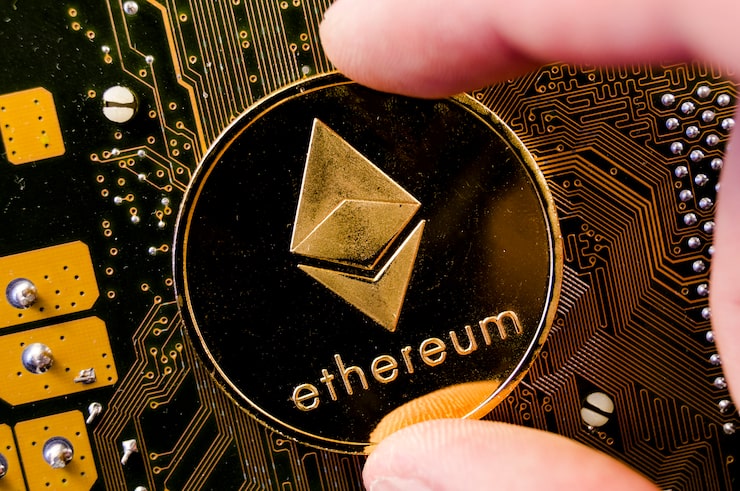
The Merge represented the culmination of years of planning and development within the Ethereum community. Before this transition, Ethereum relied on proof-of-work, the same consensus mechanism that Bitcoin uses, where miners compete to solve complex mathematical puzzles using computational power. The first miner to solve the puzzle earns the right to add the next block to the blockchain and receives newly minted ETH as a reward, along with transaction fees from users. This process required massive amounts of electricity and specialized hardware, creating an entire industry around Ethereum mining operations.
When Ethereum transitioned to proof-of-stake, the network eliminated the need for miners entirely. Instead of computational work, the new system relies on validators who lock up, or stake, 32 ETH to participate in securing the network and validating transactions. These validators are chosen through a selection algorithm rather than competing through computational power. The change reduced Ethereum’s energy consumption by approximately 99.95 percent, addressing one of the most significant criticisms of blockchain technology while fundamentally altering how the network operates.
The immediate impact on mining operations was absolute and irreversible. Mining software designed for Ethereum stopped working on the main network the moment The Merge activated. Mining pools that had supported Ethereum for years either shut down their ETH services or transitioned to supporting other cryptocurrencies. The hashrate that had been dedicated to Ethereum, measured in terahashes per second, needed to find new homes on alternative networks or face being powered down entirely. This sudden displacement of computing power created both challenges and opportunities across the cryptocurrency mining landscape.
For miners who had built their operations specifically around Ethereum, the transition meant making difficult decisions about their future direction. Some had invested hundreds of thousands or even millions of dollars in hardware, facilities, cooling systems, and electrical infrastructure optimized for Ethereum mining. The question was not just about finding another coin to mine, but whether continuing to mine at all made financial sense given electricity costs, hardware depreciation, and the potential oversaturation of alternative networks as displaced Ethereum miners flooded into them.
What Happened to Ethereum Mining Hardware

The hardware used for Ethereum mining consisted primarily of graphics cards from manufacturers like NVIDIA and AMD. Unlike Bitcoin mining, which had long ago transitioned to specialized ASIC chips, Ethereum mining remained GPU-friendly due to its memory-intensive algorithm called Ethash. This meant that consumer-grade graphics cards could effectively mine Ethereum, making the barrier to entry lower than Bitcoin mining and creating a massive secondary market for GPUs among miners.
When The Merge eliminated Ethereum mining, the GPU market experienced immediate turbulence. Miners who had purchased cards at inflated prices during the cryptocurrency boom suddenly found themselves holding depreciating assets. The resale market became flooded with used mining cards, driving down prices significantly. Gamers and content creators, who had struggled to find affordable graphics cards during the mining boom, suddenly had access to cheaper options, though many remained cautious about purchasing cards that had run continuously under heavy loads.
The depreciation was not uniform across all hardware types. High-end cards with substantial memory capacity retained more value because they remained useful for mining memory-intensive algorithms on other networks. Older cards with lower memory capacity saw steeper price drops because their options for profitable mining were more limited. Some miners chose to hold onto their hardware, betting that prices would eventually stabilize or that new opportunities would emerge. Others liquidated their equipment quickly to recover whatever capital they could before prices fell further.
Mining rigs required more than just graphics cards. Motherboards designed to support multiple GPUs, powerful supplies, specialized frames, and cooling solutions all formed part of the ecosystem. While these components retained some resale value, they commanded far less than when Ethereum mining was profitable. Complete mining rigs that once sold for premium prices became difficult to sell as complete units, with many miners parting out individual components to maximize returns.
Alternative Cryptocurrencies for GPU Mining
The most immediate question for displaced Ethereum miners was which alternative cryptocurrency to mine. Several proof-of-work networks existed that remained GPU-mineable, and each presented different profitability profiles, technical requirements, and future prospects. The challenge was that the massive hashrate leaving Ethereum was about to flood into these smaller networks, potentially making them less profitable as mining difficulty increased to compensate for the additional computing power.
Ravencoin emerged as one popular alternative for former Ethereum miners. This network uses the KawPow algorithm, which is GPU-friendly and has a community focused on asset transfer and tokenization. The network had a relatively modest hashrate before The Merge, making it vulnerable to the influx of mining power. As expected, difficulty increased substantially as miners switched over, reducing per-unit profitability. However, some miners remained optimistic about the long-term value proposition of Ravencoin and its use cases.
Ergo represented another option, utilizing the Autolykos algorithm designed to be ASIC-resistant and GPU-efficient. This proof-of-work blockchain focuses on providing a platform for contractual money and has connections to the Cardano ecosystem. The network’s smaller size compared to Ethereum meant that mining rewards were more limited, but some miners appreciated its technical innovations and philosophical approach to blockchain development. Like other alternatives, Ergo saw significant difficulty increases following The Merge.
Ethereum Classic, the original Ethereum chain that split after the DAO hack in 2016, became perhaps the most obvious destination for displaced miners. It continued using proof-of-work with the same Ethash algorithm that Ethereum had used, meaning miners could point their existing configurations at Ethereum Classic pools with minimal adjustment. The network’s hashrate increased dramatically after The Merge, more than tripling in a matter of days. This surge raised questions about long-term profitability and whether the network could support such a large mining community.
Flux, Firo, Beam, and numerous other GPU-mineable cryptocurrencies also saw increased attention from former Ethereum miners. Each offered different features, community dynamics, and profitability calculations. Many miners adopted a strategy of mining whichever coin was most profitable at any given moment, using profitability calculators and auto-switching mining software to maximize returns. This approach, while potentially optimizing short-term income, also meant constantly moving between networks and dealing with multiple wallets and exchanges.
Economic Reality of Post-Merge Mining
The fundamental economic challenge facing miners after The Merge involved the relationship between revenue, operational costs, and hardware depreciation. During Ethereum’s peak, many miners enjoyed substantial profit margins that justified expanding operations and investing in additional equipment. The transition eliminated the most profitable target for GPU mining, forcing a recalculation of whether mining remained economically viable.
Electricity costs became the primary determining factor in post-Merge mining profitability. Miners in regions with low electricity rates, typically below eight cents per kilowatt-hour, maintained better prospects for continued profitable operations. Those paying twelve cents or more per kilowatt-hour found that mining many alternative cryptocurrencies resulted in breaking even or operating at a loss. This geographical disparity meant that mining operations in certain locations became unviable overnight, while others could continue with adjusted expectations.
The concept of mining difficulty adjustment played a crucial role in determining profitability across alternative networks. Most proof-of-work cryptocurrencies automatically adjust their mining difficulty based on the total network hashrate to maintain consistent block times. When massive amounts of hashrate from Ethereum suddenly entered smaller networks, difficulty increased proportionally. This meant that even though more miners were participating, individual miners received smaller portions of the block rewards, reducing per-unit profitability.
Hardware depreciation added another layer to economic considerations. Mining equipment loses value over time through both physical wear and technological obsolescence. Graphics cards have finite lifespans, especially when running continuously at high temperatures and power levels. The sudden devaluation of mining GPUs following The Merge accelerated this depreciation curve. Miners needed to factor in not just immediate profitability but also the decreasing resale value of their equipment over time.
Some mining operations had taken on debt to finance their expansion during profitable periods. These miners faced particular pressure after The Merge, as they needed to generate sufficient revenue to service debt payments while dealing with reduced profitability. The inability to meet these obligations forced some operations into liquidation, further flooding the market with used mining equipment and putting downward pressure on hardware prices.
Ethereum Classic as the Primary Alternative
Ethereum Classic deserves particular attention because it became the most direct successor to Ethereum mining operations. As a continuation of the original Ethereum blockchain before the DAO fork, Ethereum Classic maintained proof-of-work consensus and used the identical Ethash algorithm. This technical compatibility meant miners could transition their operations with minimal disruption, simply redirecting their mining software to Ethereum Classic pools.
The influx of hashrate to Ethereum Classic was staggering. Before The Merge, the network operated at approximately 50 terahashes per second. Within days of Ethereum’s transition to proof-of-stake, Ethereum Classic’s hashrate exceeded 200 terahashes per second, with some periods showing even higher levels. This represented more than a quadrupling of network security but also meant that mining rewards were distributed among far more participants.
The increased hashrate raised questions about Ethereum Classic’s ability to sustain such a large mining community economically. Block rewards on the network are fixed, meaning that the same amount of ETC was being distributed among many more miners. Individual profitability decreased substantially unless the price of ETC increased proportionally, which did not occur consistently. Many miners found that their expected earnings from Ethereum Classic represented only a fraction of what they had earned from Ethereum.
Concerns about potential 51 percent attacks on Ethereum Classic emerged during the transition period. With so much hashrate suddenly available from displaced Ethereum miners, the theoretical possibility existed that a malicious actor could accumulate sufficient hashrate to attack smaller networks. Ethereum Classic had experienced such attacks in the past, making the community particularly sensitive to this risk. The massive increase in honest hashrate after The Merge actually improved security in this regard, as it became more expensive to attack the network.
Long-term sustainability questions persisted around Ethereum Classic as a mining destination. The network has a smaller developer community and less commercial adoption than Ethereum maintained before The Merge. While committed proponents argue for Ethereum Classic’s value as an immutable, proof-of-work smart contract platform, skeptics question whether it can support the large mining ecosystem that migrated from Ethereum. Market dynamics would ultimately determine whether Ethereum Classic could sustain this community or whether miners would need to continue seeking alternatives.
Converting Mining Operations to Other Uses
Rather than continuing to mine alternative cryptocurrencies with uncertain profitability, some former Ethereum miners explored converting their hardware to other productive uses. Graphics cards, while purchased for mining, are versatile computational tools capable of various applications beyond cryptocurrency. This versatility provided options for miners looking to extract value from their investments through non-mining channels.
Rendering services represented one viable alternative use for mining GPUs. Content creators, architects, and animation studios require significant computational power for rendering 3D graphics, video effects, and complex visualizations. Some former miners positioned themselves as rendering service providers, either selling direct services to clients or participating in distributed rendering networks where they could earn fees for providing computational power. The income potential varied considerably but offered more predictability than speculative cryptocurrency mining.
Machine learning and artificial intelligence applications have substantial GPU requirements, particularly for training neural networks and processing large datasets. Former mining operations with multiple high-end graphics cards possessed the infrastructure needed for certain AI workloads. Some miners pivoted toward providing computational resources for machine learning projects, either through commercial arrangements or decentralized computing marketplaces that connect computational power with researchers and developers.
Cloud gaming services and virtual desktop infrastructure represented another potential application for mining GPUs. These services allow users to stream games or access powerful computers remotely, with the actual computing happening in data centers. Former miners with reliable internet connections and appropriate facilities could potentially repurpose their hardware for these applications. However, this approach required different technical knowledge, business relationships, and often compliance with various regulations depending on jurisdiction.
Scientific computing projects sometimes seek distributed computational resources for research purposes. Protein folding, climate modeling, astronomical data analysis, and various other research areas can utilize GPU computing power. While not all such projects offered direct compensation, some distributed computing platforms provided token rewards or other incentives for contributing resources. This approach appealed to miners who wanted their hardware to contribute to societally beneficial projects while generating at least some return.
The Broader Implications for Proof-of-Work Mining
The Merge’s impact extended beyond Ethereum specifically, raising broader questions about the future of proof-of-work consensus mechanisms across the cryptocurrency space. Ethereum’s transition to proof-of-stake represented the largest blockchain to abandon proof-of-work, lending credibility to arguments that energy-intensive mining might become obsolete as the industry matures. This philosophical shift influenced perceptions of other proof-of-work networks and their long-term viability.
Environmental concerns have increasingly influenced cryptocurrency regulation and public perception. Ethereum’s dramatic reduction in energy consumption through The Merge provided a concrete example of how blockchain networks could address sustainability criticisms. This success put pressure on other proof-of-work networks, particularly Bitcoin, to justify their energy consumption or consider alternative consensus mechanisms. While Bitcoin’s community remained largely committed to proof-of-work, the conversation around energy use became more prominent and urgent.
Regulatory attention toward cryptocurrency mining intensified in various jurisdictions following The Merge. Some regions had already imposed restrictions or bans on cryptocurrency mining due to energy concerns, and Ethereum’s successful transition emboldened policymakers to question why other networks could not make similar changes. China had banned cryptocurrency mining in 2021, and other countries explored various levels of restrictions. The mining community faced an uncertain regulatory landscape that could significantly impact operations regardless of economic profitability.
The concentration of remaining proof-of-work mining raised centralization concerns within the cryptocurrency community. As marginal mining operations became unprofitable and shut down, a larger percentage of global hashrate concentrated in the hands of larger, more efficient operations with access to cheap electricity and economies of scale. This trend potentially undermined the decentralization principles that originally motivated cryptocurrency development, creating tension between economic reality and philosophical ideals.
Innovation in mining hardware continued despite uncertainty around proof-of-work’s future. Manufacturers developed more efficient GPUs and explored new chip architectures optimized for specific algorithms. Some companies invested in renewable energy integration for mining operations, attempting to address environmental concerns while maintaining profitability. The mining industry demonstrated resilience and adaptability, though questions remained about whether these innovations could overcome the fundamental economic and environmental challenges facing proof-of-work mining.
Staking as an Alternative to Mining
The Merge’s transition to proof-of-stake introduced many former miners to the concept of earning rewards through staking rather than computational work. While fundamentally different from mining, staking offered a path to continue participating in cryptocurrency networks and earning returns on capital. Understanding the differences, requirements, and implications of staking became essential for anyone considering this alternative.
Staking on Ethereum requires locking 32 ETH to operate a validator node, representing a substantial capital requirement that exceeded what many small-scale miners could afford. At various price points, this requirement could represent tens of thousands or even hundreds of thousands of dollars in capital that must remain locked and at risk. Validators face penalties for downtime or malicious behavior, adding technical responsibilities beyond what mining required. This higher barrier to entry changed the dynamics of network participation substantially.
Staking pools and services emerged to allow smaller participants to earn staking rewards without meeting the full 32 ETH requirement or running their own validator infrastructure. These platforms aggregate deposits from multiple users, operate validators on their behalf, and distribute rewards proportionally after taking service fees. While this approach lowered barriers to participation, it also introduced counterparty risk and reduced the decentralization that proof-of-stake theoretically offers.
The risk profile of staking differs significantly from mining. Miners faced risks related to hardware failure, electricity costs
What Happened to GPU Mining When Ethereum Switched to Proof-of-Stake
The transition of Ethereum from Proof-of-Work to Proof-of-Stake fundamentally transformed the cryptocurrency mining landscape. September 15, 2022, marked a watershed moment when the network completed The Merge, instantly eliminating the need for computational mining hardware. Millions of graphics processing units that had been dedicated to validating transactions and securing the network suddenly found themselves without their primary purpose.
Before The Merge, Ethereum commanded the largest GPU mining ecosystem in the cryptocurrency world. Miners had invested billions of dollars in specialized rigs featuring high-end graphics cards from NVIDIA and AMD. These setups consumed enormous amounts of electricity while solving complex cryptographic puzzles to validate blocks and earn ETH rewards. The network’s hashrate exceeded 900 terahashes per second at its peak, representing an unprecedented concentration of computational power.
When Ethereum transitioned to its new consensus mechanism, this entire infrastructure became obsolete for ETH mining overnight. The blockchain no longer required miners to perform computational work. Instead, validators stake 32 ETH to participate in block validation, receiving rewards for their locked capital and network participation. This shift eliminated the arms race of purchasing ever-more-powerful hardware to remain competitive in mining operations.
The Immediate Impact on Mining Hardware Markets
Graphics card prices experienced dramatic fluctuations in the months surrounding The Merge. During the lead-up to the transition, uncertainty gripped the mining community. Some operators began liquidating their equipment early, flooding secondary markets with used GPUs. Others held onto their hardware, hoping to pivot to alternative cryptocurrencies that still relied on Proof-of-Work algorithms.
The flooding of secondhand markets with mining cards created opportunities for gamers and creative professionals who had struggled with inflated GPU prices during the mining boom years. Cards that had sold for double or triple their manufacturer’s suggested retail price during the chip shortage suddenly became available at steep discounts. However, buyers approached these used cards with caution, knowing they had often operated continuously under heavy loads for extended periods.
Major retailers and distributors found themselves managing excess inventory of cards marketed specifically to miners. Models with reduced display outputs, removed cooling features meant for non-mining use, or other mining-specific modifications became particularly difficult to sell. Manufacturers had ramped up production to meet mining demand, creating a supply glut that would take months to clear.
The economic impact extended beyond just hardware sales. Companies that had built businesses around mining operations faced existential questions. Large-scale mining farms with dedicated facilities, cooling infrastructure, and power contracts needed to quickly reassess their business models. Some facilities had signed multi-year contracts for electricity at rates that only made sense when mining Ethereum at certain profitability levels.
Migration to Alternative Proof-of-Work Networks
A significant portion of displaced Ethereum hashrate attempted migration to other GPU-mineable cryptocurrencies. Ethereum Classic, the original Ethereum chain that continued after the 2016 DAO hack, represented the most obvious alternative. It used the same Ethash algorithm that Ethereum miners knew well, requiring minimal configuration changes to switch mining operations.
Ethereum Classic’s network hashrate exploded in the days following The Merge. The blockchain went from approximately 50 terahashes per second to over 200 terahashes virtually overnight. This massive influx of computational power dramatically increased mining difficulty, reducing profitability for individual miners. What seemed like a straightforward transition quickly became a race to the bottom as too many miners competed for limited block rewards.
Ravencoin emerged as another popular destination for displaced mining equipment. This project focused on asset transfer and had cultivated a dedicated community. Its KawPoW algorithm was designed to be ASIC-resistant, making it well-suited for GPU mining. However, Ravencoin’s market capitalization was a fraction of Ethereum’s, meaning the total available mining rewards were substantially smaller.
Ergo, Flux, and Conflux also saw influxes of mining hashrate as operators searched for profitable alternatives. Each network experienced its own growing pains as it absorbed portions of the displaced computational power. Mining difficulty adjustments, network congestion, and price volatility created unstable conditions across the entire GPU-mineable cryptocurrency ecosystem.
The mathematical reality proved challenging for most miners. Ethereum had offered a combination of high liquidity, substantial block rewards, and widespread exchange support that no other GPU-mineable coin could replicate. The total dollar value of mining rewards available across all alternative networks combined represented only a fraction of what Ethereum had provided. This meant that not all displaced miners could remain profitable, regardless of which alternative they chose.
Mining profitability calculators showed stark realities. Operations that had generated steady income mining Ethereum suddenly faced scenarios where electricity costs exceeded mining revenue. Geographic location became even more critical, as only miners with access to extremely cheap power could maintain profitability on alternative chains. Those paying average residential electricity rates found GPU mining financially unviable in most cases.
| Cryptocurrency | Algorithm | Hashrate Increase Post-Merge | Primary Challenge |
|---|---|---|---|
| Ethereum Classic | Ethash | 300%+ | Extreme difficulty increase |
| Ravencoin | KawPoW | 250%+ | Lower market cap limits rewards |
| Ergo | Autolykos | 400%+ | Limited exchange availability |
| Flux | ZelHash | 200%+ | Smaller network infrastructure |
| Conflux | Octopus | 180%+ | Regional trading restrictions |
Some mining operations attempted to diversify across multiple chains, automatically switching between cryptocurrencies based on momentary profitability. Mining management software with profit-switching capabilities allowed operators to maximize returns by constantly reallocating hashrate to whichever network offered the best revenue at any given moment. However, this strategy introduced complexity in wallet management, exchange relationships, and tax accounting.
Professional mining operations with substantial investments in infrastructure explored more creative solutions. Some transitioned their facilities to provide computational services beyond cryptocurrency mining. GPU computing has applications in artificial intelligence model training, video rendering, scientific research, and other computationally intensive tasks. These alternative use cases offered potential revenue streams that didn’t depend on cryptocurrency prices or mining difficulty.
Cloud computing companies showed interest in acquiring mining hardware to expand their GPU-as-a-service offerings. The growing demand for machine learning infrastructure created opportunities for miners to lease or sell their equipment to companies focused on AI development. However, mining GPUs often lacked certain features that data center operators preferred, such as error-correcting memory or professional driver support.
Geographic arbitrage became increasingly important in the post-Merge mining landscape. Operations located in regions with renewable energy sources, government subsidies for data centers, or naturally cool climates that reduced cooling costs maintained better prospects. Some miners physically relocated their operations to jurisdictions with more favorable conditions, though this involved substantial logistical challenges and capital investment.
The environmental narrative around cryptocurrency also shifted after The Merge. Ethereum’s energy consumption dropped by approximately 99.95 percent with the elimination of mining. This transition removed one of the primary criticisms environmental advocates had leveled against the network. However, the displaced mining equipment didn’t simply disappear. Its environmental impact continued, just distributed across different blockchains or applications.
Hardware longevity concerns affected decision-making for miners considering their next moves. Graphics cards used continuously for mining typically experienced significant wear, particularly on cooling systems and power delivery components. Cards that had operated non-stop for two or three years might have limited remaining operational life. This depreciation factored into calculations about whether continuing to mine alternative coins made economic sense versus selling equipment while it retained residual value.
Tax implications created additional complexity for mining operations unwinding or pivoting their businesses. In many jurisdictions, the sale of mining equipment potentially triggered capital gains or losses depending on depreciation schedules and original purchase prices. Miners who had treated their operations as businesses faced different tax treatment than hobbyists. The sudden shift in the industry’s economics forced many operators to consult with accountants about the most tax-efficient approaches to managing their situations.
Insurance companies that had provided coverage for mining operations also reassessed their positions. Policies designed around Ethereum mining needed renegotiation or cancellation. The risk profiles of operations changed substantially when switching to smaller, less established networks. Some insurers withdrew from the cryptocurrency mining sector entirely, leaving operators to self-insure their equipment and facilities.
Communities of miners that had formed around Ethereum found themselves scattered. Online forums, Discord servers, and social media groups that had focused on optimizing Ethereum mining performance transformed into spaces for discussing alternative strategies. Some communities fractured as members pursued different paths forward, while others evolved to address the new reality of GPU mining in a post-Ethereum world.
Manufacturer relationships with the mining sector also evolved. NVIDIA and AMD had produced specialized mining cards during the boom years, products stripped of features unnecessary for mining to hit lower price points. These cards became particularly difficult to repurpose after The Merge. Consumer sentiment toward these products turned negative, as buyers preferred standard graphics cards that retained full functionality and better resale value.
The secondhand market dynamics revealed interesting patterns about GPU durability and buyer preferences. Cards from certain model generations or specific manufacturers commanded premium prices based on perceived reliability and repurposing potential. Mining-specific variants sold at deeper discounts, reflecting their limited utility outside mining applications. Buyers increasingly requested evidence of how cards had been used, with mining history generally depressing prices.
Regional variations in the impact of The Merge reflected differences in electricity costs, cryptocurrency adoption, and alternative economic opportunities. Miners in regions with exceptionally cheap hydroelectric or geothermal power maintained better prospects for continued mining profitability. Conversely, those in areas with expensive electricity faced immediate pressure to shut down operations entirely rather than switching to alternative coins.
Warehouse spaces that had been converted into mining facilities faced new questions about their highest and best use. Some property owners sought new tenants from traditional data center industries or other commercial sectors. Others maintained mining operations at reduced scales, betting that cryptocurrency prices might rise enough to restore profitability. The industrial real estate market in regions that had seen significant mining activity experienced notable shifts as this specialized use case diminished.
Power companies that had benefited from mining operations as large electricity consumers suddenly faced reduced demand. Some utilities had invested in infrastructure upgrades to serve mining facilities, investments that now served excess capacity. In certain jurisdictions, this situation led to regulatory discussions about who should bear the costs of stranded infrastructure investments made to serve an industry that rapidly contracted.
The broader implications for blockchain technology and cryptocurrency mining emerged over time. The Merge demonstrated that major protocol transitions were technically feasible, even for networks as large and economically significant as Ethereum. This success encouraged other Proof-of-Work blockchains to consider their own transitions, though many remained committed to mining as a fundamental aspect of their security models and value propositions.
Educational resources and training programs focused on cryptocurrency mining found themselves needing substantial updates. Courses that had taught Ethereum mining setup and optimization became largely historical. New content emerged around alternative mining opportunities, GPU repurposing, and staking as an alternative form of network participation. The knowledge base that the mining community had developed over years of Ethereum mining retained some relevance but required significant adaptation.
Equipment manufacturers faced pressure to innovate beyond mining-specific products. The lesson from The Merge reinforced that designing hardware for a single, potentially temporary use case carried significant risk. Future product development increasingly emphasized versatility and repurposing potential, ensuring that hardware investments could serve multiple purposes throughout their operational lives.
Long-term price effects on graphics cards stabilized several months after The Merge. The initial flood of used mining equipment gradually absorbed into markets. Production levels adjusted to reflect demand primarily from gamers, content creators, and professional users rather than miners. Prices trended toward historical norms relative to performance and manufacturing costs, though broader economic factors and component availability continued influencing markets.
Conclusion
The transition of Ethereum to Proof-of-Stake represented one of the most significant disruptions in cryptocurrency history. GPU mining, which had been the backbone of Ethereum’s security for years, became obsolete overnight. Miners faced difficult choices about liquidating hardware, switching to alternative networks, or exiting the industry entirely. The economic realities proved challenging, as no combination of alternative GPU-mineable coins could replicate the mining opportunities that Ethereum had provided. Graphics card markets experienced turmoil before eventually stabilizing at more sustainable levels. The environmental impact of crypto mining shifted rather than disappeared, as computational power migrated to other networks or applications. For the broader blockchain ecosystem, The Merge demonstrated that fundamental protocol changes were possible but also highlighted the real costs borne by communities built around existing consensus mechanisms. The full implications continue to unfold as the industry adapts to this new landscape where GPU mining occupies a smaller, less central role in the cryptocurrency world.
Question and answer:
Can you still mine Ethereum after The Merge happened?
No, traditional Ethereum mining is no longer possible after The Merge. The network transitioned from Proof-of-Work (PoW) to Proof-of-Stake (PoS) in September 2022, which eliminated the need for miners using GPUs or ASICs. Instead of mining, the network now relies on validators who stake 32 ETH to secure the blockchain and process transactions. If you have mining equipment, you’ll need to redirect it to other PoW cryptocurrencies or consider selling your hardware.
What happened to all the miners who were mining ETH before the transition?
Miners had to make several choices when Ethereum switched to PoS. Many redirected their mining rigs to alternative cryptocurrencies like Ethereum Classic (ETC), Ravencoin (RVN), or Ergo (ERG). Some miners sold their equipment while GPU prices were still reasonable. Others transitioned to become validators by accumulating the required 32 ETH, though this requires significantly less hardware. A portion of miners also joined staking pools where they could participate with smaller amounts of ETH. The mining community essentially fragmented across different blockchain projects that still use PoW consensus.
Is it profitable to mine Ethereum Classic now that ETH miners moved there?
Profitability dropped significantly after The Merge because thousands of miners shifted to Ethereum Classic and other altcoins, dramatically increasing network difficulty. ETC saw its hashrate multiply several times over, which reduced individual mining rewards proportionally. Whether it’s profitable depends on your electricity costs, hardware efficiency, and current ETC prices. Miners in regions with cheap electricity might break even or earn modest profits, while those paying average rates often struggle to cover operational costs. You should calculate your specific situation using mining profitability calculators before committing resources.
How does staking work compared to mining and can I do it with my gaming PC?
Staking differs fundamentally from mining. Instead of solving computational puzzles, validators lock up 32 ETH as collateral and run validator software on relatively modest hardware. A standard computer with good internet connectivity is sufficient – your gaming PC could technically handle it, but you’d need the 32 ETH requirement first. Validators earn rewards for proposing and attesting to blocks, typically around 4-5% annual return on staked ETH. If you don’t have 32 ETH, you can participate through staking pools or services like Rocket Pool or Lido, which accept smaller amounts. The hardware requirements are minimal compared to mining, but you need consistent uptime and network connectivity.
Did any group try to keep the old Proof-of-Work version of Ethereum running?
Yes, a group of miners and PoW advocates created ETHW (EthereumPoW), a fork that continued using the old mining mechanism. This fork split from the main chain right at The Merge, maintaining the PoW consensus algorithm. However, ETHW has received limited adoption and support from the broader crypto community. Most major exchanges, developers, and DeFi projects stayed with the PoS version. The forked chain faces challenges including lower security, reduced liquidity, and questions about long-term viability. While you can still mine ETHW, its price and network activity remain far below the main Ethereum chain.
