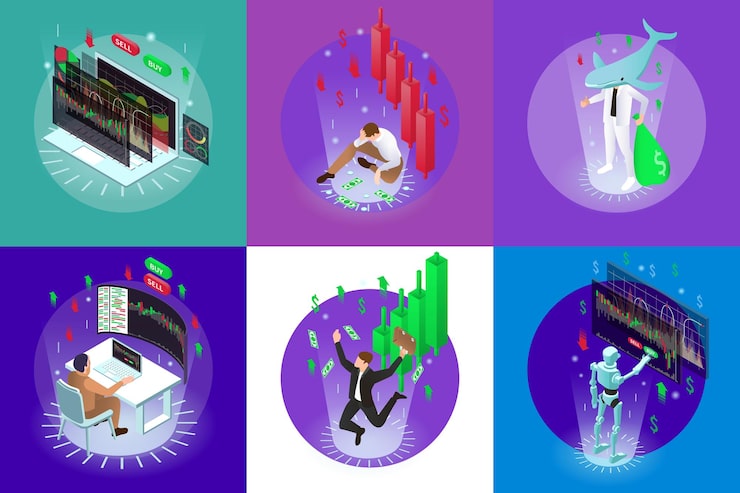
The cryptocurrency market has always been a rollercoaster of emotions. Unlike traditional financial markets with decades of established patterns and institutional stability, digital assets swing wildly based on sentiment, news cycles, and collective psychology. For traders navigating this volatile landscape, understanding market sentiment isn’t just helpful – it’s essential for survival. The Crypto Fear and Greed Index emerged as a response to this need, offering a quantifiable measure of the emotional temperature driving Bitcoin, Ethereum, and the broader cryptocurrency ecosystem.
This sentiment indicator distills complex market psychology into a simple numerical scale ranging from zero to one hundred. When the index approaches extreme fear territory, it signals that investors are worried, possibly overselling assets in panic. Conversely, extreme greed suggests the market might be overheated, with traders buying impulsively without regard for fundamental value. The beauty of this tool lies in its ability to cut through noise and provide actionable insights based on actual market behavior rather than speculation or punditry.
For anyone serious about cryptocurrency trading, whether you’re executing day trades on Binance or building long-term positions in decentralized finance protocols, learning to interpret this index can dramatically improve your decision-making framework. The psychological dynamics that govern bull markets and bear markets follow recognizable patterns, and traders who recognize these emotional cycles gain a significant edge over those who trade based purely on technical indicators or gut feeling.
Understanding the Psychology Behind Market Sentiment
Market sentiment represents the collective mood of all participants in a financial system. In cryptocurrency markets, this emotional element gets amplified because of several unique factors. The market operates continuously without traditional trading hours, creating constant pressure and opportunity. Social media platforms like Twitter and Reddit can spark massive price movements within hours. Regulatory uncertainty adds another layer of anxiety, as government decisions in major economies can suddenly change the entire landscape for blockchain technology and digital currencies.
The concept of using sentiment as a contrarian indicator has roots in traditional finance. Warren Buffett’s famous advice to be fearful when others are greedy and greedy when others are fearful encapsulates this philosophy perfectly. When applied to cryptocurrency trading, this principle becomes even more powerful because crypto markets tend to overreact in both directions. The absence of circuit breakers and the presence of high leverage trading means that fear can spiral into capitulation events, while greed can fuel parabolic rallies that defy rational valuation metrics.
Human psychology hasn’t changed despite technological advancement. The same fear of missing out that drove tulip mania in the 1600s fuels modern crypto bubbles. The same panic that caused bank runs throughout history manifests today when exchanges face liquidity concerns or when major tokens collapse. By measuring these emotional extremes systematically, traders can position themselves opposite the herd at precisely the moments when contrarian positions offer the greatest risk-reward ratios.
Components That Drive the Fear and Greed Index
The index doesn’t rely on a single data point but synthesizes multiple market indicators to create a comprehensive sentiment picture. Understanding these components helps traders appreciate why the index moves and how to use it alongside other analytical tools in their trading strategy.
Volatility Measurements and Price Swings

Volatility represents one of the most significant inputs. The index monitors current volatility levels and compares them to average volatility over recent periods. Unusual spikes in volatility typically indicate fear, as investors react nervously to price uncertainty. During stable periods with gradual price appreciation, the volatility component contributes to a higher greed reading. This makes intuitive sense – when markets move steadily upward without dramatic swings, participants feel confident and accumulate positions without hesitation.
The relationship between volatility and sentiment isn’t always straightforward, though. Sometimes massive volatility occurs during capitulation events when weak hands sell to strong hands at the bottom of a correction. Other times, volatility spikes during euphoric rallies as traders leverage up and chase momentum. The index algorithm accounts for these nuances by weighing volatility alongside other factors rather than treating it as the sole determinant of market emotion.
Market Momentum and Volume Analysis

Trading volume provides crucial context about the conviction behind price movements. High volume during price increases suggests genuine demand and confident buying, contributing to greed signals. Conversely, high volume during selloffs indicates panic and contributes to fear readings. The momentum component examines whether Bitcoin and major altcoins are gaining or losing value relative to their recent trading ranges.
Volume analysis extends beyond simple quantity to examine the quality of transactions. Are coins moving from exchanges to cold storage, suggesting long-term holding conviction? Or are they flooding onto exchanges, indicating preparation for selling? These on-chain metrics provide insight into whether current sentiment reflects temporary emotions or deeper conviction about market direction. Smart traders recognize that volume patterns often precede major trend changes, making this component particularly valuable for timing entries and exits.
Social Media Signals and Community Engagement
The cryptocurrency community lives online. Twitter threads, Reddit discussions, Telegram groups, and Discord servers buzz with constant speculation, analysis, and emotional reactions. The index incorporates social media sentiment by analyzing the frequency and tone of cryptocurrency-related posts and hashtags. Natural language processing algorithms scan millions of posts to determine whether the overall conversation skews positive or negative.
During extreme greed phases, social media explodes with predictions of imminent price targets that seem disconnected from reality. Everyone suddenly becomes an expert, sharing charts showing exponential projections. Influencers gain massive followings by promising wealth, and skeptical voices get drowned out or attacked. In contrast, extreme fear manifests as declarations that cryptocurrency was always a scam, that particular projects will never recover, and that selling everything is the only rational choice. Experienced traders recognize these social media patterns as contrarian signals that often mark optimal entry or exit points.
Market Dominance Patterns
Bitcoin dominance, which measures Bitcoin’s market capitalization relative to the total cryptocurrency market, serves as another sentiment indicator. When Bitcoin dominance increases, it suggests investors are fleeing riskier altcoins for the relative safety of the most established cryptocurrency. This flight to quality indicates fear or at least caution about broader market conditions. Declining Bitcoin dominance typically occurs during alt seasons when greed drives speculative capital into smaller cap tokens chasing higher percentage gains.
The rotation between Bitcoin and altcoins follows cyclical patterns that reflect broader risk appetite. During the early stages of bull markets, Bitcoin usually leads as it has the deepest liquidity and greatest institutional acceptance. As confidence builds, capital flows into Ethereum and large-cap alternatives. Eventually, extreme greed pushes investors into increasingly speculative tokens with little fundamental justification. Tracking these dominance shifts helps traders identify where they are in the emotional cycle and adjust position sizing accordingly.
Search Engine Query Trends
Google Trends data reveals what ordinary people are searching for regarding cryptocurrency. Spikes in searches for terms like “buy Bitcoin” or “how to invest in crypto” indicate growing mainstream interest and often coincide with greed phases. Searches for “Bitcoin crash” or “crypto scam” correlate with fear periods. This component captures retail investor attention, which tends to arrive late to rallies and capitulate near bottoms.
The relationship between search volume and price action reveals the classic cycle of retail participation. New investors typically don’t search for cryptocurrency information during boring consolidation phases when experienced traders are accumulating. Instead, searches spike after dramatic price increases have already occurred, when mainstream media coverage reaches saturation. By the time your relatives who never mentioned cryptocurrency before start asking how to buy, the index likely shows extreme greed and experienced traders start planning exits rather than entries.
Interpreting Index Readings for Trading Decisions
Raw numbers on the fear and greed scale require context and interpretation to become actionable trading signals. The index ranges from zero, representing maximum fear, to one hundred, indicating maximum greed. However, simply buying at zero and selling at one hundred oversimplifies the complexity of market cycles.
Extreme Fear as Opportunity
Readings below twenty-five generally indicate extreme fear. These moments occur during sharp corrections, after negative regulatory news, following exchange hacks, or during broader market crashes that pull down cryptocurrency prices alongside traditional assets. Historical analysis shows that extreme fear readings often mark excellent accumulation zones for patient investors with sufficient capital reserves.
The psychological challenge during extreme fear periods cannot be overstated. When the index shows maximum fear, it feels absolutely terrible to buy cryptocurrency. News headlines scream doom, social media fills with capitulation posts, and every rational argument seems to support selling rather than buying. Your portfolio shows deep unrealized losses, and the possibility of further declines seems not just likely but inevitable. This is precisely when contrarian traders who understand market cycles deploy capital.
Successful traders don’t typically invest everything at once even during extreme fear. Instead, they use scaled entry strategies, buying portions of their intended position as fear persists. This approach acknowledges that timing exact bottoms is impossible while still taking advantage of the favorable risk-reward ratio that extreme fear creates. Some practitioners wait for the index to tick slightly higher from maximum fear before entering, using the initial rebound as confirmation that capitulation has completed.
Extreme Greed as Warning Signal
Readings above seventy-five signal extreme greed, suggesting the market may be overextended. These periods feel wonderful for existing holders as portfolios reach all-time highs and unrealized gains create euphoria. Everyone seems to be making money, and the question shifts from whether to buy cryptocurrency to which altcoin will deliver the next ten-fold return. This emotional state makes objective decision-making nearly impossible for most participants.
Extreme greed doesn’t necessarily mean prices will crash immediately. Markets can remain irrational longer than traders can remain solvent, as the saying goes. Sometimes greed readings stay elevated for weeks during powerful bull runs. However, these periods do indicate elevated risk and reduced upside potential relative to downside vulnerability. Prudent traders use extreme greed as a signal to take partial profits, tighten stop losses, reduce leverage, or at minimum avoid initiating new long positions at what may prove to be local tops.
The distribution strategy during greed phases mirrors the accumulation approach during fear. Rather than selling entire positions in one transaction, experienced traders scale out gradually, taking profits as greed intensifies. This method ensures participation if prices continue rising while reducing exposure before inevitable corrections. Some traders rotate profits from highly speculative altcoins back into Bitcoin or stablecoins during extreme greed, preserving gains while maintaining market exposure.
Neutral Zone Navigation
Index readings between forty and sixty indicate neutral sentiment without extreme emotional distortion. These periods often coincide with consolidation phases where prices move sideways after major trends exhaust themselves. For traders, neutral zones present different challenges than extremes. The absence of clear directional conviction makes position timing more difficult, and false breakouts become more common as the market tests both support and resistance levels.
Many traders find neutral sentiment periods frustrating because they lack the obvious contrarian signals that extreme readings provide. However, these phases offer opportunities for different strategies. Range trading becomes more viable when sentiment remains balanced. Traders can sell near resistance and buy near support repeatedly while volatility stays contained. Neutral periods also provide excellent opportunities to prepare for the next major move by analyzing fundamentals, researching new projects, and building watchlists of opportunities to pursue when sentiment shifts back toward an extreme.
Combining the Index With Technical Analysis
The fear and greed index works best as one component of a comprehensive trading system rather than a standalone signal generator. Combining sentiment analysis with technical chart patterns, support and resistance levels, moving averages, and other indicators creates a more robust framework for decision-making.
Confirming Support and Resistance Levels
When extreme fear coincides with a test of major technical support levels, the confluence strengthens the bullish case for accumulation. For example, if Bitcoin drops to a historically significant support zone that has held multiple times while the fear index registers extreme readings, the probability of a bounce increases substantially. Both technical and sentiment factors align to suggest the selloff may be overdone.
Similarly, when extreme greed occurs as prices test major resistance levels, the combined signal suggests heightened rejection risk. If Ethereum approaches a previous all-time high while the index shows extreme greed, traders should anticipate potential resistance as profit-taking intensifies and new buyers become scarce after the emotional rally has already occurred. The technical and sentiment context together provide more reliable signals than either would independently.
Divergence Signals
Sometimes the most valuable information comes from divergences between price action and sentiment. If cryptocurrency prices continue making new highs but the fear and greed index starts declining from extreme greed toward neutral, this divergence suggests weakening momentum and distribution by informed participants. Similarly, if prices make new lows during a correction but the index shows fear diminishing rather than intensifying, it indicates that selling pressure is exhausting and a reversal may be imminent.
These divergences require patience to play out. Markets can maintain divergent conditions for extended periods before resolution. However, traders who recognize these patterns position themselves advantageously ahead of major trend changes. Divergence trading requires discipline to wait for confirmation rather than acting prematurely based on subtle signals that might prove to be noise rather than meaningful patterns.
Volume Confirmation
Volume provides essential confirmation for sentiment-based trading decisions. Extreme fear accompanied by massive selling volume suggests genuine capitulation and distribution completion. In contrast, extreme fear with relatively light volume indicates that major holders aren’t selling, and the decline may reflect temporary weakness rather than fundamental rejection. Smart traders look for high volume capitulation events during extreme fear as signals that a bottom is forming.
On the greed side, parabolic price increases on declining volume suggest that momentum is faltering despite emotional euphoria. This condition often precedes major corrections as the marginal buyer becomes scarce. Conversely, extreme greed accompanied by persistently high volume indicates strong demand that may sustain the rally longer than sentiment indicators alone would suggest. The volume context helps traders distinguish between sustainable trends and emotional excess likely to reverse quickly.
Timeframe Considerations for Different Trading Styles
The relevance of the fear and greed index varies depending on trading timeframe and strategy. Day traders, swing traders, and long-term investors each extract different value from sentiment analysis.
Day Trading Applications
For day traders operating on minute and hourly charts, the fear and greed index provides macro context rather than specific trade signals. A day trader might avoid short positions when the index shows extreme fear, recognizing that even if prices decline intraday, powerful bounces are likely. Conversely, during extreme greed, day traders might favor short-term short positions and be more skeptical of long breakout trades that could reverse quickly.
The index helps day traders calibrate position sizing and risk management. During extreme sentiment periods, volatility typically increases, warranting tighter stops and smaller position sizes to account for larger potential swings. Day traders also watch for intraday shifts in sentiment that might not yet register on the daily index reading but foreshadow changes in the broader emotional context.
Swing Trading Strategy
Swing traders holding positions for days or weeks find the fear and greed index particularly valuable for timing entries and exits. Extreme fear readings often mark the beginning of multi-day or multi-week bounces that swing traders can capture. Planning entries during extreme fear and exits during greed phases aligns perfectly with the typical swing trading timeframe.
Swing traders use sentiment shifts as trailing stop triggers. As the index moves from fear toward neutral and then greed during a rally, swing traders progressively tighten stops to protect accumulated gains. When greed reaches extreme levels, swing traders either exit positions entirely or move stops very tight to ensure they capture most of the move before the inevitable correction.
Long-Term Investment Perspective
Long-term investors focused on multi-year holding periods use the fear and greed index primarily for accumulation timing rather than short-term trading. Extreme fear events provide opportunities to add to core positions at favorable prices. These investors don’t necessarily sell during extreme greed but might pause regular accumulation plans until more favorable sentiment conditions return.
The long-term investor recognizes that extreme sentiment readings occur regularly throughout market cycles. Rather than reacting emotionally to each swing, they maintain strategic perspective and use sentiment extremes as opportunities to either accumulate at discounts or simply hold through temporary euphoria. This approach requires emotional discipline and conviction in the fundamental long-term value proposition of cryptocurrency technology.
Historical Index Performance During Major Market Events
Examining how the fear and greed index behaved during significant cryptocurrency market events provides valuable context for interpreting current readings and anticipating future patterns.
The 2017-2018 Bull Market and Crash
During late 2017, as Bitcoin approached twenty thousand dollars, the fear and greed index spent weeks in extreme greed territory. Social media exploded with predictions of one hundred thousand dollar Bitcoin by year end. Retail investors who had never owned cryptocurrency suddenly opened exchange accounts. The index accurately reflected the unsustainable emotional excess driving prices.
When the crash came in early 2018, the index plummeted to extreme fear. As Bitcoin lost more than eighty percent of its value over the following months, fear readings persisted. Those who bought during the extreme fear periods of late 2018 and early 2019 positioned themselves perfectly for the next bull cycle. The index demonstrate
How the Fear and Greed Index Formula Calculates Market Sentiment in Real-Time
The crypto market moves fast, and emotions drive much of that movement. Understanding how the Fear and Greed Index actually works behind the scenes gives traders a significant advantage when making decisions. This indicator doesn’t just pull numbers from thin air – it relies on a sophisticated formula that processes multiple data streams simultaneously to produce a single score between 0 and 100.
At its core, the index combines six distinct market factors, each weighted differently based on their reliability and impact on investor psychology. The calculation happens continuously throughout each trading day, updating as new market data flows in from exchanges, social platforms, and blockchain networks worldwide. This real-time processing ensures that the sentiment reading reflects current conditions rather than outdated information.
The formula starts by collecting raw data from each component source. For volatility measurements, the system pulls current Bitcoin price movements and compares them to the average fluctuations over the previous 30 and 90 days. When volatility spikes unexpectedly, the algorithm interprets this as fear entering the market, since rapid price swings typically cause investors to panic and make emotional decisions.
Market momentum represents another critical input. The calculation examines trading volume alongside price direction, specifically looking at whether Bitcoin is gaining or losing value relative to recent trends. Strong upward momentum with increasing volume signals greed, as more participants jump in hoping to catch profits. Conversely, declining prices with heavy selling volume indicates fear taking hold across the market.
Social media analysis forms a particularly complex part of the equation. The system scans thousands of posts, comments, and mentions across platforms like Twitter, Reddit, and specialized cryptocurrency forums. Natural language processing algorithms identify keywords, sentiment markers, and engagement patterns. A surge in posts containing words like “moon,” “buy the dip,” or rocket emojis contributes to a higher greed score. Meanwhile, increased mentions of “crash,” “sell,” or “bear market” push the index toward fear.
The weighting system ensures that not all factors carry equal influence. Market momentum and volatility typically receive the highest weights, around 25% each, because these metrics directly reflect actual trading behavior with real money at stake. Social media sentiment usually carries less weight, perhaps 15%, since online chatter doesn’t always translate into actual trading decisions. Survey data, when available, might account for another 15% of the final calculation.
Breaking Down Each Component of the Calculation
Volatility analysis requires sophisticated statistical modeling. The formula doesn’t simply look at whether prices moved up or down – it examines the rate and magnitude of those movements. A cryptocurrency moving 5% in a day might be normal, but a 15% swing in a few hours suggests heightened emotional trading. The system calculates standard deviations from mean prices, comparing current volatility to historical baselines.
This approach helps normalize readings across different market conditions. During a sustained bull run, what counts as “extreme” volatility differs from bear market standards. The algorithm adjusts its sensitivity accordingly, ensuring that the fear and greed score remains meaningful whether Bitcoin trades at $20,000 or $60,000.
Market momentum calculations go beyond simple price charts. The formula incorporates volume-weighted average prices, examining whether buying or selling pressure dominates at different price levels. When traders consistently buy at higher prices, pushing the market up, this demonstrates strong greedy behavior. The system also tracks the speed of price changes – gradual increases suggest cautious optimism, while parabolic rises indicate excessive greed.
The momentum component also considers market breadth by analyzing how many different cryptocurrencies participate in price movements. When Bitcoin rallies alone while altcoins stagnate, the greed reading stays moderate. But when hundreds of tokens surge simultaneously, the index interprets this as widespread speculative fever, pushing the score higher into extreme greed territory.
Dominance metrics play a supporting role in the calculation. Bitcoin dominance – its market cap percentage relative to all cryptocurrencies – provides context for risk appetite. Rising dominance often signals fear, as investors flee altcoins for the perceived safety of Bitcoin. Falling dominance typically indicates greed, with speculators chasing higher returns in smaller, riskier assets.
Survey data, when incorporated, comes from polling crypto investors about their outlook and planned actions. The formula weights responses based on respondent trading history and portfolio size, giving more influence to experienced traders managing significant capital. Retail investors’ opinions still count but carry less weight than institutional perspectives, reflecting their different impacts on actual market movements.
Google search trends feed into the social sentiment component. The system tracks search volume for terms like “buy Bitcoin,” “crypto crash,” “altcoin season,” and hundreds of related phrases. Sudden spikes in searches for “how to sell cryptocurrency” or “Bitcoin price prediction” reveal shifting public interest and concern levels. The algorithm compares current search volumes to historical patterns, identifying when interest reaches unusual extremes.
Real-Time Data Processing and Updates
The technical infrastructure behind the index handles massive amounts of information every second. API connections to major exchanges provide continuous price and volume data. Web scraping tools monitor social platforms, while search engines supply query statistics. All these streams flow into a central processing system that cleanses, validates, and integrates the data.
Data validation prevents manipulation or errors from skewing results. If one exchange reports a price significantly different from others, the system flags this as an anomaly and either corrects it or excludes it from calculations. Similarly, coordinated social media campaigns attempting to artificially inflate sentiment get filtered out through pattern recognition algorithms that identify bot activity and coordinated posting.
The update frequency varies by component. Price and volume data refresh every few minutes as new trades execute on exchanges. Social media sentiment updates every 15-30 minutes as new posts get analyzed. Survey data and search trends typically update hourly or daily, since these metrics change more slowly and don’t require second-by-second precision.
These different refresh rates mean the overall index score can shift gradually or suddenly depending on which components change. A major news event might cause social sentiment to spike within minutes, but if actual trading volume and volatility remain stable, the overall index moves only modestly. This multi-factor approach prevents any single data point from causing false signals.
The normalization process ensures comparability across time periods. Raw scores from each component get scaled to fit the 0-100 range, with historical context determining what counts as extreme versus normal. The system maintains a rolling database of previous readings, using statistical techniques to identify true outliers versus routine fluctuations.
Machine learning models continuously refine the weighting algorithm. By analyzing past index readings against subsequent price movements, the system learns which factors most reliably predict actual market behavior. If social sentiment starts becoming more predictive, its weight gradually increases. If volatility measures become less reliable, their influence diminishes. This adaptive approach keeps the index relevant as market dynamics evolve.
Seasonal adjustments account for predictable patterns in crypto markets. Trading volume typically drops during holiday periods, and this shouldn’t necessarily indicate fear. The formula incorporates calendar awareness, adjusting expectations for normal seasonal variations. Similarly, it accounts for regular events like Bitcoin halving cycles, options expiration dates, and quarterly institutional rebalancing periods.
The aggregation method combines weighted components through a sophisticated algorithm rather than simple averaging. Non-linear relationships between factors get recognized – for example, high volatility matters more when accompanied by declining prices than during rallies. The system applies conditional logic that mirrors how professional traders actually interpret market conditions.
Geographic considerations influence social sentiment analysis. The algorithm weights posts based on the author’s location and local market hours. Comments from Asia during Asian trading hours carry more weight for that time period than European posts made while those markets sleep. This geographic intelligence prevents the index from being overly influenced by one region’s sentiment when other major markets are inactive.
Liquidity measurements supplement volume analysis. The formula examines order book depth on exchanges, looking at how much buying or selling pressure waits at various price levels. Thin order books with large gaps between bid and ask prices suggest uncertainty and fear. Deep, stable order books indicate confidence and typically correlate with more neutral sentiment readings.
The index calculation also monitors funding rates on derivatives platforms. When futures and perpetual swap contracts show high positive funding rates, it means leveraged long positions dominate, signaling greed. Negative funding rates indicate short positions prevail, suggesting fear. These derivative metrics provide insight into professional trader positioning that complements retail sentiment indicators.
On-chain metrics contribute additional layers of analysis. The formula tracks active addresses, transaction volumes, and coin movements between exchanges and personal wallets. Large transfers from personal wallets to exchanges often precede selling, indicating fear. Money flowing from exchanges to cold storage suggests investors plan to hold long-term, demonstrating confidence rather than panic.
Hash rate stability factors into some versions of the calculation. When Bitcoin miners continue operating despite price declines, it demonstrates long-term conviction in the network’s value. Conversely, hash rate drops during bull markets might seem counterintuitive but can indicate miners taking profits, adding a subtle greed signal.
The system accounts for market manipulation attempts by incorporating anomaly detection. Wash trading, spoofing, and coordinated pump-and-dump schemes create artificial volume and price movements. Statistical filters identify these patterns and reduce their influence on the sentiment calculation, preventing bad actors from gaming the index.
Historical backtesting validates the formula’s effectiveness. Developers regularly review past index readings against subsequent price movements, measuring correlation strength. Strong inverse correlations at extreme readings – prices often rise after extreme fear and fall after extreme greed – confirm the indicator’s value. Weak correlations prompt formula adjustments to improve predictive power.
The calculation maintains transparency in its methodology while protecting specific implementation details. Users can understand the general approach and component weights without accessing proprietary algorithms that might be exploited if fully public. This balance ensures the index remains useful while preventing manipulation through reverse engineering.
Alternative sentiment indexes use different formulas, and comparing their readings provides additional context. Some emphasize social media more heavily, others focus almost entirely on price action and volume. Professional traders often monitor multiple sentiment indicators simultaneously, looking for consensus or divergence among them to inform their analysis.
The integration of news sentiment represents an evolving component. Natural language processing now analyzes headlines and articles from major crypto news sources, quantifying whether coverage skews positive or negative. Major announcements about regulation, institutional adoption, or technological developments get factored into the sentiment calculation within minutes of publication.
Options market data adds sophisticated insights for advanced versions of the index. Put-call ratios, implied volatility readings, and options skew all reveal how traders position for future scenarios. Heavy put buying indicates hedging against declines, suggesting underlying fear despite potentially stable prices. Aggressive call buying demonstrates optimism and willingness to leverage for gains.
The formula handles black swan events through emergency protocols. When unprecedented price crashes or surges occur, the system temporarily increases update frequency and adjusts component weights. During the 2022 Terra collapse or FTX bankruptcy, for example, social sentiment and exchange flow data received higher weight as these factors became more immediately relevant than longer-term trends.
Regulatory news sentiment gets weighted based on jurisdiction importance. Announcements from major markets like the United States, European Union, or China carry more influence than smaller markets. The algorithm also distinguishes between proposed regulations, passed laws, and actual enforcement actions, recognizing their different timeline and impact levels.
The calculation separates Bitcoin sentiment from broader crypto market sentiment when appropriate. While Bitcoin dominates the overall market, altcoin seasons demonstrate distinct sentiment patterns. Advanced versions of the index can generate separate scores for Bitcoin, Ethereum, and overall market sentiment, revealing when fear or greed concentrates in specific market segments.
Institutional activity tracking represents a newer component in some formula versions. Large wallet movements, spot ETF flows, and public company treasury decisions provide signals about sophisticated investor sentiment. These players often move against retail sentiment, so their actions get tracked separately to identify potential market turning points.
The system’s architecture ensures reliability through redundancy and fail-safes. Multiple data sources for each component prevent single points of failure. If one exchange API goes down, others continue providing price data. If social media scraping encounters issues, the formula temporarily increases weight on other components until normal service resumes.
Processing speed matters for real-time accuracy. Modern implementations use distributed computing and efficient algorithms to handle data volumes without lag. Cloud infrastructure scales automatically during high-activity periods when markets move rapidly and users check the index more frequently.
The output presentation simplifies the complex calculation into an easily digestible score and category label. Rather than overwhelming traders with raw data from six components, the index provides a single number and descriptive term like “Extreme Fear” or “Greed.” This simplification makes the tool accessible while the sophisticated formula works behind the scenes.
Customization options allow advanced traders to adjust component weights based on their own analysis preferences. Some platforms provide controls letting users emphasize factors they consider most relevant while reducing others. This flexibility acknowledges that different trading strategies benefit from different sentiment interpretations.
Conclusion
The Fear and Greed Index formula represents a sophisticated fusion of quantitative data analysis and behavioral psychology. By continuously processing market prices, trading volumes, social media sentiment, search trends, and various other signals, it distills complex market emotions into a single actionable metric. The real-time nature of these calculations ensures traders receive current readings that reflect immediate market conditions rather than outdated information.
Understanding the mechanics behind the index calculation helps traders use it more effectively. Recognizing that volatility and momentum carry the most weight explains why the index can remain neutral during significant social media hype if actual trading behavior stays measured. Knowing that social sentiment gets filtered for manipulation prevents overreacting to artificial trends.
The continuous refinement of weighting algorithms and incorporation of new data sources means the index evolves alongside crypto markets. As institutional participation grows, those metrics gain importance. As decentralized finance matures, on-chain data becomes more telling. The adaptive nature of the formula ensures its continued relevance even as market structure changes.
For traders, the practical implication is clear: this index provides a data-driven, quantitative measure of market emotion that updates constantly throughout trading sessions. Rather than relying solely on personal intuition about whether others feel fearful or greedy, traders can reference an objective calculation based on actual market behavior and measurable sentiment indicators. This objectivity helps remove personal bias from trading decisions, particularly during extreme market conditions when emotions run highest and rational thinking becomes most difficult.
The formula’s complexity ensures robustness while its simple output maintains accessibility. Whether you’re a beginner learning to read market conditions or an experienced trader incorporating sentiment analysis into a comprehensive strategy, understanding how the Fear and Greed Index calculates its readings provides valuable context for interpreting and acting on its signals effectively.
Q&A:
How accurate is the Crypto Fear and Greed Index for predicting Bitcoin price movements?
The Index shows moderate correlation with Bitcoin price trends but shouldn’t be used as a standalone prediction tool. Historical data reveals that extreme fear readings (below 25) often coincide with local price bottoms, while extreme greed (above 75) frequently appears near market tops. However, markets can remain in these extreme zones for weeks or even months. The Index works best when combined with technical analysis, on-chain metrics, and volume data. Traders should treat it as one component of a broader analytical framework rather than a definitive signal.
What specific data sources does the Index pull from to calculate its score?
The Fear and Greed Index aggregates six weighted components: volatility (25%), market momentum and volume (25%), social media sentiment (15%), Bitcoin dominance (10%), Google Trends data (10%), and surveys (15%). Volatility measures current price swings against 30 and 90-day averages. Momentum tracks buying volume relative to price movements. Social media analysis scans Twitter hashtags and engagement rates. Bitcoin dominance reflects the ratio between BTC market cap and total crypto market cap. The methodology updates daily at midnight UTC, though the exact algorithms remain proprietary.
Can I use this Index for altcoins or is it only relevant for Bitcoin trading?
While the Index primarily tracks Bitcoin sentiment, it has significant implications for altcoin markets due to BTC’s dominant influence on overall crypto market psychology. During extreme fear periods, altcoins typically experience amplified selloffs. Conversely, greed phases often trigger “altcoin seasons” where traders rotate profits into smaller cap assets. That said, individual altcoins can diverge substantially based on project-specific news, tokenomics, or sector trends. Some traders create custom sentiment indicators for specific altcoins by adapting the Index methodology to coin-specific data sources and community channels.
What’s the best trading strategy when the Index reaches extreme levels?
Contrarian strategies perform well at extremes. When the Index drops below 20 (extreme fear), dollar-cost averaging into positions often yields positive returns over 3-6 month periods, as panic selling creates opportunities. Above 80 (extreme greed), reducing exposure or taking partial profits helps protect gains before corrections. The key is avoiding immediate reactions – wait for confirmation through price action or supporting indicators. Some successful traders use a tiered approach: deploying 25% of capital at fear levels of 20, another 25% at 15, and reserving funds for potential drops to 10 or below. Risk management remains critical since extreme conditions can persist longer than expected.
How often does the Index actually signal major market turning points versus false alarms?
Analysis of the Index since 2018 shows roughly 60-65% accuracy for identifying significant reversals within 2-4 weeks of extreme readings. False signals occur more frequently during ranging markets or during extended bull/bear trends where sentiment remains skewed for months. The 2021 bull run saw the Index stay above 70 for nearly three months before the May crash. Similarly, the 2022 bear market kept readings below 30 for extended periods with multiple failed bounces. The signal quality improves when extreme readings coincide with technical support/resistance levels, major round numbers, or significant on-chain events like miner capitulation. Context matters more than the raw number.
How does the Crypto Fear and Greed Index actually calculate market sentiment, and what specific data sources does it use?
The Crypto Fear and Greed Index operates by analyzing multiple market indicators to produce a single sentiment score ranging from 0 to 100. The calculation incorporates six primary data sources: volatility measurements (comparing current Bitcoin price movements against average fluctuations over 30 and 90-day periods), market momentum and volume (examining trading volumes alongside price changes), social media activity (analyzing hashtags, mentions, and engagement rates across platforms), surveys (gathering direct sentiment data from crypto participants), Bitcoin dominance (measuring BTC’s market share relative to altcoins), and Google Trends data (tracking search query volumes for crypto-related terms). Each component receives weighted significance in the final calculation, though the exact weighting formula remains proprietary. Volatility accounts for approximately 25% of the index, while market momentum contributes around 25%, social media represents 15%, surveys add 15%, dominance factors in 10%, and trends make up the remaining 10%. The index updates daily, providing traders with fresh sentiment readings that reflect recent market developments rather than outdated information.
